Construction sites generate large volumes of mud, dust, and debris every day. As heavy vehicles move in and out of the site, they often carry dirt onto public roads, creating safety hazards, environmental concerns, and costly maintenance issues. Installing a Wheel Cleaning System for Construction Sites is one of the most effective ways to prevent these problems while ensuring cleaner operations and better regulatory compliance. Beyond maintaining cleaner roads, these systems help contractors improve site efficiency, protect their reputation, and create a safer environment for workers and the surrounding community.

Why Wheel Cleaning Matters at Construction Sites
Modern construction projects involve continuous movement of dump trucks, concrete mixers, excavators, and other heavy vehicles. Without proper wheel cleaning, mud accumulates on roads, increasing the risk of vehicle skidding, dust pollution, and complaints from nearby residents.
A reliable Construction Site Wheel Washing System removes mud, clay, gravel, and loose debris from vehicle tires before they leave the project area. This simple process significantly reduces contamination beyond the site boundary and supports responsible construction practices.
In many regions, environmental authorities and municipal agencies have strict regulations regarding road cleanliness and dust emissions. Investing in an effective cleaning solution helps contractors meet these requirements while avoiding penalties and project delays.
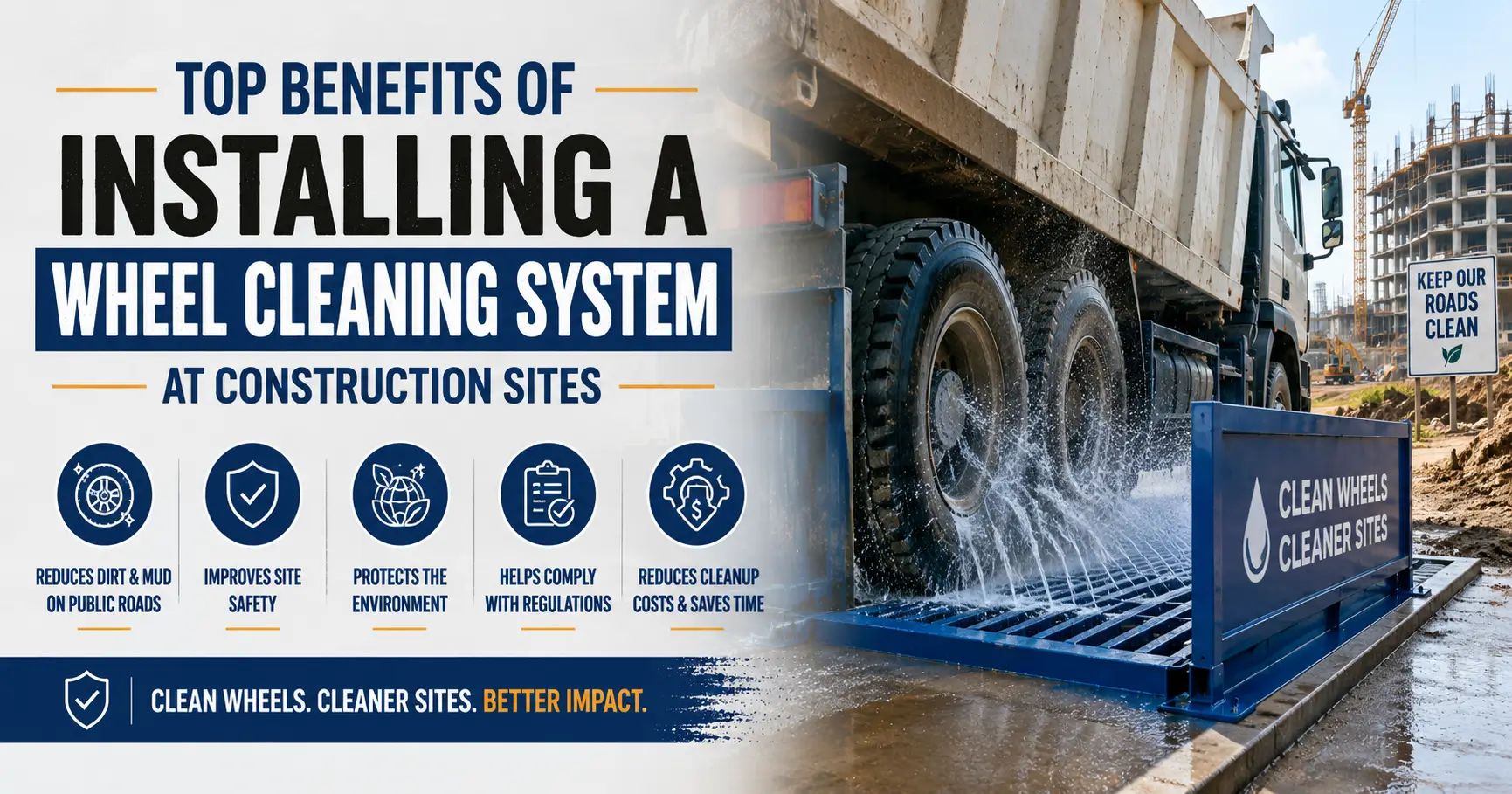
Top Benefits of a Wheel Cleaning System for Construction Sites
1. Keeps Public Roads Clean
One of the biggest advantages of installing a Wheel Cleaning System for Construction Sites is preventing mud from being transported onto nearby roads.
Clean roads:
- Reduce maintenance costs for local authorities.
- Improve driving conditions for motorists.
- Prevent slippery surfaces caused by wet soil.
- Enhance the public image of construction companies.
Instead of relying on manual road cleaning, automatic wheel cleaning provides consistent results throughout the project lifecycle.
2. Improves Construction Site Mud Control
Mud accumulation is more than just an inconvenience—it creates operational and environmental challenges. Effective Construction Site Mud Control ensures that excessive soil remains within the project boundary rather than spreading across surrounding infrastructure.
By washing vehicle wheels before exit, contractors can:
- Minimize mud tracking.
- Reduce road sweeping frequency.
- Improve drainage efficiency.
- Maintain cleaner access roads.
This proactive approach saves both time and operational costs while maintaining a professional work environment.
How a Wheel Cleaning System for Construction Sites Supports Environmental Compliance
Environmental compliance has become a key priority for construction companies. Government agencies increasingly monitor dust emissions, sediment runoff, and road contamination around active projects.
A properly installed Wheel Cleaning System for Construction Sites contributes to sustainable site management by limiting pollutants that leave the construction area. Most modern systems recycle water through sedimentation tanks and filtration units, reducing overall water consumption while maintaining effective cleaning performance.
Combined with other Construction Site Dust Control Solutions, wheel washing helps create cleaner surroundings, minimizes airborne particles, and supports greener construction practices.
Enhances Workplace Safety
Safety extends beyond the construction site itself. Mud deposited on roads can become slippery, especially during rainy weather, increasing accident risks for motorists, cyclists, and pedestrians.
A high-quality Vehicle Wheel Cleaning System reduces these hazards by ensuring vehicle tires are free from excessive dirt before entering public roads.
Within the project site, cleaner vehicle movement also contributes to:
- Better traction on access roads.
- Reduced slip hazards.
- Improved visibility through lower dust levels.
- Safer logistics operations.
Maintaining cleaner transport routes ultimately benefits everyone involved in the project.
Reduces Dust Generation
Dry soil attached to vehicle tires eventually breaks apart, creating airborne dust as vehicles travel. Excessive dust affects nearby communities, reduces air quality, and may violate environmental regulations.
Installing a Wheel Wash System significantly limits the amount of loose dirt leaving the site, making it an important part of an overall dust management strategy.
When integrated with other Construction Site Dust Control Solutions such as water spraying, covered stockpiles, and stabilized haul roads, wheel cleaning helps maintain healthier working conditions while reducing environmental impact.
Saves Time and Operating Costs
Although installing a wheel cleaning system requires an initial investment, the long-term savings are substantial.
Construction companies can reduce expenses associated with:
- Frequent road sweeping.
- Regulatory penalties.
- Vehicle maintenance caused by accumulated mud.
- Labour required for manual cleaning.
- Project delays due to environmental non-compliance.
Because automated systems clean vehicle wheels quickly, traffic flow remains efficient without creating bottlenecks at site exits.
Protects Company Reputation
Construction projects are highly visible to clients, local authorities, and nearby residents. Dirty roads and excessive dust often lead to complaints, negative publicity, and strained community relationships.
Using a professional Construction Site Wheel Washing System demonstrates a commitment to environmental responsibility and operational excellence.
Clients increasingly prefer contractors who implement sustainable practices and maintain high site standards. Cleaner roads reflect positively on project management and reinforce trust among stakeholders.
Explore More: Hydroseeder in Tamil Nadu | Dust Collector in Gujarat | Dust Catcher in Andhra Pradesh
Supports Equipment Longevity
Heavy equipment constantly operates under harsh conditions. Mud and abrasive materials can accelerate wear on tires, suspension components, and undercarriages.
A properly maintained Vehicle Wheel Cleaning System helps remove accumulated debris before vehicles travel long distances, reducing unnecessary wear and minimizing maintenance requirements.
Regular cleaning also improves inspection accuracy by preventing excessive dirt from concealing potential mechanical issues.
Works Efficiently Across Different Construction Projects
Whether managing residential developments, highways, mining operations, industrial facilities, or infrastructure projects, a Wheel Wash System adapts to different operational requirements.
Modern systems can accommodate various vehicle sizes while delivering fast, consistent cleaning performance with minimal operator intervention.
Their versatility makes them suitable for projects involving:
- Commercial construction
- Infrastructure development
- Mining operations
- Demolition projects
- Waste management facilities
- Industrial manufacturing sites
Choosing the Right Wheel Cleaning Solution
Not every construction project has identical requirements. Before selecting a wheel cleaning solution, contractors should evaluate several factors, including traffic volume, vehicle size, site layout, available water supply, and maintenance requirements.
Look for systems offering:
- Efficient water recycling capabilities.
- Durable galvanized or stainless-steel construction.
- Automated operation with minimal manual intervention.
- High-pressure spray technology.
- Easy maintenance and sediment removal.
- Reliable performance under continuous heavy-duty use.
Manufacturers like Automeck provide advanced wheel cleaning solutions designed to improve operational efficiency while helping construction companies meet environmental and regulatory expectations.
Conclusion
Installing a Wheel Cleaning System for Construction Sites is a practical investment that delivers benefits far beyond cleaner vehicle tires. It helps reduce mud tracking, supports environmental compliance, improves workplace safety, lowers operating costs, minimizes dust emissions, and enhances the professional image of construction companies. As construction regulations become more stringent and sustainability gains greater importance, adopting efficient wheel cleaning technology is an effective way to maintain cleaner, safer, and more responsible project sites while ensuring long-term operational success.
Frequently Asked Questions
1. What is a wheel cleaning system used for?
A wheel cleaning system removes mud, soil, and debris from vehicle tires before they leave a construction site, helping keep public roads clean.
2. How does a construction site wheel washing system work?
It uses high-pressure water jets to clean vehicle wheels and undercarriages as vehicles pass through the washing platform.
3. Does a wheel wash system save water?
Yes. Most modern systems recycle and filter water, significantly reducing overall water consumption.
4. Why is construction site mud control important?
Effective mud control improves road safety, reduces maintenance costs, supports environmental compliance, and minimizes public complaints.
5. Can a vehicle wheel cleaning system reduce dust?
Yes. By removing loose soil from vehicle tires, it helps reduce dust generation and complements broader dust control measures.