Air pollution is not only an outdoor problem. Indoor smoke, poor ventilation, chemical vapors, dust, vehicle exhaust and industrial emissions can all affect the air we breathe every day. If you are wondering how to control air pollution, it starts with identifying sources and applying practical controls at home, at work and across industrial facilities.

Why Air Pollution Control Matters
Air quality directly influences respiratory health, comfort, productivity and the surrounding environment. Fine particulate matter (PM2.5), particulate matter (PM10), nitrogen oxides, sulfur dioxide, carbon monoxide, volatile organic compounds (VOCs) and ground-level ozone can enter the air through combustion, manufacturing, transportation, cleaning products and poorly managed waste.
Knowing how to control air pollution is not about one single device. It combines source reduction, cleaner energy, ventilation, filtration, good housekeeping, emission monitoring and responsible maintenance. These air pollution control measures also support compliance and reduce unnecessary losses.
Effective pollution prevention is therefore a combination of reducing emissions at their source and controlling pollutants that cannot be eliminated completely.
How to Control Air Pollution at Home
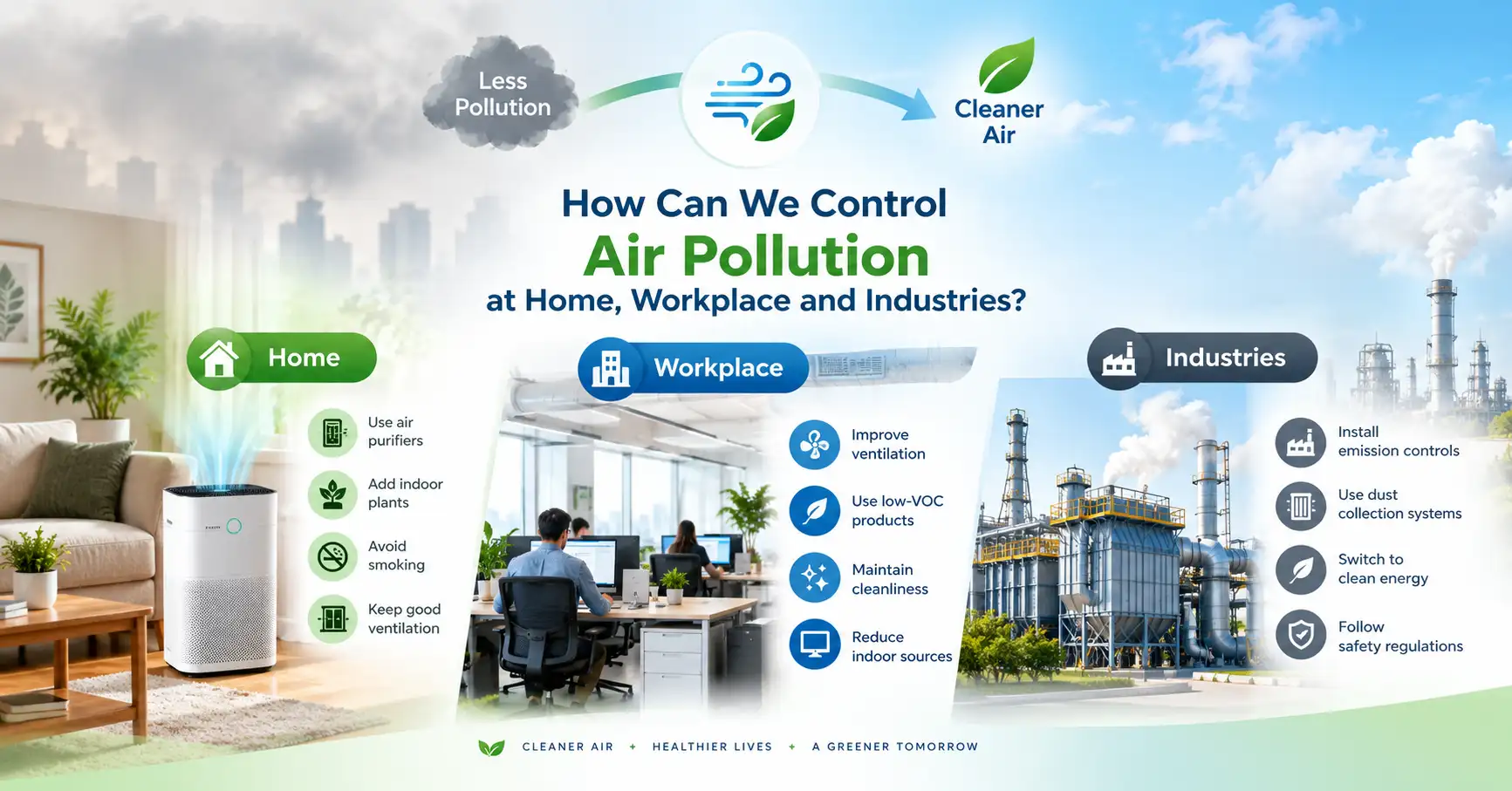
Homes can contain pollutants from cooking, tobacco smoke, candles, incense, paints, cleaning chemicals, dampness and outdoor traffic. Learning how to control air pollution indoors is mainly about preventing pollutants at their source and keeping fresh air moving safely.
Start with ventilation. Use kitchen exhaust fans or range hoods that vent outdoors, especially while cooking. Keep fuel-burning appliances properly maintained and never use charcoal grills, generators or similar combustion equipment indoors. Avoid smoking inside the house because secondhand smoke contains numerous harmful pollutants.
For how to reduce air pollution at home, choose low-VOC paints and household products when possible, store chemicals securely, clean dust regularly and control moisture to discourage mold. A properly selected air purifier with an effective particulate filter can supplement source control, particularly in rooms where outdoor pollution is high. However, filtration should not replace ventilation or fixing the source of contamination.
Practical home air pollution control measures include:
- Maintain gas stoves, heaters and chimneys regularly.
- Keep doors and windows closed temporarily during severe outdoor pollution episodes, while maintaining safe ventilation when conditions improve.
- Use clean cooking fuels and avoid burning waste, plastics or leaves around the property.
- Replace or clean HVAC filters according to the manufacturer’s instructions.
For how to reduce air pollution at home, remember that ordinary houseplants are not a substitute for ventilation or filtration. The most effective approach is to reduce emissions before they spread through the room.
How to Control Air Pollution in the Workplace
Offices, warehouses, workshops, laboratories, kitchens and construction areas can have very different air-quality risks. Identify sources such as dust, welding fumes, solvents, cleaning agents, combustion equipment, vehicle exhaust and poorly maintained HVAC systems.
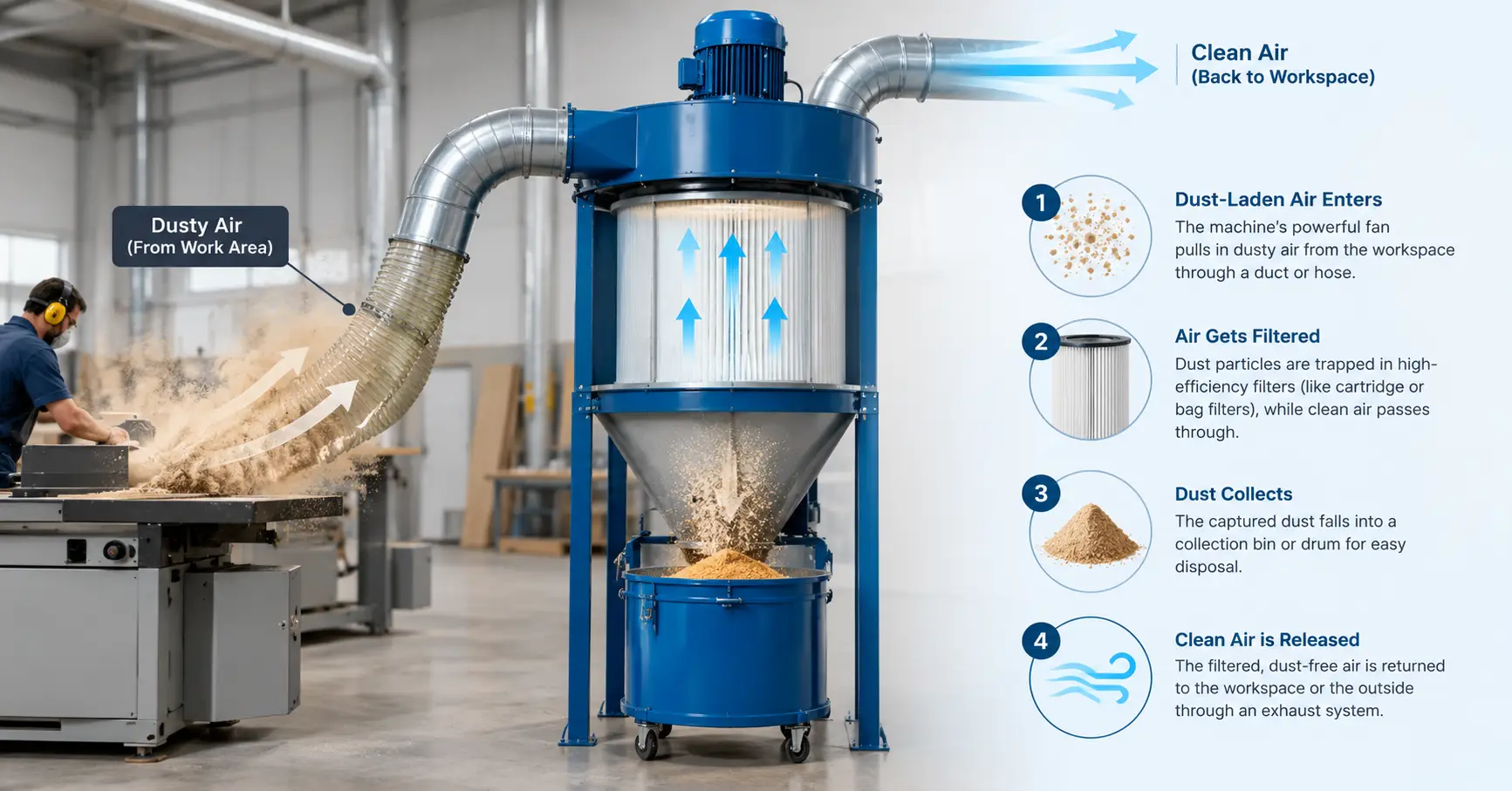
If you want to know how to reduce air pollution in the workplace, begin with an indoor air-quality assessment. Inspect ventilation rates, filtration, humidity, pollutant sources and employee exposure. Where possible, replace hazardous materials with less-emitting alternatives and use local exhaust ventilation to capture contaminants close to the source.
Good housekeeping also matters. Dry sweeping can send fine dust back into the air, so suitable vacuum systems or wet-cleaning methods may be preferable for certain applications. Maintenance teams should inspect filters, ducts, exhaust systems and combustion equipment on a defined schedule.
Useful ways to control air pollution in workplaces include:
- Install source-capture systems for welding, soldering, painting or chemical processes.
- Use appropriate respirators and other personal protective equipment when engineering controls cannot fully eliminate exposure.
- Keep vehicles, forklifts and generators maintained to limit exhaust emissions.
- Train employees to handle, store and dispose of chemicals correctly.
Workplace air quality improves most when engineering controls come first, supported by administrative procedures, monitoring and personal protective equipment. For how to reduce air pollution in the workplace, employers should also consider relevant occupational and environmental regulations.
Explore More: Automatic car washing machine | best hydroseeder machine in mumbai | dust collector manufacturers
Industrial Air Pollution Control Methods
Industrial operations can release particulate matter, sulfur oxides, nitrogen oxides, VOCs, acid gases and other contaminants through boilers, furnaces, kilns, chemical processes, material handling and storage. Because emissions can be significant, industrial pollution control requires systematic engineering rather than isolated actions.
The most effective industrial air pollution control methods begin with source reduction. Facilities can improve combustion efficiency, switch to cleaner fuels, redesign processes, recover solvents, prevent leaks and optimize raw-material use. These ways to control air pollution reduce emissions before control equipment is needed.
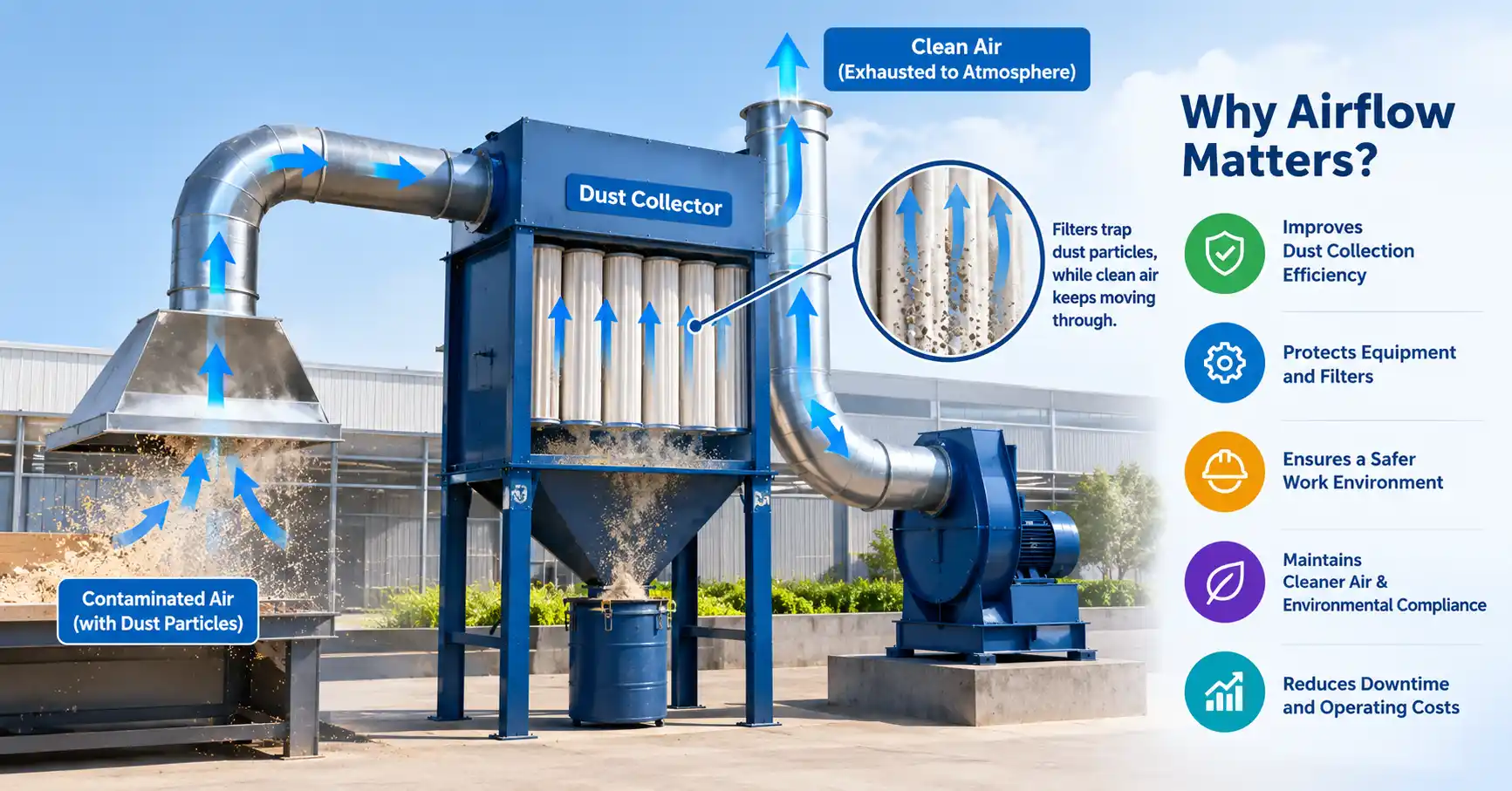
Where emissions remain, facilities can use technologies matched to the pollutant and process. Common systems include baghouse filters for particulate matter, electrostatic precipitators for fine particles, wet scrubbers for certain particulate and gaseous pollutants, activated-carbon adsorption for some VOCs, and catalytic or thermal systems for selected gaseous emissions.
For industrial plants, strong air pollution control measures often involve:
- Enclosing dusty operations and using covered conveyors, hoppers and storage areas.
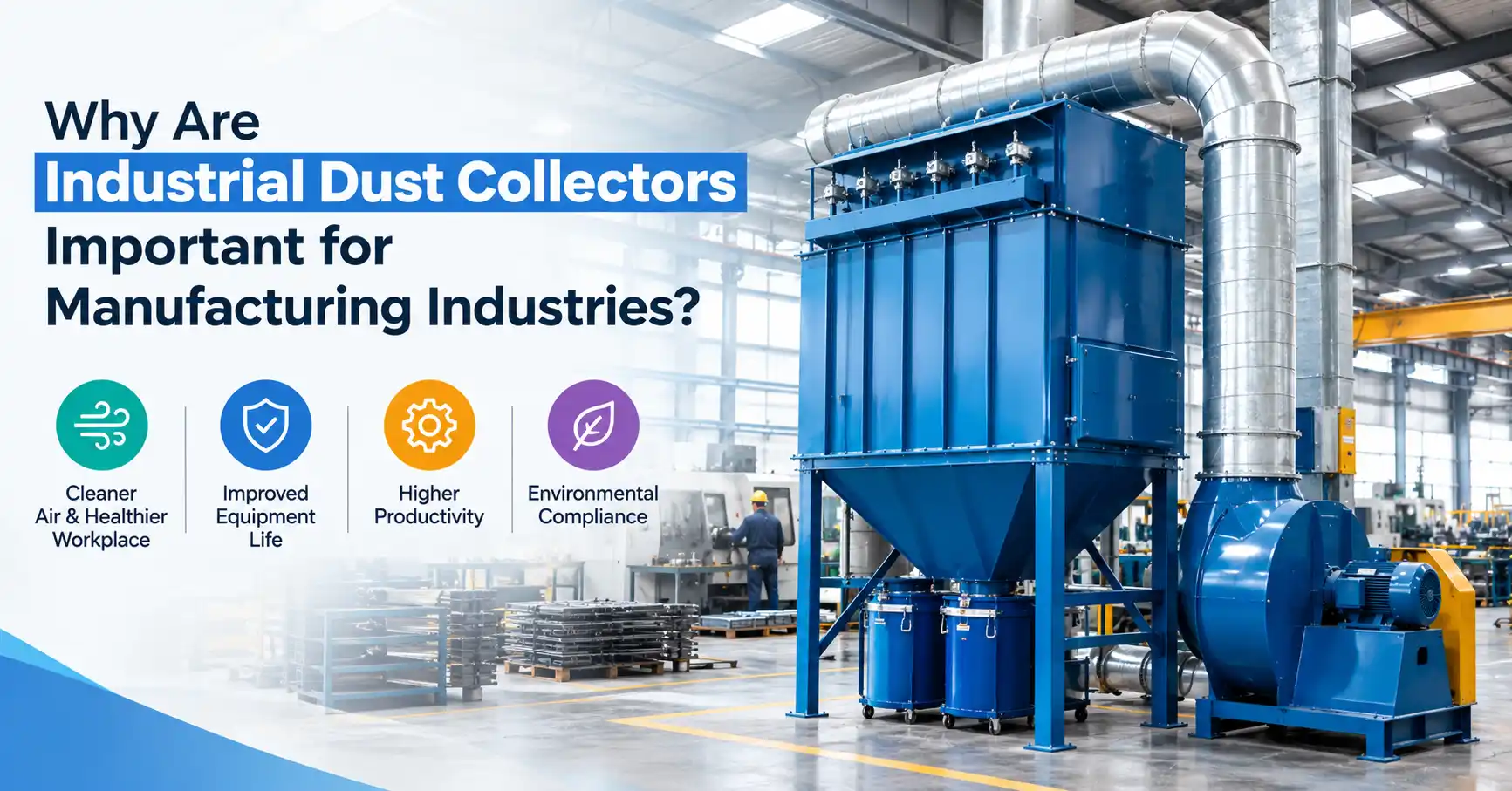
- Installing and maintaining dust collectors, scrubbers or other emission-control equipment.
- Using continuous or periodic stack-emission monitoring where required.
- Inspecting valves, pumps, tanks and pipelines to detect and repair fugitive emissions.
- Managing construction dust, road dust and material handling around the facility.
Choosing industrial air pollution control methods depends on pollutant concentration, gas temperature, particle size, flow rate, operating conditions and limits. Proper sizing, pressure-drop management, filter selection and preventive maintenance are essential for consistent performance.
Businesses evaluating solutions from providers such as Automeck should focus on the specific pollutant, application, required efficiency, operating cost and maintenance needs rather than choosing equipment based only on capacity or price.
How to Build an Effective Air Pollution Control Plan
Whether the setting is a home, office or factory, a practical plan follows the same basic logic: identify, prevent, control and verify. Start by mapping pollution sources and determining which pollutants are being generated. Then prioritize source reduction before selecting ventilation, filtration or treatment equipment.
Monitoring is equally important. Indoor air-quality sensors can help identify changes in particulate levels or carbon dioxide, while industrial facilities may need specialized instruments for stack emissions, VOCs or combustion gases. Data can reveal whether controls are actually working and help identify maintenance problems.
A good program should also include routine inspections, filter replacement, equipment calibration, employee training and documented corrective actions. In industrial environments, an environmental management system can connect air-quality goals with energy efficiency, waste reduction and compliance activities.
The right technology depends on pollutant concentration, gas temperature, particle size, flow rate, operating conditions and regulatory limits. Proper sizing, pressure-drop management, filter selection and preventive maintenance are essential for consistent performance.
Conclusion
Knowing how to control air pollution is ultimately about reducing emissions at their source and using suitable controls when pollutants cannot be eliminated. At home, cleaner cooking, ventilation and source management can make a meaningful difference. In workplaces, exposure assessment, local exhaust ventilation, housekeeping and maintenance are key. In industry, cleaner processes, emission-control equipment, monitoring and preventive maintenance provide a structured path to better air quality.
The most useful ways to control air pollution are practical, consistent and matched to the source. By combining prevention with appropriate air-cleaning and emission-control technologies, homes, businesses and industrial facilities can create healthier environments while using resources more efficiently.
Frequently Asked Questions
1. What is the easiest way to control air pollution at home?
Reduce indoor sources such as smoke and combustion, improve safe ventilation, maintain appliances and use suitable filtration when needed.
2. Can air purifiers completely remove air pollution?
No. They can reduce certain airborne pollutants, but source control and proper ventilation remain important.
3. How can workplaces improve indoor air quality?
Identify pollution sources, improve ventilation, use source-capture systems, maintain HVAC equipment and train employees in safe handling practices.
4. What are common industrial air pollution controls?
Baghouse filters, electrostatic precipitators, scrubbers, adsorption systems and combustion controls are commonly selected according to the pollutant and process.
5. Why is monitoring important for air pollution control?
Monitoring shows whether controls are performing properly and helps identify changing pollution levels, leaks or maintenance issues.