If you work in woodworking, metalworking, manufacturing, or another environment where airborne particles are generated, understanding how does a dust collection system work is essential for choosing the right equipment. It captures contaminated air near the source, separates dust from the air stream, and sends cleaner air onward. A properly designed system combines controlled airflow, ductwork, filtration, and dust discharge.

How Does a Dust Collection System Work?
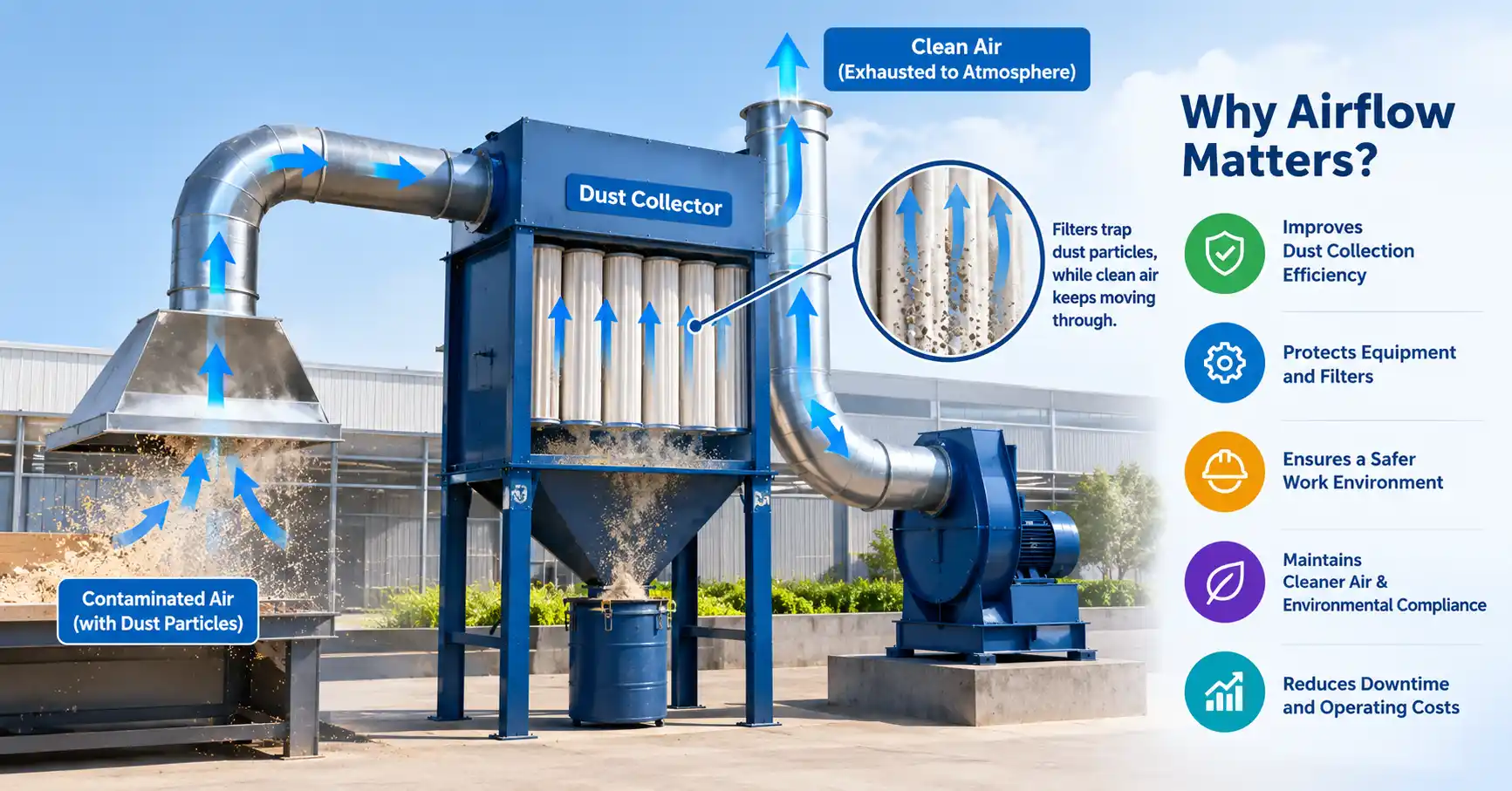
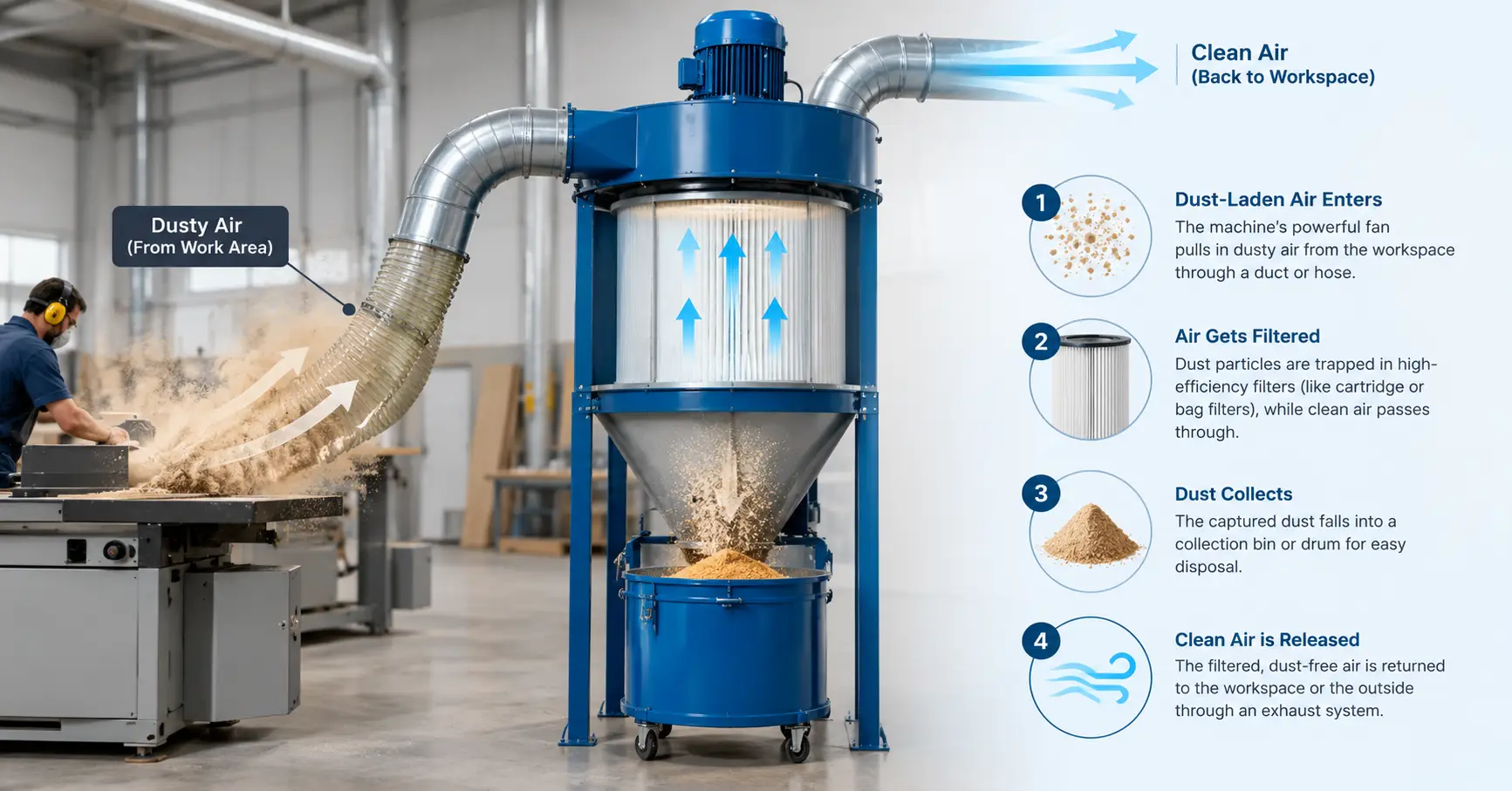
The basic process is capture, convey, separate, filter, and discharge. A fan or blower creates negative pressure that pulls dusty air through a hood, pickup point, or machine connection. The air then travels through ducts toward the collector, where heavier particles may be separated before finer particles reach the filter.
So, how does a dust collector work in practical terms? The collector uses airflow velocity and pressure differences to keep particles moving through the system. Once the air enters the collector, its speed and direction can change, allowing larger particles to drop into a hopper. Smaller particles are retained by filter media, while cleaner air continues toward the outlet.
This dust collection system working principle allows one central unit to serve several machines when the duct network is correctly sized. The system must maintain enough capture velocity at each pickup point so airborne contaminants are drawn away before they spread.
How Does a Dust Collector Remove Dust From Air?
To understand how does a dust collector remove dust from air, imagine a controlled air-cleaning cycle. First, a process generates particles. A hood or enclosure captures contaminated air. Next, the blower moves that air through ductwork. Inside the collector, separation and filtration remove particles according to their size, density, and the filter’s characteristics.
Many systems combine mechanical separation with fabric or cartridge filtration. A cyclone separates heavier particles using centrifugal action, while cartridge and baghouse collectors use specialized filter media for finer particles.
How dust collectors work also depends on the material being handled. Wood dust, welding fumes, grinding particles, and chemical powders can have different physical properties. Collector selection should consider particle size, temperature, moisture, airflow, and potential hazards.
The Main Stages of Dust Collection
1. Capture: A hood, enclosure, or machine port captures dust close to where it is generated.
2. Conveyance: Ductwork carries contaminated air to the collector while maintaining suitable air velocity.
3. Separation and filtration: Cyclones, baffles, bags, cartridges, or other media separate particulate matter from the air.
4. Dust discharge: Collected material falls into a hopper, bin, drum, or automatic discharge system.
5. Clean-air handling: Filtered air leaves through the clean-air side and is recirculated where appropriate or exhausted according to the design.
This sequence keeps source capture central to dust control, limiting how much contaminant becomes airborne.
How Does a Dust Collection System Work in an Industrial Environment?
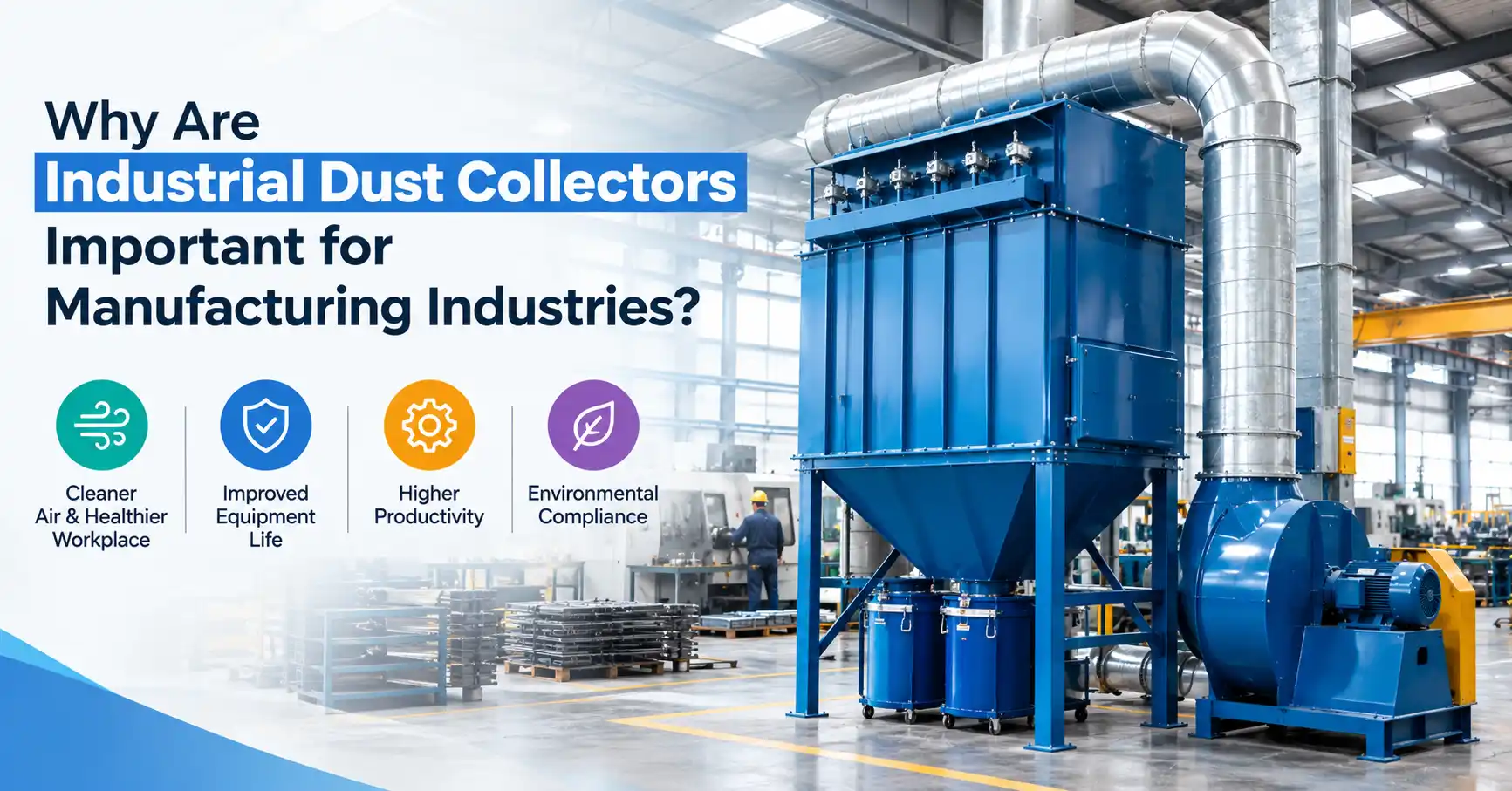
An industrial dust collection system is generally more engineered than a portable collector. It may serve multiple machines with centralized ducting and automatic filter cleaning.
In an industrial installation, how does a dust collection system work efficiently? It depends on the collector, blower, duct layout, pickup points, and process requirements. Poorly sized or leaking ducts can reduce capture performance, while excessive airflow can raise energy use.
Filter cleaning is another important part of operation. As dust accumulates on filter media, pressure drop can increase. Many collectors use pulse-jet cleaning, where short bursts of compressed air dislodge dust from the filter surface. The loosened material falls into the hopper for removal.
The dust collection system working principle involves more than filtration; the air-handling network must remain balanced.
Explore More: Hydroseeder machine in nagpur | dust collector manufacturers | dust collector manufacturers in hyderabad
Key Components That Make Dust Collection Work
A dust collector is a complete air-management system rather than a single filter. Its main components work together to create and maintain airflow.
The capture hood or pickup sits near the dust source. The ductwork transports contaminated air while maintaining suitable conveying velocity.
The blower or fan creates the pressure differential. The filter housing and media perform particle separation using bags, cartridges, HEPA filters, cyclonic separators, or combinations of these technologies.
The hopper and dust discharge system collect separated material.
When evaluating how dust collectors work, look at the complete system rather than only the filter’s rated efficiency. A highly efficient filter cannot compensate for poor source capture or inadequate airflow.
Factors That Affect Dust Collector Performance
Several factors determine whether a collection system delivers consistent results:
- Airflow and capture velocity: Enough air must move to capture and transport particles effectively.
- Filter selection: Media should match particle characteristics, temperature, humidity, and filtration requirements.
- Duct design: Excessive bends, undersized ducts, leaks, and poorly balanced branches can increase pressure losses.
- Filter loading: Dust buildup can increase resistance unless the cleaning system keeps the filter surface in suitable condition.
- Dust properties: Fine powders, fibrous dust, abrasive particles, combustible dust, and sticky materials may require different designs.
- Maintenance: Inspect filters, seals, ducts, fans, and discharge equipment regularly.
Real-world performance depends on complete system design and operating conditions, not fan capacity alone.
Choosing an Effective Industrial Dust Collection System
Start by identifying the dust source, material type, number of collection points, operating hours, and required airflow. Then determine whether the process produces coarse chips, fine particulate, fumes, or a mixture.
For several machines, calculate airflow for simultaneous operation. The duct layout should account for pressure loss, branch balancing, and future expansion.
Safety also matters because some industrial dusts can create fire or explosion hazards. Depending on the material, grounding, spark detection, isolation, or explosion protection may be required. A qualified professional should evaluate these risks.
Manufacturers such as Automeck may provide configurations for specific industrial applications, but the solution should be selected from process requirements rather than equipment size alone.
How Does a Dust Collection System Work After Installation?
Once installed, the system continuously repeats the same cycle: contaminated air is captured, transported, filtered, and discharged as collected material while cleaner air exits the collector. Operators should monitor airflow, filter pressure drop, vibration, and leakage.
Understanding how does a dust collector work makes troubleshooting easier. A sudden reduction in suction may point to a blocked filter, damaged duct, open access door, fan issue, or improperly positioned damper. Rising pressure drop can indicate filter loading or a problem with the cleaning cycle.
Clean filters, sealed ducts, functioning fans, and reliable dust discharge help maintain stable performance.
Conclusion
An industrial dust collection system can remove airborne particulate by creating controlled airflow, capturing dust at the source, conveying contaminated air through ductwork, separating larger particles, and filtering finer particles before cleaner air leaves the system. In simple terms, how does a dust collection system work comes down to coordinated airflow, particle separation, filtration, and dust removal.
The key point is that effective dust control depends on the whole system—not just the collector. Proper capture points, correctly sized ducts, suitable filters, adequate fan capacity, regular filter cleaning, and preventive maintenance all contribute to reliable performance. Understanding these fundamentals can help facility owners and operators select, operate, and maintain equipment effectively.
Frequently Asked Questions
1. How does a dust collector work?
A dust collector uses a fan to pull contaminated air into the system, separates particles, filters the remaining dust, and collects the separated material for disposal.
2. How does a dust collector remove dust from air?
It uses airflow, mechanical separation, and filtration to capture particles according to their size and properties.
3. What is the dust collection system working principle?
The basic principle is source capture followed by air conveyance, particle separation, filtration, and controlled dust discharge.
4. How dust collectors work in factories?
In factories, centralized systems use ductwork and high-capacity fans to collect dust from multiple production points and send it to filters and collection equipment.
5. How does a dust collection system work with multiple machines?
A central collector connects to several pickup points through a designed duct network. Dampers and airflow calculations help provide suitable capture performance at operating machines.