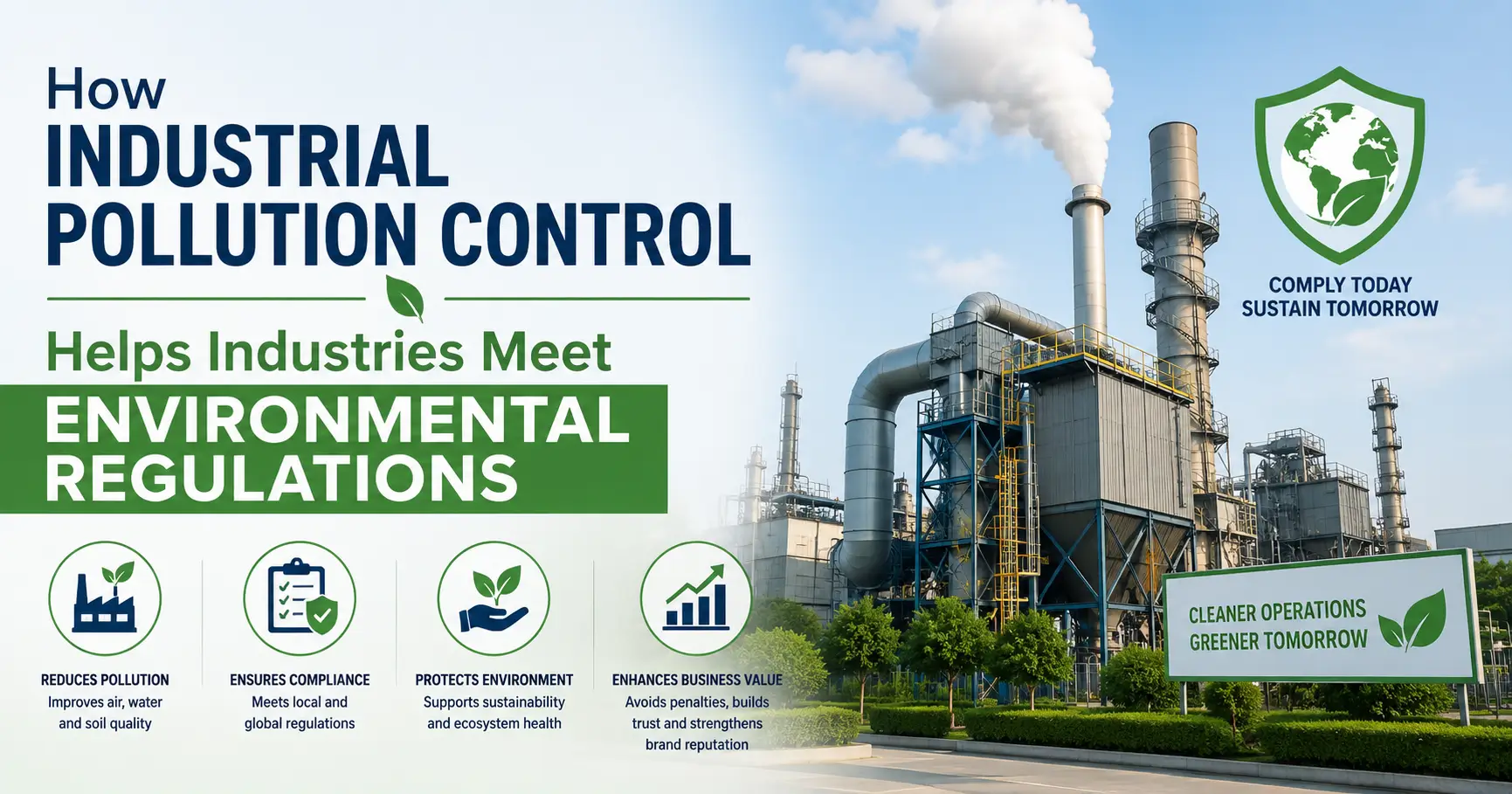
Industrial growth drives economic development, but it also brings significant environmental challenges. Manufacturing plants, chemical facilities, power stations, and processing units generate emissions, wastewater, dust, and hazardous waste that can affect air, water, and soil quality. This is where Industrial Pollution Control plays a crucial role. By implementing advanced pollution control measures, industries can reduce their environmental impact while complying with government regulations and sustainability standards.
As environmental laws become stricter across the globe, businesses are expected to adopt cleaner production practices and minimize pollution at every stage of their operations. Effective pollution control not only helps companies avoid penalties but also improves operational efficiency, strengthens brand reputation, and supports long-term business growth.

Why Industrial Pollution Control Is Essential for Modern Industries
Industrial Pollution Control is the process of preventing, reducing, and managing pollutants generated during industrial activities. It involves technologies, operational strategies, and monitoring systems that limit emissions and waste before they reach the environment.
Today, regulators require industries to monitor pollutants such as particulate matter, sulfur dioxide (SO₂), nitrogen oxides (NOx), volatile organic compounds (VOCs), and hazardous wastewater. Organizations that invest in reliable Industrial Pollution Control Systems can efficiently capture or treat these pollutants before discharge.
Beyond legal compliance, pollution control supports sustainable manufacturing by conserving natural resources, reducing operational risks, and improving workplace safety. It also helps businesses align with Environmental, Social, and Governance (ESG) goals that investors and customers increasingly value.
Understanding Environmental Regulations for Industries
Every country has environmental laws designed to protect ecosystems and public health. These regulations establish limits on emissions, wastewater discharge, hazardous waste disposal, and workplace environmental practices.
Environmental Regulations for Industries generally require manufacturers to:
- Monitor and report emissions regularly.
- Install approved pollution control technologies.
- Treat industrial wastewater before discharge.
- Manage hazardous waste through authorized disposal methods.
- Maintain environmental records for regulatory inspections.
Failure to comply may result in fines, operational shutdowns, legal actions, or damage to a company’s reputation. Following Environmental Regulations for Industries is therefore both a legal obligation and a business necessity.
Key Components of Industrial Pollution Control Systems
Modern Industrial Pollution Control Systems combine engineering solutions with continuous monitoring to minimize pollution from manufacturing processes. These systems are designed according to industry type, production capacity, and regulatory requirements.
Some of the most commonly used pollution control technologies include:
- Electrostatic precipitators and bag filters for dust collection
- Wet scrubbers for removing harmful gases
- Activated carbon filters for VOC removal
- Effluent Treatment Plants (ETPs) for wastewater treatment
- Continuous Emission Monitoring Systems (CEMS) for real-time monitoring
When properly maintained, these solutions improve environmental performance while reducing operational risks and maintenance costs.
How Industrial Pollution Control Helps Achieve Regulatory Compliance
One of the primary reasons industries invest in Industrial Pollution Control is to maintain consistent regulatory compliance. Pollution control technologies help organizations monitor emissions accurately, reduce pollutant discharge, and generate compliance reports required by environmental authorities.
For example, manufacturing plants equipped with emission monitoring systems can detect abnormal pollutant levels before they exceed legal limits. This proactive approach allows corrective actions to be taken immediately, reducing the risk of regulatory violations.
In addition, pollution control equipment supports certification requirements under internationally recognized environmental management systems such as ISO 14001, encouraging continuous improvement in environmental performance.
The Role of Industrial Emission Control in Cleaner Manufacturing
Air pollution remains one of the most significant environmental concerns associated with industrial production. Effective Industrial Emission Control focuses on reducing airborne contaminants released from boilers, furnaces, kilns, and manufacturing processes.
Technologies used for Industrial Emission Control help industries:
- Reduce particulate emissions
- Control sulfur dioxide and nitrogen oxide levels
- Capture volatile organic compounds
- Improve stack emission quality
- Meet air quality standards established by regulatory authorities
Cleaner air emissions not only protect surrounding communities but also contribute to healthier working environments within industrial facilities.
Managing Industrial Waste Pollution Control Effectively
Industrial facilities generate various forms of waste, including solid waste, sludge, chemicals, oils, and contaminated water. Without proper treatment, these wastes can cause severe environmental damage.
An effective Industrial Waste Pollution Control strategy focuses on reducing waste generation, recycling reusable materials, and treating hazardous waste before disposal. Companies often implement waste segregation, recycling initiatives, and advanced wastewater treatment technologies to minimize environmental impact.
Proper Industrial Waste Pollution Control also reduces disposal costs, conserves resources, and supports circular economy practices where materials are recovered and reused whenever possible.
Explore More: Car washing system in Pune | Car washing system in Mumbai | Hydroseeder machine in delhi
Benefits of Environmental Compliance for Manufacturing
Meeting environmental standards offers benefits that extend well beyond avoiding penalties. Strong Environmental Compliance for Manufacturing practices create long-term value for businesses by improving operational performance and stakeholder confidence.
Organizations that prioritize Environmental Compliance for Manufacturing often experience:
- Reduced legal and regulatory risks
- Lower environmental management costs
- Improved energy and resource efficiency
- Greater customer and investor trust
- Enhanced corporate sustainability reputation
Many multinational companies also prefer suppliers that demonstrate strong environmental performance, making compliance a competitive advantage in global supply chains.
Emerging Technologies Transforming Pollution Control
The future of pollution control is being shaped by digital innovation and automation. Smart sensors, Industrial Internet of Things (IIoT) devices, Artificial Intelligence (AI), and predictive analytics are enabling industries to monitor environmental performance in real time.
Automated systems can identify abnormal emission patterns, predict equipment failures, and optimize pollution control processes before problems occur. Cloud-based environmental monitoring platforms also simplify compliance reporting by generating accurate environmental data for regulatory agencies.
These advancements reduce downtime, improve maintenance planning, and ensure consistent environmental performance throughout production cycles.
Companies like Automeck and other industrial automation providers are increasingly supporting manufacturers with intelligent monitoring solutions that improve operational visibility and environmental management.
Best Practices for Sustainable Industrial Pollution Management
Achieving long-term environmental performance requires more than installing pollution control equipment. Industries should adopt a comprehensive environmental management approach that combines technology, employee awareness, and continuous improvement.
Some proven best practices include:
- Conduct periodic environmental audits and risk assessments.
- Monitor emissions and wastewater continuously.
- Train employees on environmental procedures.
- Maintain pollution control equipment regularly.
- Improve production efficiency to reduce waste generation.
Integrating these practices into daily operations helps organizations build a culture of sustainability while maintaining consistent regulatory compliance.
Conclusion
As environmental expectations continue to rise, businesses must balance productivity with responsible environmental stewardship. Industrial Pollution Control enables industries to reduce emissions, manage waste responsibly, and comply with evolving environmental standards without compromising operational efficiency.
Organizations that invest in advanced pollution control technologies, continuous monitoring, and sustainable manufacturing practices are better positioned to meet regulatory requirements, protect natural resources, and strengthen their market reputation. By viewing environmental compliance as a strategic investment rather than a regulatory obligation, industries can achieve sustainable growth while contributing to a cleaner and healthier future.
Frequently Asked Questions
1. What is Industrial Pollution Control?
Industrial Pollution Control refers to technologies and practices used to reduce air emissions, wastewater, and industrial waste generated during manufacturing processes.
2. Why are pollution control systems important for industries?
They help industries comply with environmental regulations, reduce environmental impact, improve operational efficiency, and avoid legal penalties.
3. What are the most common industrial pollution control systems?
Common systems include bag filters, scrubbers, electrostatic precipitators, effluent treatment plants (ETPs), and continuous emission monitoring systems (CEMS).
4. How does industrial emission control improve environmental performance?
It reduces harmful pollutants such as particulate matter, sulfur dioxide, nitrogen oxides, and volatile organic compounds before they are released into the atmosphere.
5. How can manufacturers improve environmental compliance?
Manufacturers can improve compliance by installing pollution control technologies, monitoring emissions regularly, maintaining treatment systems, conducting environmental audits, and following applicable environmental regulations.