What Are the Main Components of a Dust Collector System?

Dust collector system components

Dust is a common challenge in industries such as cement, woodworking, pharmaceuticals, metal fabrication, food processing, and chemical manufacturing. Without proper control, airborne particles can affect product quality, workplace cleanliness, equipment performance, and employee health. This is where understanding dust collector system components becomes important. A well-designed dust collection system captures dust at its source, transports contaminated air, separates particles, and releases filtered air according to the system’s design. Each component plays a specific role in maintaining efficient airflow and reliable filtration. In this guide, we will explore the main parts of an industrial dust collector, how they work together, and what businesses should consider when selecting a suitable system.


multi utility vehicle

What Are Dust Collector System Components?

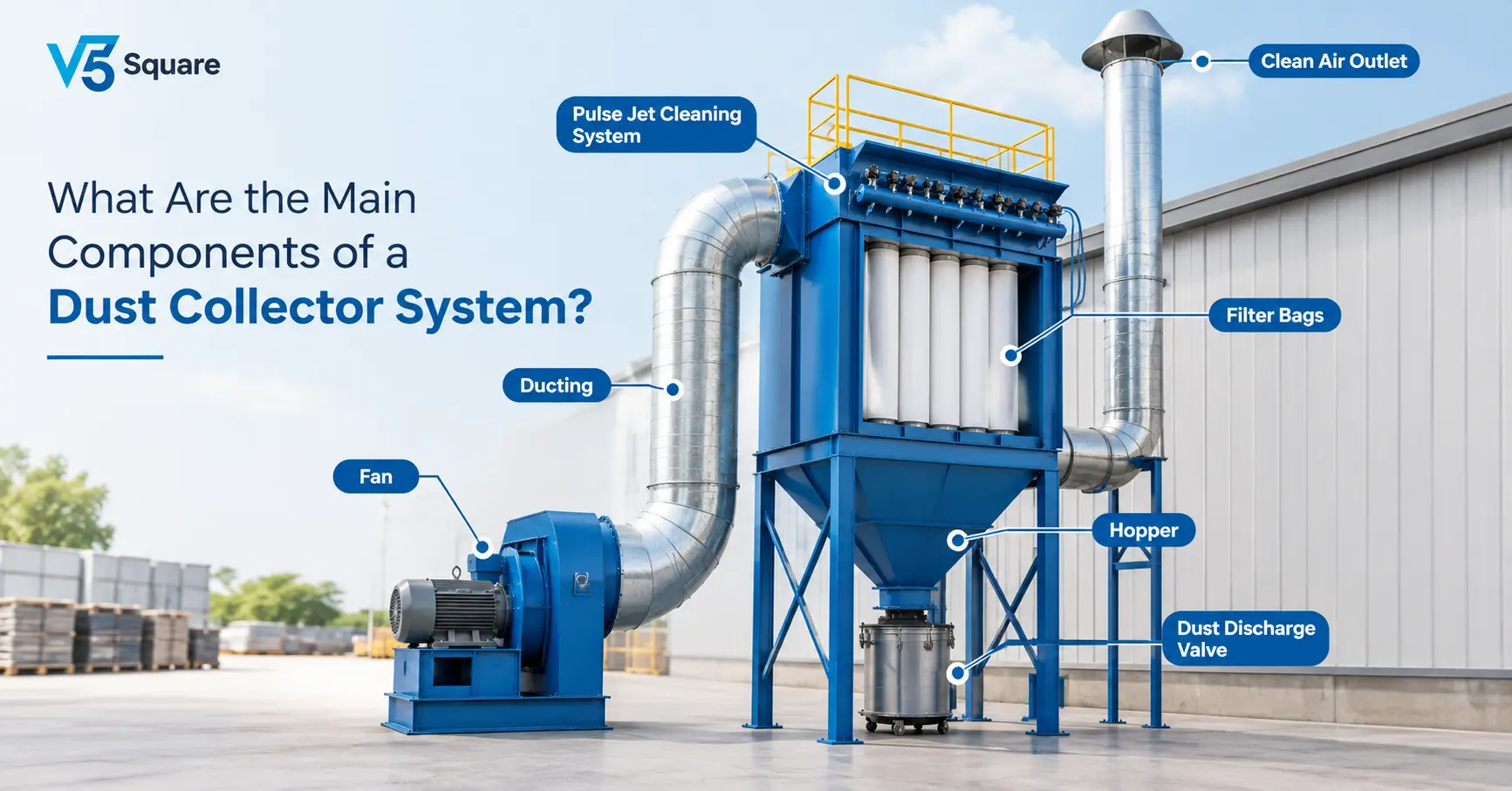
A dust collector is an industrial air pollution control device designed to remove airborne particles from process air. It is commonly used wherever manufacturing, cutting, grinding, mixing, sanding, or material handling generates dust. The dust collector system components are the interconnected parts responsible for capturing, transporting, filtering, and collecting dust. These typically include a capture hood, ductwork, air mover, filtration unit, cleaning mechanism, dust discharge equipment, and control system. The exact configuration depends on the material being processed, particle size, dust concentration, airflow requirements, and applicable safety standards. For example, a woodworking facility may require a different arrangement from a cement plant or metalworking workshop. Understanding these parts helps businesses identify performance issues, plan preventive maintenance, and choose equipment that suits their production requirements.

Dust Collection Hood or Capture Point

The hood is the point where airborne dust enters the collection system. It is positioned close to the dust-generating activity, such as a cutting machine, conveyor transfer point, mixing station, or grinding operation. An effective hood captures contaminants before they spread throughout the workplace. Its shape, opening size, position, and required airflow influence the system’s overall performance. Poor hood placement can allow dust to escape, even when the filtration unit is working correctly. Therefore, engineers must consider the dust source, particle movement, worker access, and surrounding air currents when designing the capture point. Enclosures and extraction arms are also used where appropriate to improve dust capture while minimising interference with production activities.

Ductwork and Airflow Network

Ductwork transports dust-laden air from the capture hood to the filtration unit. It typically consists of metal pipes, branches, elbows, connectors, dampers, and supporting structures. The design must maintain sufficient air velocity to carry particles without allowing excessive dust buildup inside the ducts. Incorrect duct sizing can create pressure losses, uneven airflow, blockages, and unnecessary energy consumption. Among the essential industrial dust collector parts, ductwork deserves particular attention because even an efficient filter cannot compensate for poor contaminant capture or inadequate air transport. Engineers must also account for duct length, bends, leakage, material abrasiveness, and the number of extraction points. Regular inspection helps identify corrosion, leaks, damaged connections, and deposits that may reduce system performance.

Fan or Blower

The fan or blower provides the energy required to move air through the collection network. It creates the pressure difference needed to draw contaminated air from the capture points and push or pull it through the system. Its selection depends on the required airflow, static pressure, duct resistance, filter pressure drop, and operating conditions. Centrifugal fans are widely used in industrial applications because they can be configured for different airflow and pressure requirements. An undersized fan may result in poor dust capture, while an oversized unit can waste energy and increase operating costs. Fan performance should therefore be matched to the complete system rather than selected using airflow figures alone. Correct balancing, motor maintenance, vibration monitoring, and impeller inspection also contribute to reliable operation.

Filter Media and Filtration Unit

The filtration unit is the heart of many industrial dust collectors. It separates suspended particles from the air using filter bags, pleated cartridges, or other suitable filtration media. The dust collector filtration system must be selected according to particle characteristics, operating temperature, humidity, chemical compatibility, and required collection efficiency. For example, fine powder may require specialised filter media, while sticky or moisture-sensitive dust can create problems if the media and operating conditions are unsuitable. Some applications also require antistatic or conductive media to manage electrostatic risks. The filter housing contains the filtration elements and directs airflow through the intended filtration path. Seals, tube sheets, access doors, and internal supports help prevent unfiltered air from bypassing the media. Proper filter selection is essential because unsuitable media can cause rapid clogging, increased pressure drop, reduced airflow, and higher maintenance expenses.

Filter Cleaning Mechanism

As dust accumulates on filter surfaces, airflow resistance generally increases. Most industrial systems therefore use a cleaning mechanism to remove accumulated dust and maintain acceptable operating conditions. Common cleaning methods include pulse-jet cleaning, shaker cleaning, and reverse-air cleaning. In a pulse-jet system, compressed air is released in short bursts to dislodge dust from the filter elements. The detached material then falls into the collection hopper. The best method depends on the collector design, filter material, dust characteristics, and production requirements. Compressed-air pressure, cleaning frequency, and sequencing must be correctly configured to avoid unnecessary media wear or inefficient cleaning. Monitoring differential pressure across the filters helps operators assess filter loading and identify cleaning or maintenance needs.

Dust Hopper and Discharge System

After dust separates from the airflow, it needs to be collected and removed safely. The hopper is located beneath the filtration chamber and directs accumulated material toward the discharge point. Depending on the application, discharge equipment may include a rotary airlock valve, screw conveyor, drum, or collection bin. These devices help transfer dust without unnecessarily disturbing system airflow. The hopper must be sized for the expected dust load and emptied at suitable intervals. Allowing material to accumulate excessively can lead to bridging, compacted deposits, discharge blockages, and reduced operating efficiency. Dust properties also matter. Fine powders, fibrous particles, and abrasive materials can behave differently during storage and discharge. The collection arrangement should suit the material and provide appropriate containment during handling.

Control Panel, Sensors, and Monitoring Devices

The control system coordinates the operation of fans, cleaning mechanisms, valves, and other equipment. Depending on the installation, it may include a programmable logic controller (PLC), variable-frequency drive (VFD), pressure sensors, temperature sensors, and alarms. Differential pressure gauges are especially useful because they indicate the pressure difference across the filters. A rising reading may signal filter loading or restricted airflow, while an unexpected drop can indicate damaged media, leakage, or another operating issue. Controls can also automate cleaning cycles, monitor fan operation, and alert operators to abnormal conditions. These functions help maintenance teams respond before minor issues become major interruptions. A properly configured monitoring system improves visibility into equipment performance and supports preventive maintenance planning. Explore More: Dust Collector in Andhra Pradesh | Hydroseeder in Tamil Nadu | dust suppression system in India

How Does a Dust Collection System Work?

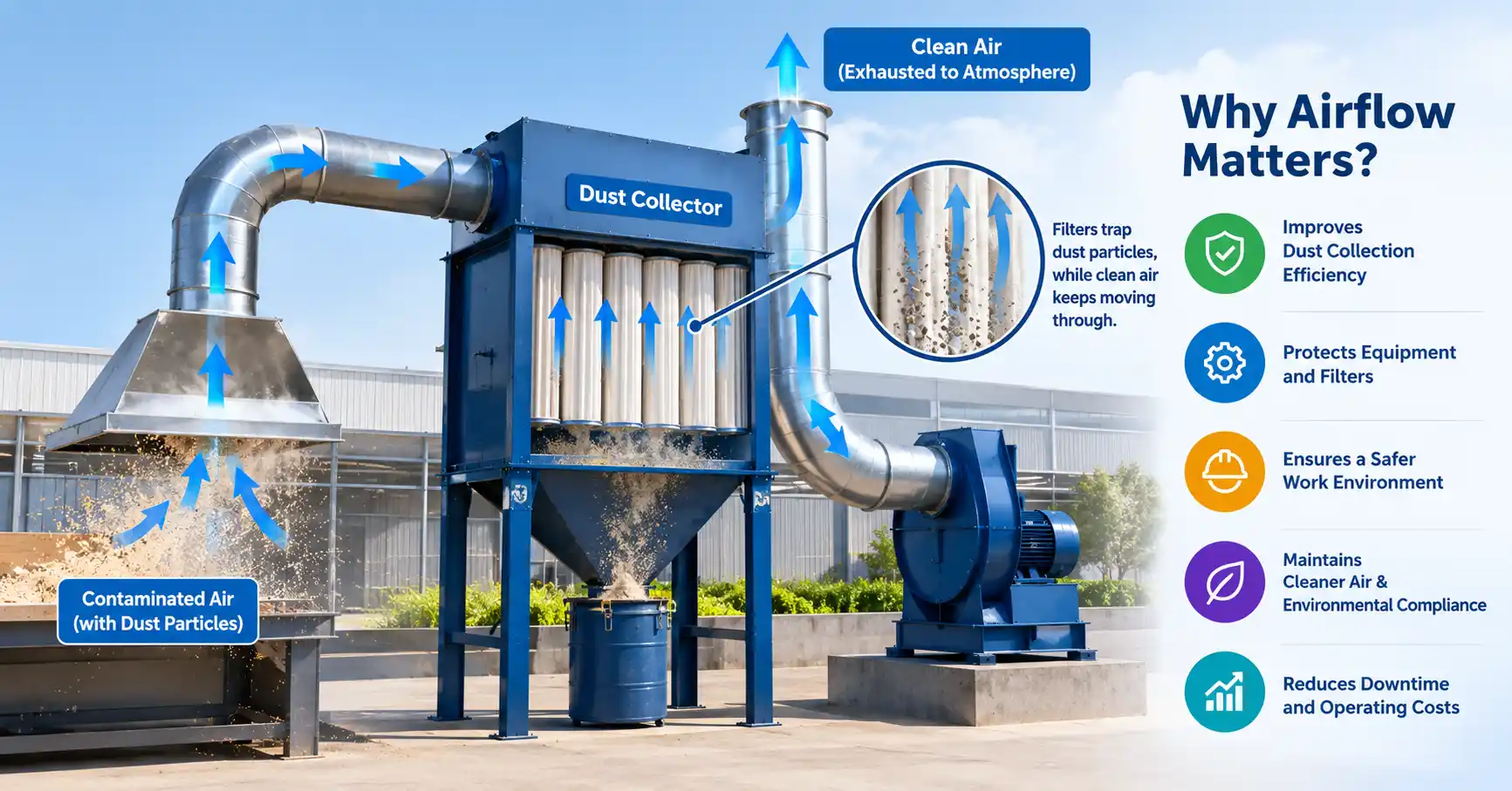
The dust collection system working principle follows a straightforward sequence: capture, transport, separation, and discharge. First, a hood captures dust near the process that generates it. The duct network carries contaminated air toward the collector, while the fan supplies the pressure needed to maintain airflow. Next, the air enters the filtration chamber. Dust particles are retained by the filter media, while the cleaned air passes through the designed outlet. The accumulated dust is removed from the filters by the cleaning mechanism and falls into a hopper or collection area. Finally, the collected material is discharged for disposal, recycling, or further processing, depending on its properties and the application. The dust collection system working principle may vary between technologies. Cartridge collectors, baghouses, cyclone separators, and wet scrubbers use different separation methods, and some installations combine multiple devices to achieve the required performance. Understanding the dust collection system working principle helps operators troubleshoot low airflow, excessive pressure drop, dust leakage, and inefficient collection.

Types of Dust Collector Filters and Their Applications

Selecting the right filter media is important because different particles require different filtration characteristics. Common types of dust collector filters include fabric bags, pleated cartridges, and specialised media designed for challenging operating conditions. Bag filters are widely used in industrial baghouses that handle substantial dust loads. Cartridge filters provide a compact filtration arrangement with a large media surface area, making them suitable for many fine-dust applications. Specialised membrane, antistatic, or high-temperature media may be required for particular processes. The choice among these types of dust collector filters depends on particle size, temperature, moisture, chemical exposure, filtration efficiency, and cleaning requirements. When comparing types of dust collector filters, consider the full operating environment rather than filtration efficiency alone. The correct selection can improve service life, airflow stability, and maintenance intervals. For application-specific guidance, manufacturers such as Automeck can be considered when researching suitable industrial dust collection equipment and filtration solutions.

Conclusion

A reliable dust collection installation depends on how well its individual parts work together. From the capture hood and ductwork to the fan, filtration media, cleaning mechanism, hopper, and control panel, every component contributes to effective dust control. Understanding dust collector system components helps businesses evaluate equipment, identify maintenance needs, and improve workplace air quality. The most suitable system should match the process, dust characteristics, required airflow, operating environment, and applicable safety requirements. With appropriate engineering, regular inspections, and correct filter selection, an industrial dust collector can support cleaner operations and dependable long-term performance.

Frequently Asked Questions

1. What are the main components of a dust collector? The main components include a capture hood, ductwork, fan, filtration unit, cleaning mechanism, dust hopper, discharge system, and control panel. 2. Which filter is commonly used in industrial dust collectors? Bag filters and cartridge filters are widely used, depending on the dust type and operating conditions. 3. What is the purpose of a dust collector fan? The fan creates the airflow and pressure needed to move dust-laden air through the collection system. 4. How often should dust collector filters be replaced? Replacement frequency depends on filter condition, dust characteristics, pressure drop, operating hours, and manufacturer recommendations. 5. Why is regular dust collector maintenance important? Routine maintenance helps maintain airflow, reduce unplanned downtime, identify leaks, and support reliable dust collection.

Stay Connected

More Updates

error: Content is protected !!