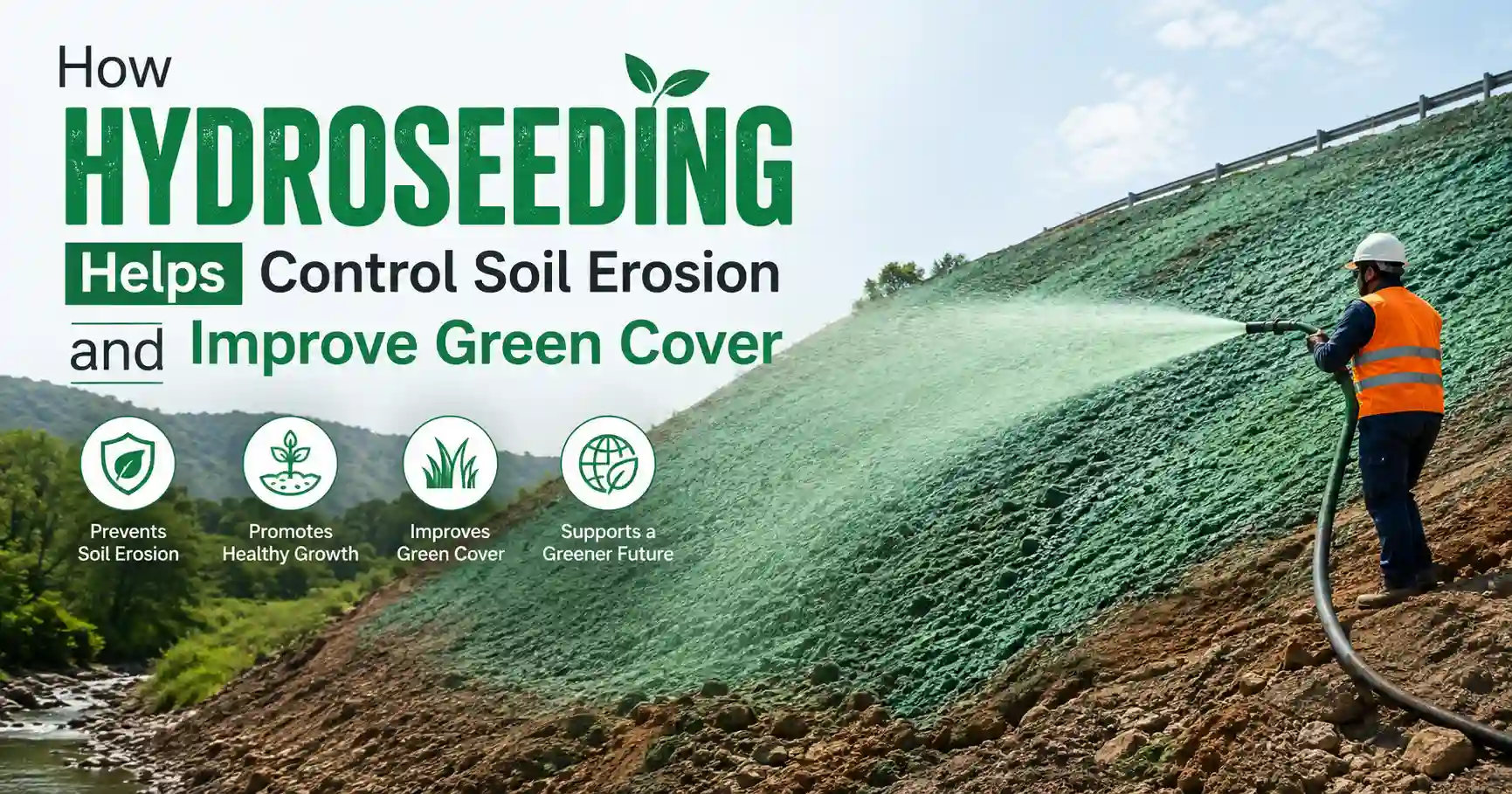
Hydroseeding is a way to establish grass and other vegetation on lawns, slopes, roadside areas, and landscape projects. But how does a hydroseeding machine work when the equipment is compact? A small unit follows the same principle as a large hydroseeder: it combines water, seed, mulch, fertilizer, and optional soil amendments into a slurry, then sprays that mixture evenly across soil.

What Is a Small Hydroseeding Machine?
A small hydroseeding machine is a tank-and-pump system used to apply a planting slurry. Instead of distributing dry seed with a broadcast spreader, the operator mixes grass seed with water, fiber mulch, starter fertilizer, tackifiers, and other suitable materials.
Inside the tank, an agitator keeps the ingredients suspended. A pump then moves the slurry through a hose and nozzle, allowing the operator to cover soil with a controlled layer.
Compact machines are useful for residential lawns, lawn renovation, gardens, embankments, sports areas, and smaller commercial projects. They are also easier to transport and maneuver than truck-mounted hydroseeders.
How Does a Hydroseeding Machine Work?
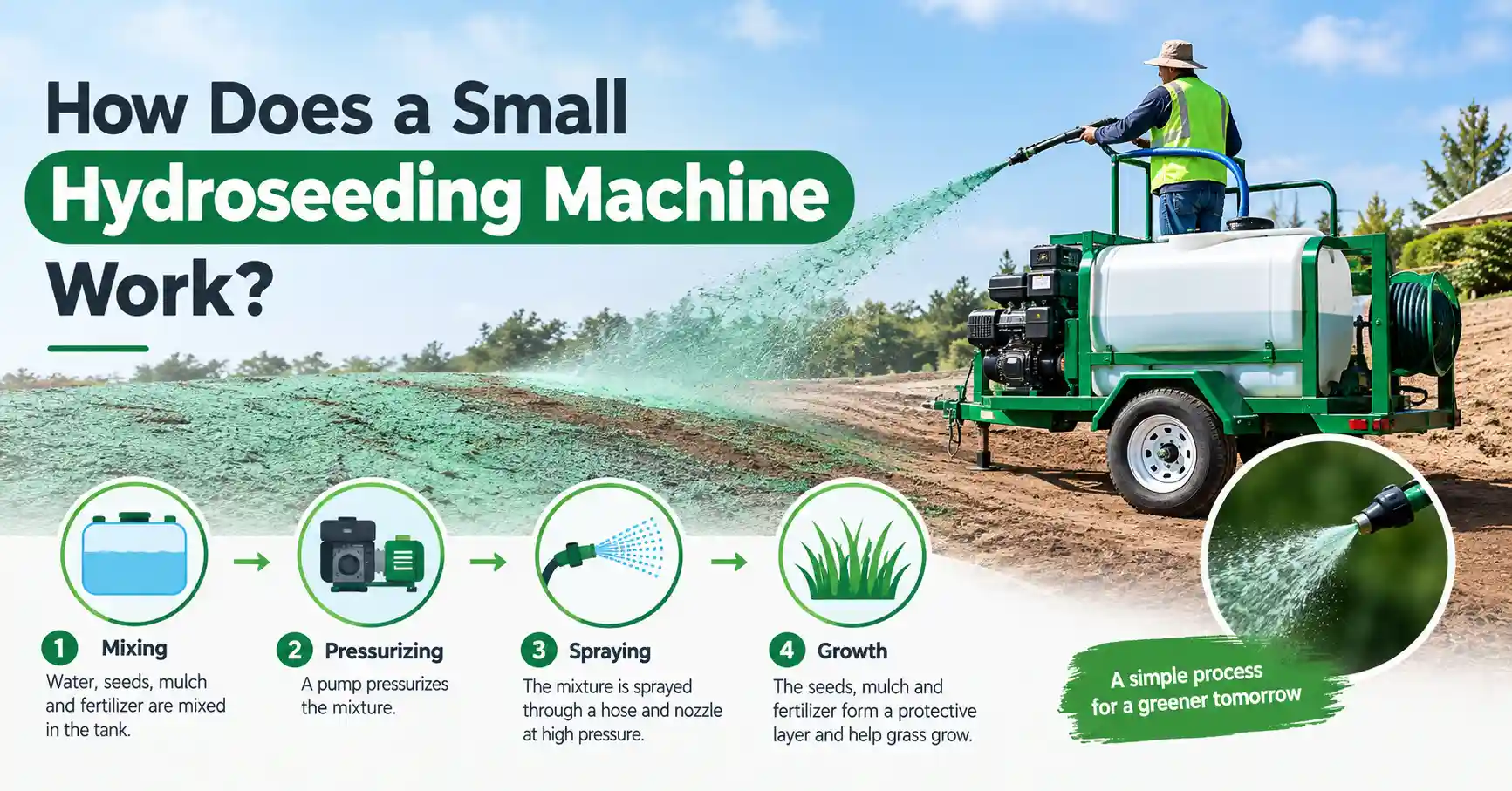
The hydroseeding machine working process is based on four actions: mixing, agitation, pumping, and spraying. First, water is added to the tank. Mulch, fertilizer, seed, and selected additives are then introduced according to the machine and material instructions.
Agitation keeps the slurry moving because fiber and seed can settle when the mixture stands still. Once the mixture reaches a workable consistency, the pump creates the flow needed to move it through the discharge system.
The operator directs the spray across soil in controlled, overlapping passes. This shows how hydroseeding works: seed is carried in a moist slurry, while mulch creates a protective layer that supports moisture retention and early establishment.
The basic cycle is straightforward. This also shows how hydroseeding works in practice:
- Fill the tank and load materials in the recommended sequence.
- Agitate the slurry until the ingredients are evenly distributed.
- Pump the mixture through the hose and nozzle.
- Spray the prepared area using consistent passes.
- Flush and clean the system after application.
How Does a Hydroseeding Machine Work Step by Step?
The hydroseeding process begins with the soil, not the machine. Good preparation, suitable seed, correct material ratios, and adequate moisture all influence the final result. The hydroseeding machine working process is most effective when each stage is planned before spraying.
Prepare the Soil
Remove debris, unwanted vegetation, and large stones. Depending on the site, the ground may need grading, loosening, topsoil improvement, or correction of compaction and drainage problems. A properly prepared seedbed gives the slurry a better surface for adhesion and seed-to-soil contact.
Select the Seed Mixture
Choose seed according to climate, sunlight, soil type, intended use, and appearance. This choice also affects how does a hydroseeding machine work in different site conditions.
Load the Tank
Add water first, then introduce mulch, fertilizer, seed, and approved additives as directed. Exact ratios vary by product and application. Avoid overloading because an excessively thick mixture can make pumping and spraying difficult.
Mix, Pump, and Spray
The agitation system blends the materials and keeps them suspended. A mixture that is too thick can increase pump strain or clogging, while an overly thin mixture may reduce mulch coverage.
The pump moves the slurry through the hose and nozzle. The operator should maintain a consistent spray pattern and overlap passes enough to avoid missed strips without creating heavy concentrations.
Water and Protect the Area
After spraying, the seedbed needs suitable moisture. Irrigation should keep the surface damp without creating runoff. Germination time depends on seed variety, temperature, moisture, and soil conditions. These factors also determine how hydroseeding works in real-world conditions.
Key Components of Hydroseeding Equipment
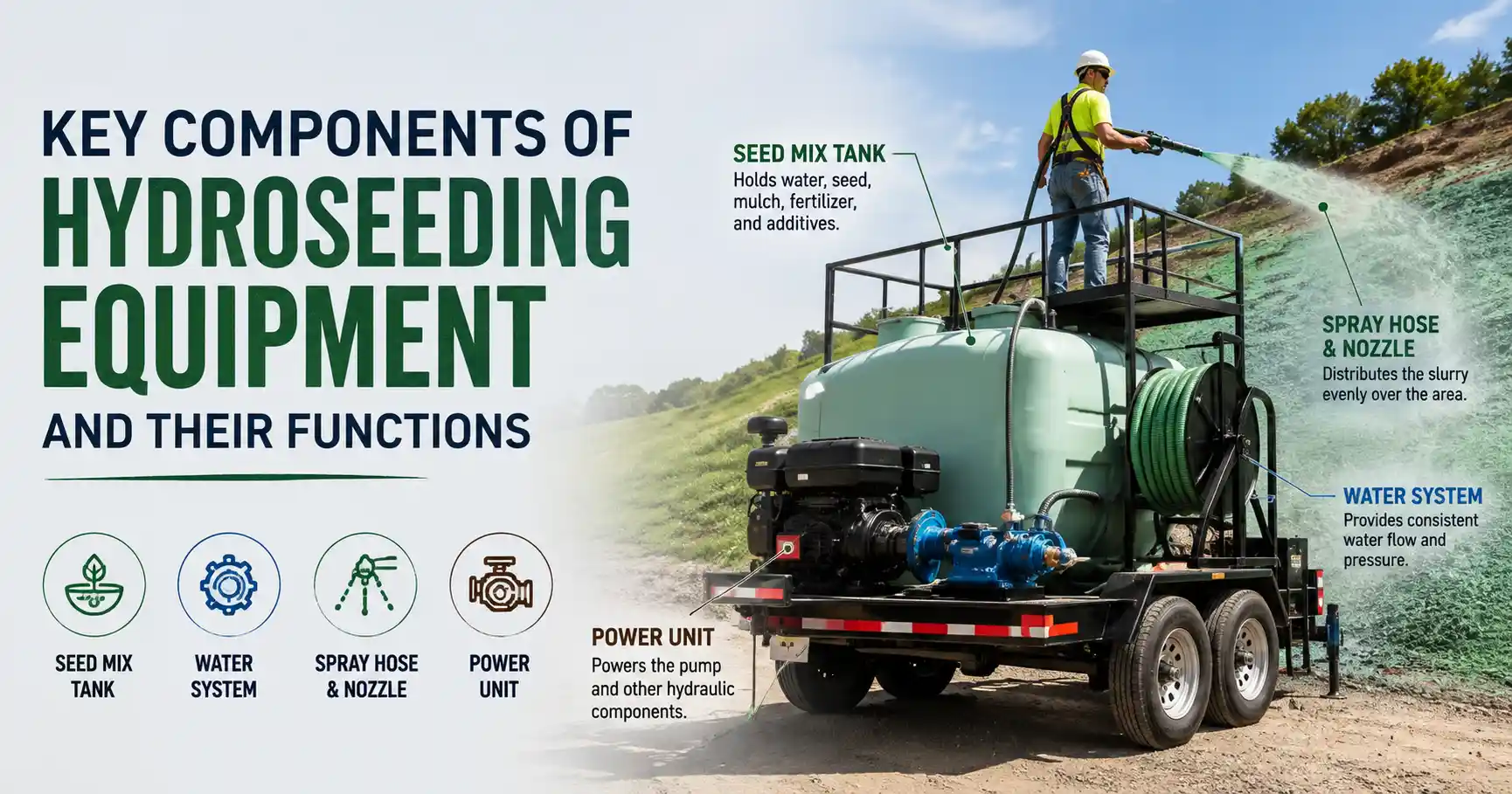
Although designs differ, most hydroseeding equipment includes a tank, agitation system, pump, discharge hose, nozzle, valves, fittings, and controls. The tank stores the slurry; the agitator keeps materials suspended; and the pump provides the flow and pressure for application.
Nozzle design affects spray pattern and coverage, while hose length influences reach and maneuverability.
When comparing machines, do not look only at tank capacity. Pump performance, agitation strength, nozzle options, cleanout access, material compatibility, build quality, and maintenance requirements can have a major effect on productivity.
What Happens Inside the Tank?
Inside the tank, water carries the other ingredients. Fiber mulch absorbs water and helps form a cohesive slurry. Seed remains distributed throughout the mixture, while fertilizer and soil amendments become part of the application.
This explains why loading and mixing technique matter. Adding materials too quickly can create clumps or make the slurry difficult to pump. Following the manufacturer’s instructions helps maintain consistent flow and reduces equipment strain.
Benefits of Compact Hydroseeding
A compact hydroseeder can provide a useful middle ground between manual seeding and high-capacity professional equipment. It can cover more ground than hand broadcasting while remaining practical for smaller crews and properties.
Key advantages include:
- More uniform seed distribution and efficient coverage.
- Mulch that supports moisture retention and helps protect seed.
- Faster application across lawns, slopes, and irregular areas.
- Easier transport and access than large truck-mounted systems.
- Flexible combinations of seed, mulch, fertilizer, and tackifier.
The hydroseeding process can be adjusted for site conditions. A standard lawn may need a lighter mulch blend, while a slope may benefit from heavier fiber coverage and an erosion-control tackifier.
Explore More: Best Dust Catcher Machine in Andhra Pradesh | Dust collector machine | Dust collector manufacturers
Where Are Small Hydroseeders Used?
A compact hydroseeder can be useful wherever wet slurry application offers an advantage over traditional broadcast seeding. Residential lawn installation is a common example, particularly when even coverage is important.
Contractors may also use compact machines for lawn renovation, roadside restoration, drainage areas, golf-course work, and erosion-prone ground.
However, hydroseeding cannot correct poor site conditions by itself. Compacted soil, poor drainage, unsuitable seed, or inadequate watering can limit germination regardless of the equipment used.
Tips for Better Hydroseeding Results
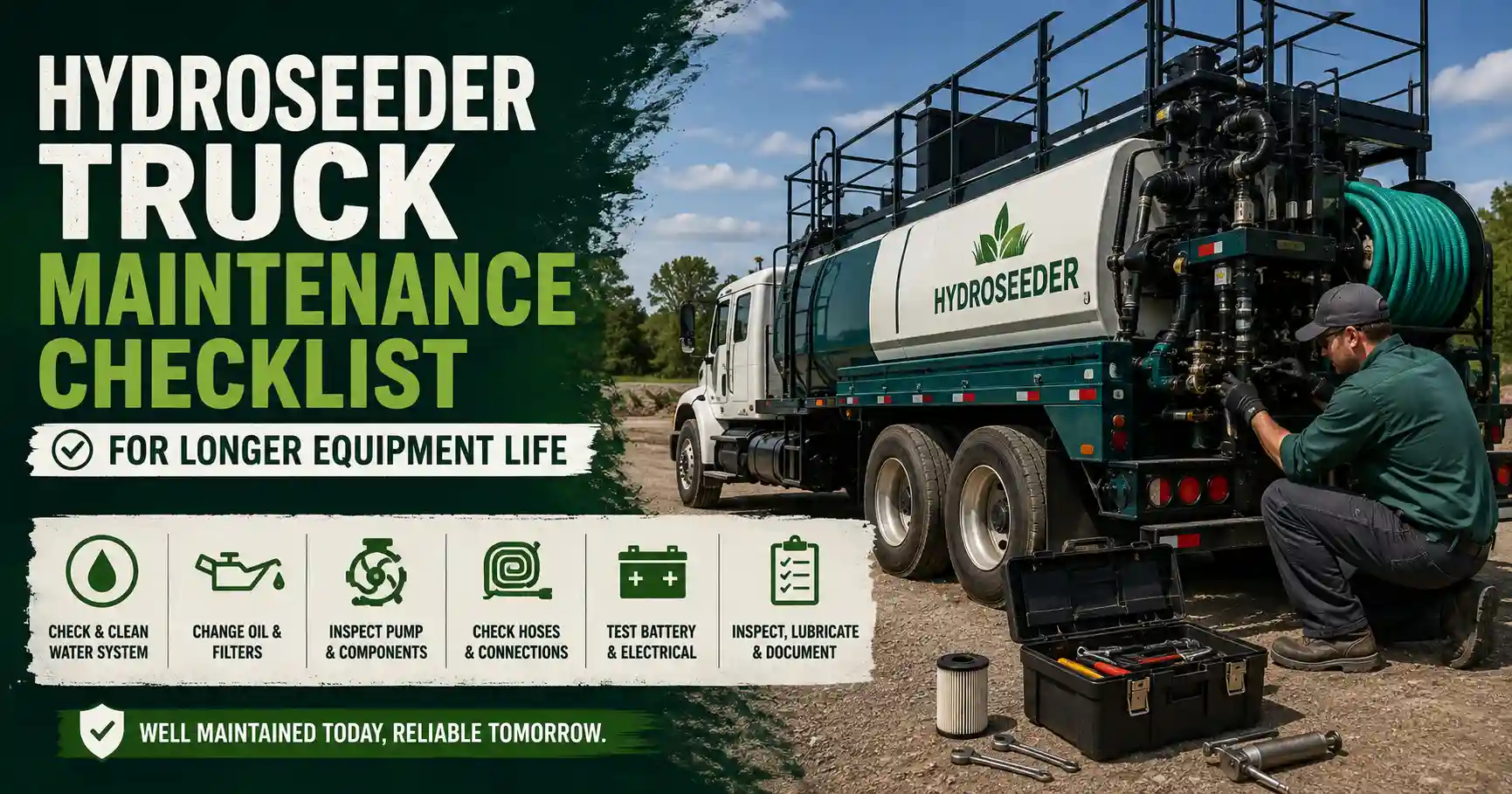
Successful application depends on both the operator and the machine. Before starting, inspect the pump, hose, fittings, nozzle, tank, and agitation system. Use clean water and follow recommended material ratios.
Avoid application during conditions that can cause rapid drying or runoff. Maintain a consistent spray distance and work systematically across the site.
Afterward, clean the system promptly because dried mulch and seed can harden inside hoses, pumps, valves, and nozzles.
How to Choose the Right Machine
Choose equipment based on the size and type of work you expect to perform. A residential contractor may prioritize portability and simple controls, while a landscaping company may need greater capacity and stronger pumping performance.
Consider tank size, pump type, agitation method, spray reach, hose configuration, material compatibility, cleanout requirements, spare-part availability, and operating costs. Understanding how does a hydroseeding machine work can help you compare these specifications realistically. These factors can reveal how the hydroseeding machine working process will perform on your typical jobs.
A compact model from Automeck can be compared with other options, but the decision should rest on specifications and operating value.
Final Thoughts
So, how does a hydroseeding machine work? It mixes water, seed, mulch, fertilizer, and optional additives into a pumpable slurry, keeps the mixture suspended through agitation, and distributes it over prepared soil through a pressurized spray system. A compact unit uses the same core principle as larger hydroseeders while offering easier transport and access for smaller jobs.
Understanding the equipment, mixing sequence, spray technique, and aftercare can help prevent common problems such as clogging, uneven coverage, runoff, and poor seed establishment. With proper soil preparation, a suitable seed blend, consistent watering, and routine maintenance, hydroseeding can be an efficient method for establishing vegetation.
Frequently Asked Questions
1. How does a hydroseeding machine work on slopes?
It sprays a seed-and-mulch slurry that can adhere to prepared soil, while mulch and tackifiers help reduce movement and erosion.
2. Can compact hydroseeding equipment be used for home lawns?
Yes. Compact units are suitable for residential lawns, repairs, landscaping projects, and other smaller areas.
3. What materials go into a hydroseeder?
Common materials include water, grass seed, fiber mulch, fertilizer, and optional tackifiers or soil amendments.
4. How often should a hydroseeder be cleaned?
Clean the tank, pump, hose, and nozzle after every application to reduce dried material and clogging.
5. Is hydroseeding better than traditional seeding?
It can provide efficient, even coverage and better moisture retention, but results still depend on preparation, seed selection, and watering.