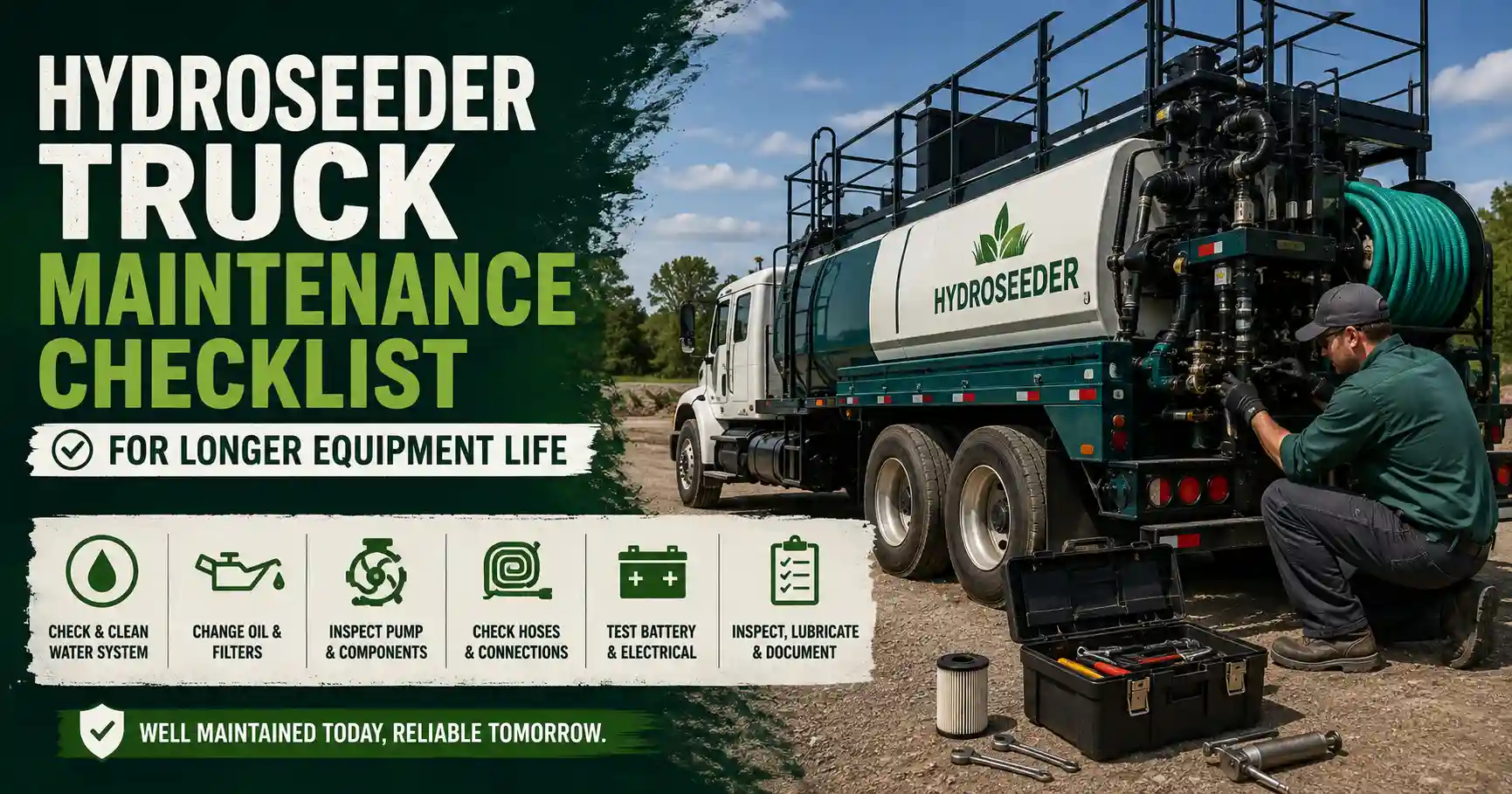
A well-maintained hydroseeder truck delivers consistent performance, minimizes unexpected breakdowns, and helps contractors complete projects on time. Whether you’re handling erosion control, roadside revegetation, or large-scale landscaping, following a Hydroseeder Truck Maintenance Checklist is one of the most effective ways to protect your investment. Regular maintenance not only extends equipment life but also improves spraying efficiency, reduces repair costs, and ensures reliable operation in demanding job site conditions.
This guide covers essential inspection points, preventive maintenance practices, and expert recommendations that every operator should follow to keep a hydroseeder truck in peak working condition.

Why Regular Hydroseeder Truck Maintenance Matters
A hydroseeder truck operates under challenging conditions. Pumps, hoses, tanks, agitators, hydraulic systems, and spray nozzles work together while handling abrasive mulch, seed mixtures, fertilizers, and water. Without proper care, wear and tear can quickly affect performance.
Routine Hydroseeder truck maintenance helps identify minor issues before they become expensive repairs. It also improves equipment reliability, reduces downtime, and increases productivity across every project.
Preventive maintenance offers several long-term benefits:
- Extends the service life of critical components such as pumps, hydraulic motors, valves, and spray systems.
- Improves fuel efficiency, minimizes equipment downtime, and maintains consistent slurry application quality.
Daily Hydroseeder Truck Maintenance Checklist
A daily inspection ensures the equipment is ready before every shift. Following a structured Hydroseeder Truck Maintenance Checklist reduces the chances of operational failures in the field.
Start by inspecting the water tank for cracks, leaks, or loose fittings. Check fluid levels, including engine oil, coolant, hydraulic oil, and fuel. Examine all hoses for cuts, bulges, or loose clamps that may lead to leaks under pressure.
Inspect the spray gun, nozzles, and discharge lines to ensure there are no blockages caused by dried mulch or seed residue. Verify that the agitator rotates smoothly and the pump operates without unusual vibration or noise.
A quick walk-around also helps identify damaged lights, worn tires, loose fasteners, or visible corrosion that could affect safety or performance.
Weekly Hydroseeder Truck Maintenance Checklist
In addition to daily inspections, a more detailed Hydroseeder Truck Maintenance Checklist should be completed every week.
Clean the tank thoroughly after the final job of the week to prevent hardened slurry buildup. Flush the entire spraying system with clean water to remove leftover mulch, fertilizer, and seed materials.
Inspect hydraulic hoses and fittings for early signs of wear. Lubricate bearings, hinges, moving joints, and rotating components according to manufacturer recommendations. Check belt tension, battery terminals, and electrical wiring connections for damage or corrosion.
Review pressure gauges and control valves to confirm they are functioning correctly before the next project begins.
Essential Hydroseeder Equipment Maintenance Practices
Consistent Hydroseeder equipment maintenance improves overall machine efficiency while preventing avoidable component failures.
The pump is one of the most important parts of the system. Regularly inspect seals, bearings, impellers, and housing for excessive wear. Replace damaged seals immediately to prevent leaks that could reduce spraying pressure.
The hydraulic system also requires attention. Monitor oil quality and replace filters at recommended service intervals. Dirty hydraulic oil accelerates wear inside pumps and motors, leading to costly repairs.
Tank cleaning is equally important. Residual mulch and fertilizer can harden over time, reducing tank capacity and increasing cleaning effort. Thorough washing after each use keeps the tank clean and prevents material contamination.
These Hydroseeder equipment maintenance practices help maintain optimal performance throughout the equipment’s service life.
Hydroseeder Truck Inspection Checklist Before Every Job
Every operator should complete a simple Hydroseeder truck inspection checklist before heading to the worksite. A few minutes of inspection can prevent hours of downtime later.
Check the following items before starting work:
- Engine oil, coolant, hydraulic fluid, fuel level, battery condition, tire pressure, hoses, spray nozzles, valves, pump operation, agitator performance, safety equipment, warning lights, and emergency shut-off controls.
- Verify tank cleanliness, inspect fittings for leaks, confirm pressure gauge accuracy, examine hose connections, and ensure all tools and spare parts are securely stored.
Following a consistent Hydroseeder truck inspection checklist helps improve workplace safety while reducing unexpected equipment failures.
Explore More : Hydroseeder Machine in Tamil Nadu | Buy hydroseeder machine in nagpur | Dust catcher machines
Hydroseeder Maintenance Tips for Longer Equipment Life
Experienced operators understand that small maintenance habits make a significant difference over time. These practical Hydroseeder maintenance tips help maximize equipment lifespan.
Always flush the tank, hoses, and pump immediately after every spraying job. Allowing slurry to dry inside the system creates blockages that reduce efficiency.
Store the truck in a covered area whenever possible. Protection from sunlight, rain, and freezing temperatures helps preserve hoses, seals, electrical components, and painted surfaces.
Use only recommended lubricants, hydraulic fluids, and replacement parts specified by the equipment manufacturer. Low-quality products may shorten component life and reduce overall performance.
Finally, maintain a detailed maintenance log. Recording inspections, repairs, filter replacements, and fluid changes makes it easier to schedule preventive service and identify recurring issues.
Applying these Hydroseeder maintenance tips consistently reduces maintenance costs while improving equipment reliability.
How to Maintain a Hydroseeder Truck Throughout the Year
Many contractors ask How to maintain a hydroseeder truck across changing seasons. The answer lies in combining daily inspections with scheduled preventive maintenance.
During peak operating seasons, inspect pumps, hoses, hydraulic systems, and spray equipment more frequently because heavy workloads accelerate wear. Replace worn nozzles promptly to maintain uniform slurry distribution.
In colder climates, winterization becomes essential. Completely drain water from tanks, pumps, and hoses before storage to prevent freezing damage. Use appropriate antifreeze products where recommended and disconnect the battery if the truck will remain unused for extended periods.
Understanding How to maintain a hydroseeder truck throughout the year ensures dependable operation regardless of workload or weather conditions.
Common Maintenance Mistakes to Avoid
Even experienced operators occasionally overlook simple maintenance tasks that eventually lead to expensive repairs.
Some common mistakes include delaying oil changes, ignoring small hydraulic leaks, skipping tank cleaning, operating with clogged spray nozzles, and neglecting regular lubrication. Failing to inspect belts, filters, and hose connections can also result in unexpected downtime during critical projects.
Creating a preventive maintenance schedule and assigning inspection responsibilities helps eliminate these avoidable issues. Companies like Automeck also emphasize routine servicing as a practical way to improve equipment longevity and operational efficiency.
Conclusion
A consistent Hydroseeder Truck Maintenance Checklist is one of the smartest investments any contractor can make. Routine inspections, proper cleaning, timely lubrication, hydraulic system care, and preventive servicing all contribute to longer equipment life, fewer breakdowns, and more reliable job site performance. By following a structured maintenance routine throughout the year, operators can reduce repair costs, improve productivity, and keep their hydroseeder truck performing at its best for years to come.
Frequently Asked Questions
1. How often should a hydroseeder truck be serviced?
A basic inspection should be performed daily, while comprehensive servicing should follow the manufacturer’s recommended maintenance intervals.
2. Why is cleaning the hydroseeder tank after every job important?
Cleaning prevents slurry buildup, reduces blockages, and keeps the spraying system operating efficiently.
3. What components wear out the fastest on a hydroseeder truck?
Pumps, hoses, spray nozzles, seals, filters, and hydraulic components typically experience the most wear.
4. Can preventive maintenance reduce repair costs?
Yes. Regular inspections and timely servicing help identify small problems before they become major repairs.
5. What is the most important step for extending hydroseeder truck life?
Following a consistent maintenance schedule that includes cleaning, lubrication, inspections, and fluid replacement is the most effective way to maximize equipment lifespan.