Choosing the right hydroseeder machine is essential for achieving efficient grass establishment, controlling soil erosion, and completing landscaping projects on time. Whether you are working on highway slopes, residential lawns, commercial landscapes, mining sites, or large construction areas, the right equipment can make a significant difference in productivity and application quality. However, with different tank capacities, engine options, pumping systems, and operating features available, selecting the right model can be challenging. Understanding your project requirements before purchasing will help you invest in equipment that delivers reliable performance and long-term value.
What Is a Hydroseeder Machine and How Does It Work?
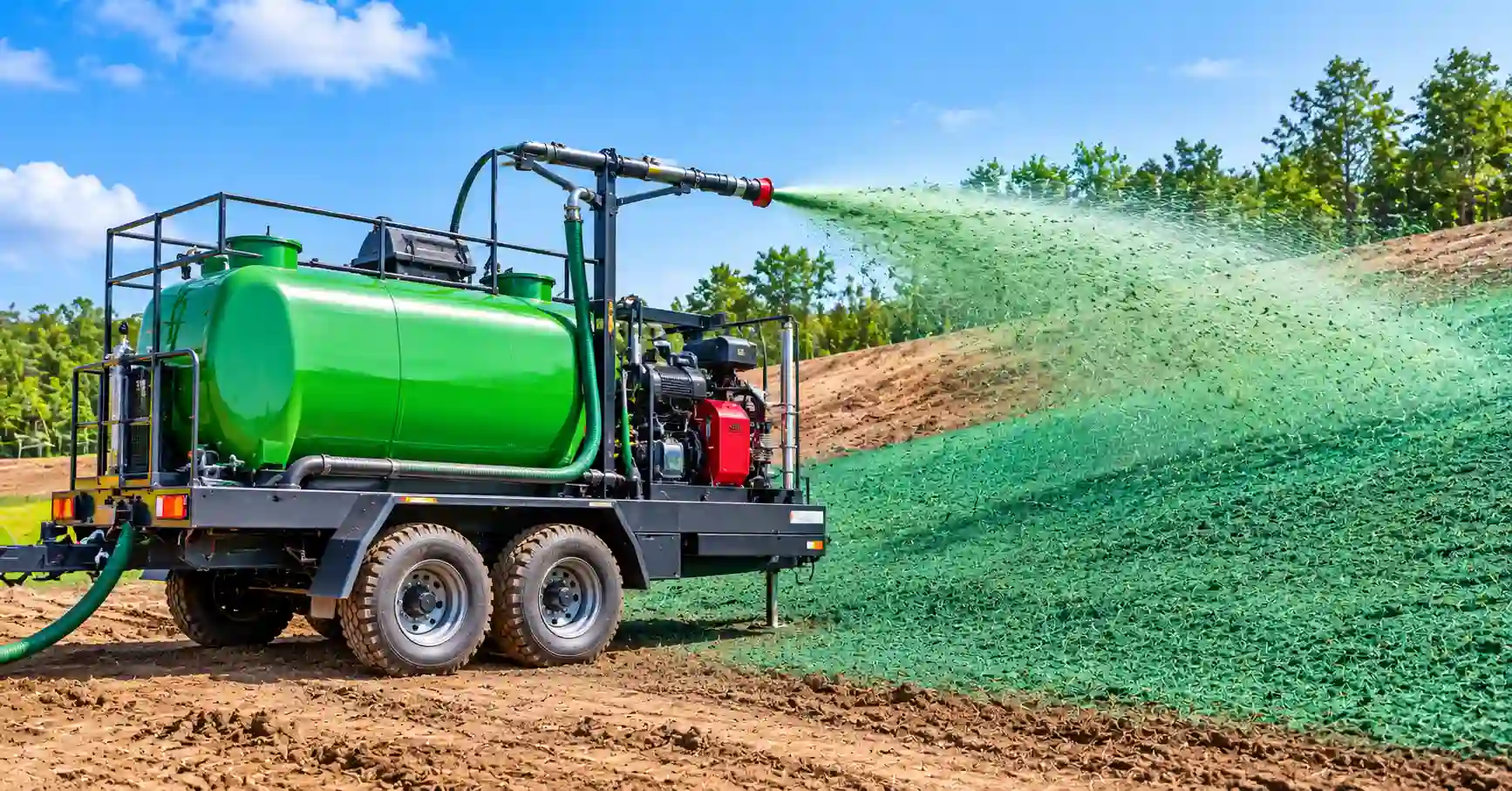
A hydroseeder is specialised landscaping equipment that applies a mixture of water, grass seed, mulch, fertiliser, and soil amendments over prepared ground. This process is known as hydroseeding and is commonly used for turf establishment, vegetation restoration, and erosion control.
The equipment combines the selected materials inside a mixing tank to create a consistent slurry. A mechanical agitation system keeps the mixture suspended before a pump transfers it through a hose or spray cannon onto the target surface.
Unlike traditional hand seeding, hydroseeding allows operators to cover larger areas with a relatively uniform application. The mulch helps retain moisture around the seeds, while fertiliser and soil conditioners support early plant development.
Modern hydroseeding equipment is used across several industries, including landscaping, road construction, infrastructure development, agriculture, and environmental restoration. The right model depends on the application, terrain, coverage requirements, and materials being used.
How to Choose a Hydroseeder Machine for Your Project?
Before comparing different models, understand the actual demands of your project. A machine suitable for a small residential lawn may not provide the capacity or pumping performance required for a highway landscaping contract.
Here are the major factors to evaluate before making a purchase.
1. Understand Your Project Size and Coverage Requirements
The first consideration is the total area you need to cover. Small landscaping projects generally require less slurry per application, whereas large commercial and infrastructure projects demand higher production capacity.
For residential lawns, gardens, and small green spaces, compact equipment may be sufficient. Medium-sized landscaping contracts may require a larger tank and more powerful pumping system. Large-scale erosion control and highway projects generally benefit from high-capacity equipment designed for continuous operation.
Estimate the total coverage area, application rate, number of working hours, and expected daily output. These details will help narrow down the available models.
2. Check the Hydroseeder Machine Capacity
Tank size directly influences how much slurry can be prepared and applied in one batch. Understanding hydroseeder machine capacity is important because it affects refilling frequency, transportation, and daily productivity.
Smaller tanks are generally easier to transport and manoeuvre, making them suitable for residential and restricted-access projects. Larger tanks reduce the number of refilling cycles and can improve efficiency on extensive sites.
However, bigger is not always better. A large tank requires an appropriate towing vehicle or truck chassis, sufficient working space, and a suitable water supply.
When comparing hydroseeder machine capacity, consider the usable working volume rather than relying only on the advertised tank size. Also check the manufacturer’s recommended slurry loading limits and material compatibility.
3. Evaluate the Pumping System and Engine Performance
The pump is one of the most important components of any hydroseeding system. It determines how effectively the slurry moves through the hoses and spray equipment.
Look for a pumping system that can handle the type of mulch and mixture required for your application. Consider discharge pressure, flow rate, hose diameter, spray distance, and the ability to handle fibrous materials.
Engine performance is equally important. A reliable power source supports consistent mixing and pumping, particularly during extended working hours.
Check the availability of replacement parts, maintenance support, fuel consumption, and service requirements before choosing a model.
4. Consider Mixing and Agitation Technology
Uniform slurry preparation is essential for achieving consistent seed distribution. If mulch, seed, and fertiliser are not properly mixed, the application may become uneven.
A quality agitation system helps prevent material settling and maintains a consistent mixture throughout the spraying process.
Depending on the machine design, agitation may be mechanical, hydraulic, or a combination of systems. Choose equipment with an effective mixing arrangement that suits the mulch type and slurry formulation you intend to use.
5. Select Equipment According to Your Application
Different projects require different hydroseeding configurations. Residential lawn installation, roadside vegetation, steep slopes, and large-scale reclamation projects do not have identical requirements.
For example, a small landscaping contractor may prioritise portability and easy operation. A construction company working on erosion control may require higher pumping output, greater hose reach, and a larger tank.
Matching the machine to the application prevents unnecessary investment in features you may not use.
Important Features to Look for in Hydroseeding Equipment
When comparing different models, do not focus only on tank size or purchase price. The overall design, operating convenience, safety, and maintenance requirements also influence equipment performance.
Good-quality hydroseeding equipment should be designed for dependable mixing, smooth slurry circulation, and consistent material application.
Pay attention to the following features:
- Durable tank construction: Look for corrosion-resistant materials, suitable internal finishes, and a design that can withstand regular use.
- Efficient agitation system: Check whether the mixing mechanism can maintain a consistent slurry without frequent blockages or material settling.
- Convenient hose and spray controls: Easy-to-operate discharge controls, suitable hose connections, and a practical spray cannon improve application flexibility.
- Safety and maintenance access: Accessible service points, emergency controls, protective guards, and straightforward cleaning procedures make daily operation easier.
Also consider transportability, towing requirements, operator visibility, and compatibility with the seed and mulch products you plan to use.
Should You Buy a Small or Commercial Hydroseeder?
The decision between compact and larger equipment depends mainly on workload, project frequency, and business requirements.
A compact model is suitable for contractors handling smaller landscaping jobs, residential gardens, and limited green spaces. These machines are generally easier to transport and may require less initial investment.
A commercial hydroseeder is designed for businesses that regularly handle larger projects. It generally offers greater tank capacity, higher production potential, and features intended for demanding applications.
For example, companies working on highway embankments, industrial landscaping, mining rehabilitation, and large construction sites may benefit from higher-capacity equipment.
However, purchasing a large machine without sufficient project demand can increase operating and ownership costs. Evaluate your expected workload before deciding.
If you are exploring a commercial hydroseeder, compare its maximum working capacity, pump specifications, engine power, mixing system, and suitability for your typical job sites.
Explore More: Hydroseeding Machine in Chhattisgarh | dust suppression system in India | multi utility vehicle in Odisha
New vs Used Hydroseeder: Which Is Better?
A new machine offers the advantage of manufacturer support, warranty coverage, and access to current specifications. It can be a suitable choice for businesses planning regular operations and wanting predictable maintenance support.
A used machine may reduce the initial investment, but its condition needs careful inspection. Check the tank for corrosion, inspect the pump and agitation system, and examine hoses, valves, engine components, and electrical connections.
If you are searching for a hydroseeder machine for sale, request a demonstration before making the purchase. Observe the mixing process, slurry discharge, and overall operating condition.
Also ask about service records, spare parts availability, previous usage, and warranty terms. Compare the total ownership cost rather than considering the purchase price alone.
Understand Your Budget and Long-Term Operating Costs
The purchase price is only one part of equipment ownership. Fuel, water supply, seeds, mulch, fertiliser, transportation, labour, and maintenance contribute to the overall project cost.
Before finalising a purchase, calculate the estimated cost per application and the number of projects required to recover your investment.
Businesses with regular contracts may find higher-capacity equipment more economical over time, while occasional users may prefer a smaller or hired unit.
It is also worth checking the manufacturer’s service network and availability of consumables. Reliable after-sales support can reduce downtime and help maintain consistent project schedules.
When comparing a hydroseeder machine for sale, consider whether the quoted price includes accessories, delivery, operator training, and initial servicing. These details can make a considerable difference to the actual investment.
For businesses evaluating suitable machinery and equipment solutions, Automeck is a brand worth considering when researching available options and discussing project-specific requirements.
Common Mistakes to Avoid When Choosing a Hydroseeder
Many buyers make equipment decisions based mainly on price or advertised tank capacity. This can lead to operational difficulties later.
Avoid selecting a machine without calculating the expected coverage area and slurry application requirements. Similarly, do not ignore pump compatibility, transport limitations, cleaning procedures, or maintenance access.
Another common mistake is overlooking operator training. Even a well-designed machine requires correct mixing ratios, suitable material selection, and proper application techniques.
Always follow the manufacturer’s operating instructions and use seed, mulch, and fertiliser combinations appropriate for the soil, climate, and project conditions.
Conclusion
Selecting suitable equipment requires a clear understanding of your project size, application requirements, operating conditions, and available budget. Pay attention to tank capacity, pump performance, agitation technology, durability, and after-sales support before making your decision.
The right hydroseeder machine should match your current workload while providing enough flexibility for future projects. By comparing specifications carefully and evaluating long-term operating costs, you can make a practical investment that supports efficient landscaping, reliable vegetation establishment, and effective erosion control.
Frequently Asked Questions
1. What size hydroseeder do I need for my project?
Choose the tank size according to your project area, slurry application rate, and required daily coverage.
2. What is the main purpose of a hydroseeder?
It applies a mixture of water, seeds, mulch, and fertiliser to establish vegetation and help control soil erosion.
3. Is a commercial hydroseeder suitable for small projects?
It can be used, but compact equipment may be more economical for smaller and occasional jobs.
4. What maintenance does a hydroseeder require?
Regular cleaning, pump inspection, engine servicing, hose checks, and agitation system maintenance are essential.
5. What should I check before buying a hydroseeder?
Check tank capacity, pump performance, engine specifications, mixing technology, warranty, spare parts, and service support.