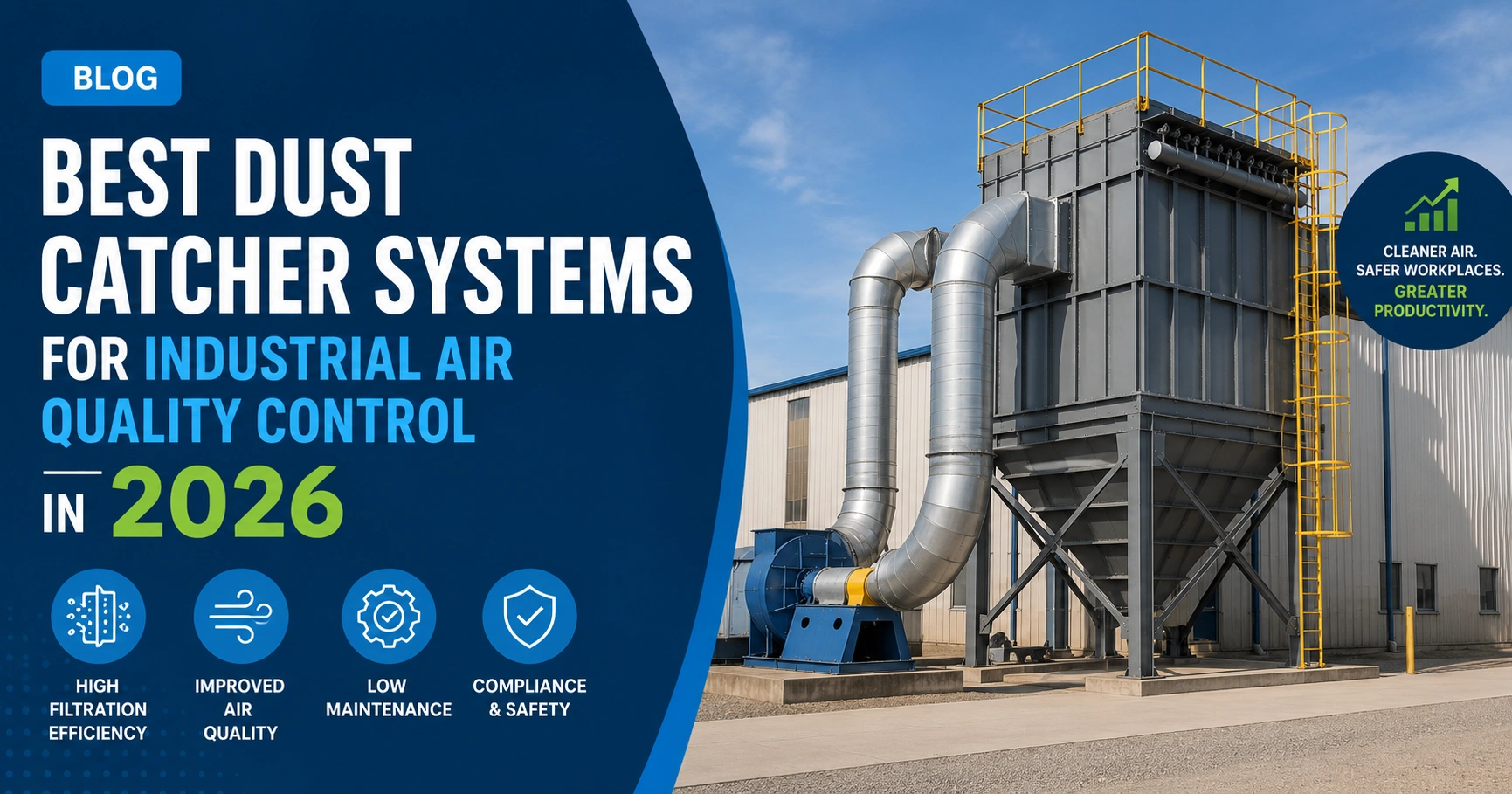
Industrial workplaces generate a large amount of dust, smoke, and airborne particles every day. From manufacturing plants and warehouses to metal processing units and woodworking factories, maintaining clean air has become one of the biggest priorities in 2026. A reliable dust Catcher system not only improves workplace safety but also helps businesses maintain productivity, protect machinery, and follow environmental standards.
With industries growing rapidly, companies are now investing in advanced air cleaning solutions that provide better performance, lower maintenance, and energy-efficient operation. Choosing the right dust Catcher can make a major difference in industrial air quality and worker health.
In this blog, we will discuss the best systems available for industrial air quality control, their benefits, features, and how businesses can choose the right solution for their facility.

Why Industrial Air Quality Control Matters
Factories and industrial units release harmful particles into the air during production activities. Dust from cement, wood, metal, chemicals, food processing, and textiles can affect both employees and equipment. Poor air quality can lead to respiratory issues, machine breakdowns, fire hazards, and reduced productivity.
A modern industrial dust collector helps remove fine dust particles before they spread through the workplace. Businesses are now using advanced solutions such as smart sensors, automated cleaning filters, and high-capacity airflow systems to maintain cleaner environments.
In India, industrial safety standards are becoming stricter, making air quality systems an important investment for factories and manufacturing units.
What is a Dust Catcher System?
A dust Catcher is a specialized system designed to capture and remove dust particles from industrial environments. These systems collect airborne contaminants through filters, suction units, and airflow management technologies.
Modern systems are integrated with advanced air filtration system technology to improve efficiency and reduce energy consumption. Depending on the industry, different systems may be used for smoke, fumes, powders, or heavy industrial dust.
These systems are widely used in:
- Manufacturing plants
- Cement industries
- Metal workshops
- Pharmaceutical factories
- Food processing units
- Textile industries
- Woodworking industries
Types of Dust Catcher Systems in 2026
1. Baghouse Dust Collectors
Baghouse systems are among the most popular solutions for large-scale industrial operations. They use fabric filter bags to capture dust particles from the air.
Benefits include:
- High dust collection efficiency
- Suitable for heavy industrial applications
- Long filter life
- Effective for continuous operation
Many industries prefer this type of industrial dust collector because it handles high dust volumes efficiently.
2. Cartridge Dust Collectors
Cartridge collectors are compact and highly effective for fine particles. They use pleated filter cartridges that provide a larger filtration surface area.
Advantages include:
- Space-saving design
- Easy maintenance
- Better filtration performance
- Lower energy consumption
This type of dust extraction system is commonly used in laser cutting, welding, and pharmaceutical industries.
3. Cyclone Dust Collectors
Cyclone systems separate dust using centrifugal force. They are ideal for collecting large and heavy particles.
Key features:
- Low maintenance
- Durable design
- Efficient pre-filtering solution
- Suitable for high-temperature applications
Factories looking for cost-effective factory dust control systems often choose cyclone collectors.
4. Wet Scrubbers
Wet scrubbers use liquid to remove pollutants from the air. These systems are highly effective for handling sticky, explosive, or chemical dust particles.
Benefits include:
- Controls hazardous particles
- Reduces fire risks
- Effective for fumes and gases
- Suitable for chemical industries
This type of industrial air cleaner is widely used where dry filtration may not be suitable.
Features to Look for in a Dust Catcher System
Choosing the right system depends on the type of industry, dust load, and workspace size. Here are important features to consider in 2026:
High Filtration Efficiency
Modern systems should include an advanced air filtration system technology capable of capturing even microscopic particles.
Energy Efficiency
Energy-saving motors and automated cleaning systems help reduce operational costs.
Smart Monitoring
Many advanced systems now come with digital monitoring for airflow, filter condition, and maintenance alerts.
Easy Maintenance
A good dust extraction system should allow quick filter replacement and minimal downtime.
Compliance with Safety Standards
Industrial facilities must ensure that their factory dust control systems meet environmental and workplace safety regulations
Benefits of Using Advanced Dust Catcher Systems
Improved Worker Safety
Clean air reduces respiratory problems and improves overall workplace conditions.
Better Equipment Performance
Dust buildup can damage machinery and reduce operational efficiency. A reliable industrial dust collector protects valuable equipment.
Reduced Maintenance Costs
Proper dust management lowers repair and cleaning expenses.
Increased Productivity
Workers perform better in clean and safe environments.
Environmental Compliance
Modern industrial air cleaner systems help businesses meet pollution control requirements and industry standards.
Industries That Need Dust Catcher Systems
Many industries now rely heavily on advanced technology to maintain air quality.
Metal Processing
Grinding, cutting, and welding generate harmful airborne particles that require efficient dust extraction system support.
Woodworking
Wood dust can create fire hazards and health risks without proper factory dust control measures.
Cement Industry
Cement plants produce heavy dust levels that demand large-capacity industrial dust collector systems.
Food Processing
Food manufacturing facilities need hygienic air filtration system solutions to maintain product quality.
Pharmaceutical Industry
Clean air is critical in pharmaceutical manufacturing to maintain contamination-free environments.
Why Businesses in India are Upgrading Air Quality Systems
In India, industrial sectors are rapidly modernizing their infrastructure. Companies are focusing more on employee safety, energy efficiency, and pollution reduction.
Advanced dust Catcher systems are now being installed in both small and large manufacturing units. Government regulations and growing awareness about workplace safety are encouraging industries to adopt modern industrial air cleaner technologies.
Many factories in India are also choosing automated systems that reduce maintenance costs and improve operational efficiency.
Explore More: dust catcher in Kolkata | dust catcher in Mumbai | dust catcher machine in Hyderabad
Choosing the Right Dust Catcher Provider
When selecting a system provider, businesses should look for:
- Industry experience
- Customized solutions
- Strong after-sales support
- Energy-efficient technology
- Quality certifications
Companies like Automeck provide advanced air quality and industrial dust management solutions for various industries. Businesses prefer trusted brands like us because of their focus on durability, performance, and modern filtration technology.
Before purchasing, always compare airflow capacity, filtration efficiency, maintenance requirements, and installation support.
Future Trends in Industrial Air Quality Control
The future of systems is becoming smarter and more energy efficient. Some major trends in 2026 include:
- AI-based monitoring systems
- IoT-enabled filter management
- Energy-saving filtration units
- Compact modular systems
- Eco-friendly filtration materials
Modern air filtration system technology is helping industries improve sustainability while maintaining better air quality standards.
As industries continue to expand in India, advanced factory dust control systems will become essential for safe and efficient operations.
Conclusion
A high-quality system is no longer optional for industrial facilities in 2026. It plays a major role in protecting workers, improving machine performance, reducing pollution, and maintaining compliance with safety standards.
Whether you need a compact dust extraction system or a large-scale industrial dust collector, choosing the right solution can improve long-term operational efficiency. Modern industrial air cleaner technology is helping businesses create cleaner and safer work environments while reducing overall maintenance costs.
Companies like Automeck continue to provide reliable solutions for industries looking to improve air quality and workplace safety. Investing in the right air filtration system today can help industries achieve better productivity and sustainable growth in the future.th
Frequently Asked Questions
1. Which industries benefit most from industrial air cleaner systems?
Industries like pharmaceuticals, food processing, metal fabrication, cement plants, and woodworking units benefit greatly from industrial air cleaner systems for cleaner and safer workplaces.
2. Can factory dust control systems reduce cleaning and maintenance costs?
Yes, effective factory dust control systems help reduce dust buildup on machinery and floors, lowering cleaning efforts and maintenance expenses.
3. What factors should be considered before choosing a dust Catcher system?
Businesses should check airflow capacity, filtration efficiency, maintenance requirements, energy consumption, and industry-specific dust handling needs before selecting a dust Catcher.
4. Can a dust extraction system help improve worker productivity?
Yes, a proper dust extraction system creates a cleaner work environment, improves air quality, and helps employees work more comfortably and efficiently.
5. Why are industries in India upgrading industrial dust collector systems in 2026?
Industries in India are upgrading industrial dust collector systems to improve workplace safety, reduce pollution, meet environmental regulations, and increase operational efficiency.