Vehicles travelling through construction sites, mining areas, manufacturing plants, and infrastructure projects often collect mud, dust, clay, and debris on their tyres. When these vehicles enter public roads, they can spread dirt, create slippery surfaces, and contribute to environmental pollution. An automatic wheel wash system helps prevent this problem by cleaning vehicle tyres and undercarriages before they leave a site. Using strategically positioned water jets, sensors, pumps, and drainage arrangements, the system removes accumulated dirt with minimal manual intervention. Understanding how this technology works can help businesses maintain cleaner premises, improve site safety, and meet environmental requirements.

What Is an Automatic Wheel Wash System?
An automatic wheel wash system is a specialised vehicle-cleaning installation designed to remove mud, soil, dust, and other contaminants from vehicle tyres and undercarriages. It is commonly installed at the exit points of construction sites, mines, industrial facilities, and large infrastructure projects.
Unlike conventional manual washing, this equipment uses automated controls and high-pressure water jets to clean vehicles as they pass through a designated washing platform.
The main purpose is to prevent contaminated vehicles from carrying mud and debris onto public roads. Depending on the design, the system can clean different types of vehicles, including trucks, dumpers, trailers, cement mixers, and heavy construction equipment.
A modern automatic vehicle washing arrangement can also include water collection tanks, sedimentation chambers, filtration units, and water recycling facilities to reduce freshwater consumption.
How Does an Automatic Wheel Wash System Work?
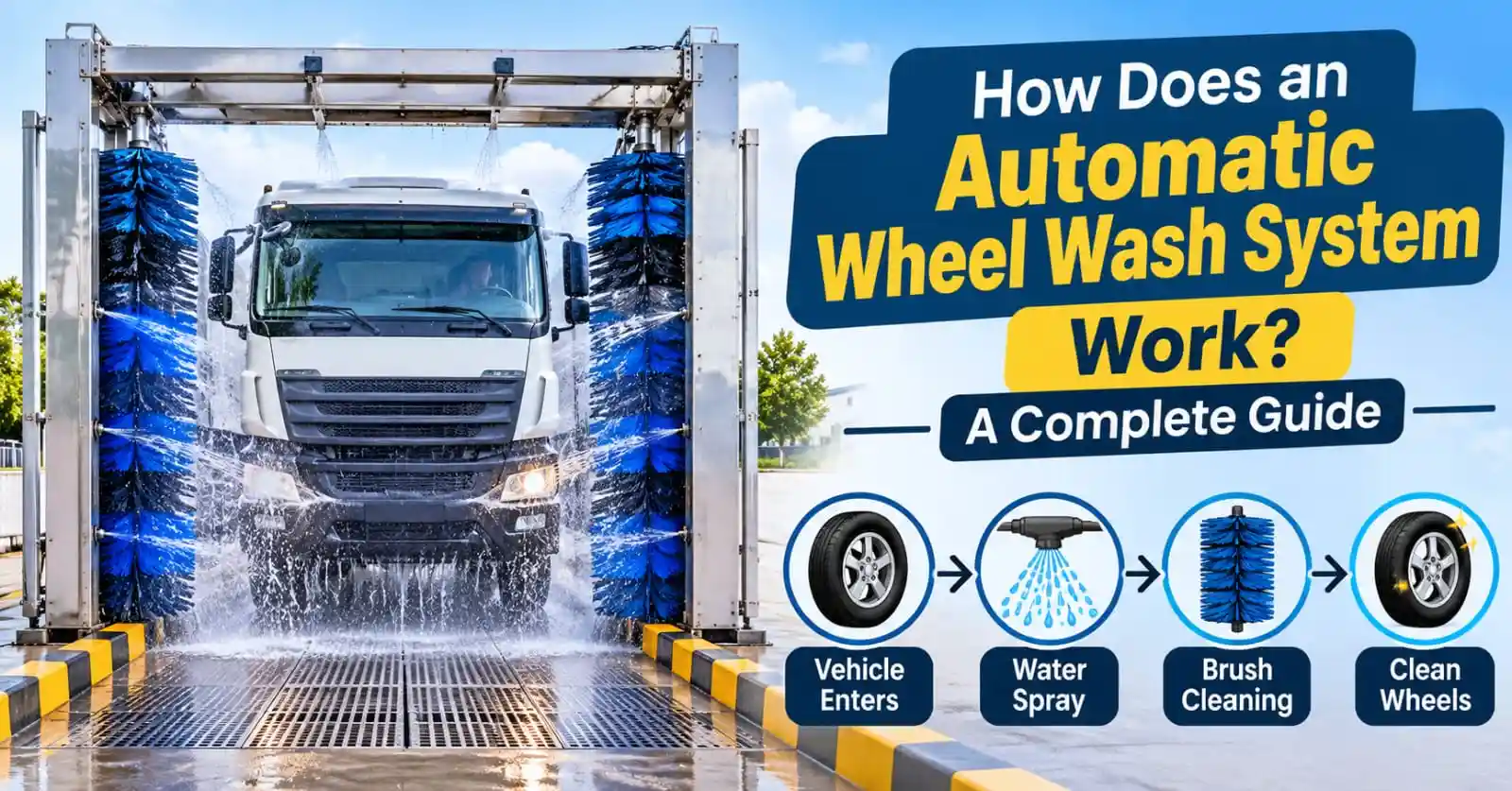
Understanding how does an automatic wheel wash system work requires looking at the complete washing cycle, from vehicle detection to water recycling.
The process is generally automated, allowing vehicles to enter, undergo cleaning, and exit without requiring workers to wash each tyre manually.
1. Vehicle Detection Through Sensors
The washing process begins when a vehicle approaches the designated washing platform. Sensors installed near the entry point detect the vehicle and activate the system.
Depending on the equipment configuration, infrared sensors, proximity sensors, or other vehicle detection mechanisms may be used.
Once the vehicle is detected, the control panel activates the water pumps and prepares the spray nozzles for operation. This ensures that water is supplied when a vehicle enters the washing area rather than continuously flowing when the platform is empty.
2. Water Pumps Generate the Required Pressure
After detecting the vehicle, the system activates powerful water pumps that supply water to strategically positioned spray nozzles.
These pumps generate sufficient pressure to remove accumulated mud, clay, loose soil, and dust from tyres and wheel assemblies.
The required water pressure depends on the vehicle type, level of contamination, nozzle arrangement, and equipment specifications.
3. High-Pressure Water Jets Clean the Tyres
As the vehicle moves onto the washing platform, strategically positioned nozzles spray water onto the tyres from different directions.
Side-mounted nozzles target the tyre surfaces, while floor-mounted spray arrangements clean the lower sections of the wheels.
This multi-directional spraying action helps remove stubborn dirt from tyre grooves, wheel arches, and other hard-to-reach areas.
Some advanced systems also incorporate underbody washing nozzles to clean the vehicle chassis and lower frame.
4. Mud and Contaminated Water Are Collected
The washing process removes dirt from the vehicle, but the contaminated water must also be managed properly.
Water containing mud, sand, and other solid particles flows into collection channels or a designated drainage system.
It is then directed towards sedimentation tanks, where heavier particles settle at the bottom. Additional filtration stages may remove finer suspended solids before the water is reused.
5. Water Recycling and Reuse
Many modern installations incorporate water recycling arrangements to reduce operating costs and freshwater consumption.
After sedimentation and filtration, the recovered water is stored in a collection tank and supplied back to the washing system.
The amount of water that can be reused depends on the filtration technology, contamination levels, and maintenance practices.
This closed-loop approach can make the washing operation more resource-efficient while reducing wastewater discharge.
Major Components of an Automatic Wheel Wash System
A well-designed automatic wheel washing system consists of several interconnected components that work together to provide effective vehicle cleaning.
Washing Platform
The washing platform is the area where vehicles pass during the cleaning cycle. It is generally manufactured using durable materials capable of supporting heavy vehicle loads.
Its structure must provide adequate strength, stability, drainage, and traction to ensure safe vehicle movement.
High-Pressure Water Pumps
Water pumps supply the pressure required for effective cleaning. Their capacity and configuration are selected according to the expected vehicle category, washing requirements, and number of vehicles handled per hour.
Spray Nozzles
Spray nozzles distribute water across different sections of the vehicle’s tyres and undercarriage. Their positioning, spray angle, and flow rate directly influence cleaning performance.
Sensors and Control Panel
Sensors identify approaching vehicles, while the control panel manages the automatic washing sequence.
Depending on the configuration, operators may be able to adjust washing duration, pump operation, and system settings through the control interface.
Water Collection and Filtration Unit
The drainage arrangement collects contaminated water, while sedimentation tanks and filtration equipment separate dirt and suspended particles.
These components help maintain water quality and support recycling.
Types of Automatic Wheel Washing Systems
Different industries have different vehicle-cleaning requirements. Therefore, washing equipment is available in multiple configurations.
A truck wheel wash system is commonly designed for heavy commercial vehicles, including dump trucks, trailers, tipper trucks, and construction transport vehicles.
An industrial wheel wash system may be customised for manufacturing plants, warehouses, mining facilities, cement factories, and other locations where vehicles frequently encounter dust and loose materials.
Some installations use drive-through platforms, while others use controlled washing bays where vehicles remain stationary during the cleaning cycle.
The selection depends on vehicle dimensions, traffic volume, available installation space, contamination levels, and the required cleaning performance.
Explore More: Multi utility vehicle in Odisha | Dust suppression system in India | Hydroseeder in Tamil Nadu
Benefits of Installing an Automatic Wheel Wash System
Installing an automatic wheel wash system offers several practical advantages for businesses that operate heavy vehicles and industrial transportation fleets.
The most important benefits include:
- Cleaner public roads: Prevents vehicles from carrying excessive mud, soil, and debris outside industrial premises.
- Improved workplace safety: Reduces the spread of loose dirt around entrances and nearby roads, helping minimise certain slip and road-safety hazards.
- Reduced manual labour: Automates much of the washing process and decreases dependence on manual tyre cleaning.
- Water conservation: Recycling arrangements can reduce freshwater requirements when properly designed and maintained.
- Better site management: Supports cleaner working environments and more organised vehicle movement.
In addition to these advantages, automated cleaning can help businesses maintain consistent washing procedures, particularly at sites with frequent heavy vehicle movement.
Where Is an Automatic Vehicle Wheel Wash System Used?
An automatic vehicle wheel wash system is useful wherever vehicles move between contaminated industrial environments and public roads or cleaner operational areas.
Construction companies commonly install these systems at project exits to remove mud from trucks and earthmoving equipment.
Mining operations use them to manage soil and mineral residue carried by transport vehicles. Cement plants and manufacturing facilities may use specialised washing installations to control dust and material accumulation.
Infrastructure projects, demolition sites, waste management facilities, and large industrial campuses can also benefit from automated wheel cleaning.
For example, a construction site operating multiple dump trucks throughout the day can use automated washing equipment to establish a consistent cleaning process before vehicles enter public traffic.
The equipment can also be integrated into site access management systems to improve vehicle movement and operational efficiency.
How to Choose the Right Automatic Wheel Wash System
Choosing suitable equipment requires evaluating the site’s operational conditions rather than selecting a model based only on price.
Start by identifying the types of vehicles that will use the washing platform. Heavy dump trucks require different structural and cleaning specifications compared with smaller commercial vehicles.
Next, evaluate daily vehicle traffic. A high-volume facility may need a system with greater washing capacity and a suitable cycle time to prevent vehicle queues.
Consider water availability, drainage infrastructure, sediment handling, and recycling requirements. The installation area should also provide sufficient space for vehicle entry, washing, and exit.
Before purchasing, review these important factors:
- Maximum vehicle weight and dimensions.
- Pump capacity, nozzle arrangement, and washing efficiency.
- Water storage, drainage, and recycling facilities.
- Platform strength and corrosion-resistant construction.
- Maintenance requirements, technical support, and spare-part availability.
Discussing these requirements with an experienced equipment supplier can help identify a configuration that suits your site.
For businesses evaluating automated vehicle-cleaning solutions, Automeck is a brand worth considering when exploring suitable equipment and system requirements.
Maintenance Tips for Long-Term Performance
Regular maintenance is essential for keeping the washing equipment reliable and effective.
Inspect spray nozzles frequently to identify blockages caused by sediment or mineral deposits. Check pump performance, water pressure, electrical connections, sensors, and control panels at scheduled intervals.
Sedimentation tanks should be cleaned regularly to prevent excessive mud accumulation. Filters also require periodic inspection and replacement or cleaning according to manufacturer recommendations.
It is equally important to inspect the washing platform, drainage channels, and structural supports for damage or corrosion.
Following a preventive maintenance schedule helps reduce unexpected breakdowns, maintain cleaning performance, and extend equipment service life.
Conclusion
Keeping industrial sites and public roads clean is an important responsibility for construction companies, mining operations, and manufacturing facilities. Automated vehicle cleaning provides a practical way to remove accumulated mud, soil, and debris before vehicles leave a worksite.
An automatic wheel wash system combines vehicle detection, water pumps, spray nozzles, drainage, and filtration technology to deliver an organised and efficient cleaning process. By selecting equipment according to vehicle capacity, site conditions, and water management requirements, businesses can improve cleanliness, support safer operations, and reduce manual washing efforts.
Frequently Asked Questions
1. What is the main purpose of an automatic wheel wash system?
It removes mud, dirt, and debris from vehicle tyres before they enter public roads.
2. How does an automatic wheel wash system detect vehicles?
It typically uses infrared, proximity, or other vehicle detection sensors to activate the washing cycle.
3. Does an automatic wheel wash system recycle water?
Yes. Many systems use sedimentation tanks and filtration units to recover and reuse water.
4. Which vehicles can use a wheel washing system?
Depending on its design, it can clean trucks, dumpers, trailers, cement mixers, and heavy construction vehicles.
5. How often should a wheel wash system be maintained?
Nozzle, pump, filter, and drainage inspections should follow a regular preventive maintenance schedule based on usage and manufacturer guidelines.