Industrial facilities often generate large amounts of dust, smoke, fumes, and airborne particles during manufacturing and processing activities. These contaminants can affect employee health, damage machinery, reduce product quality, and create unsafe working conditions. Installing an industrial dust collection system is an effective way to manage these challenges and maintain a cleaner production environment. From improving indoor air quality to protecting valuable equipment, proper dust management offers several long-term advantages. But why is investing in an efficient dust collection solution so important for modern industries? Let’s explore its major benefits.

What Is an Industrial Dust Collection System?
An industrial dust collection system is an air filtration arrangement designed to capture, separate, and remove airborne dust and particulate matter generated during industrial operations. It prevents harmful contaminants from spreading throughout the workplace by collecting them at their source or through strategically positioned extraction points.
These systems are commonly used in industries such as woodworking, pharmaceuticals, cement manufacturing, metal fabrication, food processing, chemicals, and automotive production.
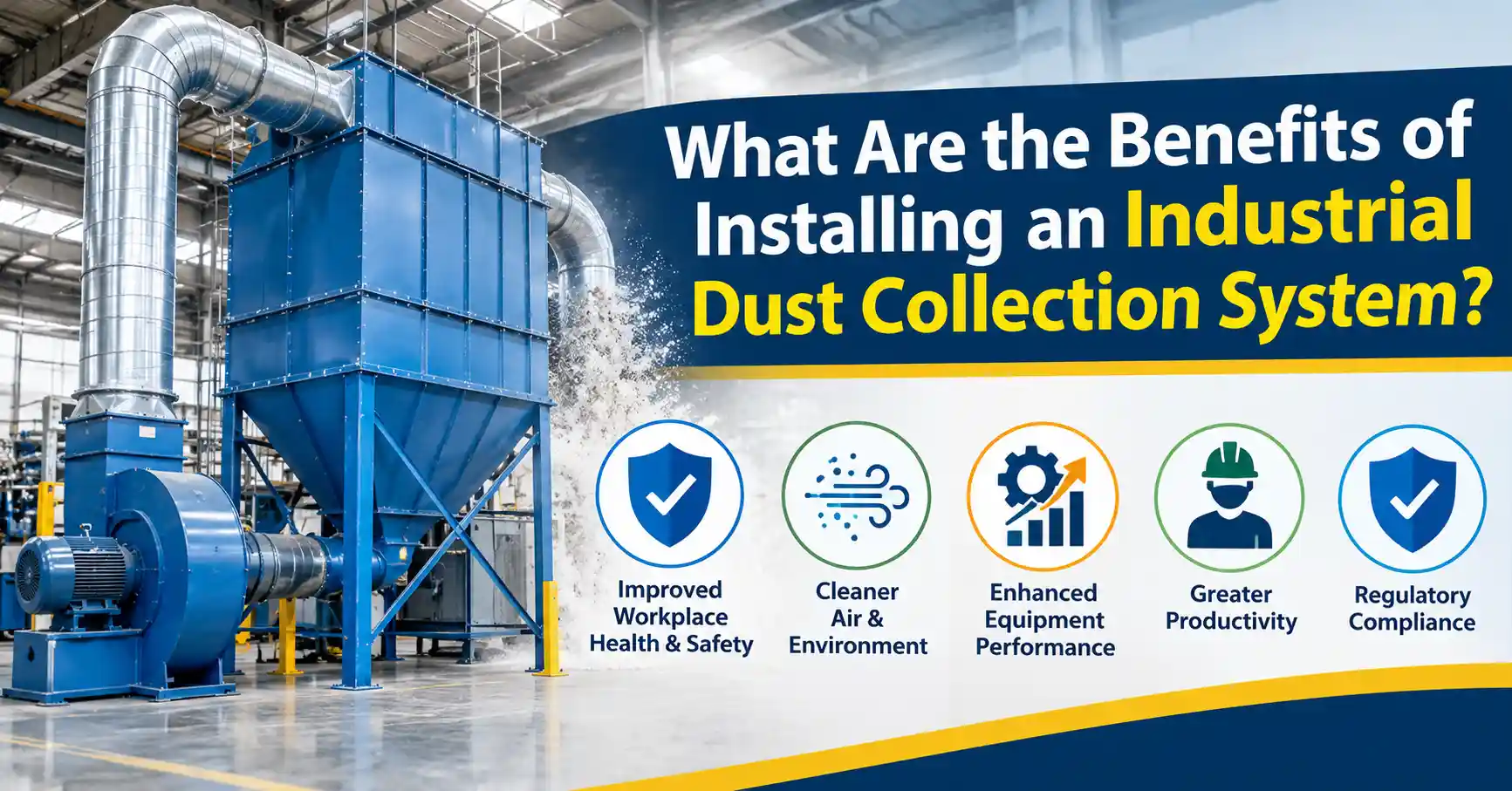
A typical setup consists of a dust hood, ductwork, an air-moving fan, a filtration unit, and a dust disposal mechanism. Depending on the application, manufacturers may use cartridge collectors, baghouse filters, cyclone separators, or wet scrubbers.
The system draws contaminated air through the ductwork, separates dust particles using appropriate filtration technology, and releases cleaned air according to the system design and applicable environmental requirements.
7 Major Industrial Dust Collection System Benefits
Understanding the industrial dust collection system benefits helps business owners make informed decisions about workplace safety, production efficiency, and long-term operational costs. Here are seven important advantages.
1. Improves Indoor Air Quality
One of the biggest advantages of installing a dust collection unit is improved air quality inside industrial facilities.
Manufacturing processes such as grinding, cutting, sanding, drilling, and material handling release fine particles into the atmosphere. When these particles remain suspended in the air, employees may inhale them throughout their working hours.
An effective extraction system captures airborne contaminants before they spread across the facility. High-efficiency filters can remove particles of different sizes, depending on their specifications and the application.
Cleaner air creates a healthier working environment and helps reduce unnecessary exposure to industrial dust. This is particularly important in facilities where employees work close to dust-generating machinery.
2. Protects Employee Health and Workplace Safety
Continuous exposure to industrial dust can contribute to respiratory irritation, occupational asthma, and other serious health problems. Certain materials, including silica, wood dust, and metal particles, may present additional health risks.
The benefits of dust collection systems extend beyond general cleanliness because they help control employee exposure to potentially hazardous airborne substances.
By capturing contaminants at their source, businesses can reduce the amount of dust circulating in production areas. This supports workplace hygiene practices and occupational health and safety programmes.
However, dust extraction should form part of a wider safety strategy that includes suitable personal protective equipment, exposure monitoring, ventilation, and employee training.
3. Increases Machinery Life and Reduces Maintenance
Industrial dust does not only affect people; it can also damage expensive machinery and production equipment.
Fine particles may enter motors, bearings, electrical panels, cooling systems, and other sensitive components. Over time, accumulated dust can cause overheating, increased friction, blockages, and premature equipment failure.
Installing an efficient industrial dust collection system helps prevent excessive dust accumulation around machinery and reduces the risk of contamination.
This can lower maintenance requirements, minimise unexpected breakdowns, and extend the useful life of equipment. As a result, manufacturers can protect their capital investment while maintaining more consistent production operations.
4. Improves Production Efficiency and Product Quality
Dust accumulation can interfere with manufacturing processes and affect the quality of finished products. In industries such as pharmaceuticals, food processing, electronics, and precision engineering, even small amounts of unwanted contamination can create significant problems.
An effective collection setup removes unwanted particles from critical production areas, helping maintain cleaner workstations and controlled manufacturing conditions.
For example, woodworking facilities can reduce airborne sawdust around cutting equipment, while metal fabrication units can manage grinding dust and other process-generated particles.
A properly designed dust collection system for manufacturing also supports smoother workflows by reducing the time employees spend cleaning production areas and dealing with dust-related interruptions.
5. Reduces Fire and Explosion Hazards
Certain industrial dust types can create serious fire and explosion risks under specific conditions. Combustible materials such as wood dust, flour, sugar, aluminium, and other fine metal particles may ignite when dispersed in the air at suitable concentrations and exposed to an ignition source.
Dust accumulation can also create additional hazards around machinery, electrical equipment, and production areas.
A properly engineered collection system helps control combustible dust by capturing it before dangerous accumulations develop.
However, ordinary filtration alone does not eliminate explosion risks. Facilities handling combustible dust should conduct a proper hazard assessment and incorporate suitable explosion protection, isolation, grounding, bonding, and fire prevention measures in accordance with applicable standards.
6. Supports Environmental Compliance
Industrial facilities must manage emissions and workplace contaminants responsibly. Poor dust management can lead to excessive particulate emissions, employee exposure concerns, and potential regulatory issues.
Modern industrial dust control solutions help businesses manage airborne pollutants through appropriate filtration, ventilation, and dust disposal arrangements.
Depending on the industry and location, facilities may need to follow environmental requirements, occupational exposure limits, and applicable pollution control guidelines.
An appropriately selected filtration system can help reduce particulate emissions and demonstrate a commitment to responsible industrial operations.
Businesses should also ensure that collected dust is handled, transported, and disposed of according to the properties of the material and relevant environmental regulations.
7. Creates a Cleaner and More Productive Workplace
A dusty production environment can affect employee comfort, workplace organisation, and overall productivity. Dust settling on floors, workstations, tools, and equipment increases cleaning requirements and can make routine operations more difficult.
The benefits of dust collection systems include maintaining cleaner work areas and supporting better housekeeping practices.
When dust is captured efficiently, employees can spend less time cleaning accumulated particles and more time focusing on their assigned responsibilities.
A cleaner facility also creates a better impression during customer visits, quality inspections, and operational audits. It demonstrates that the business takes workplace hygiene and production standards seriously.
How to Choose the Right Industrial Dust Extraction System
Selecting suitable equipment requires more than comparing filter sizes or motor capacities. Every industrial process generates different types and quantities of dust, so the collection system must be designed around actual operating conditions.
An industrial dust extraction system should be selected after evaluating the following factors:
- Dust characteristics: Identify particle size, material type, moisture content, temperature, and whether the dust is combustible or hazardous.
- Airflow requirements: Calculate the required air volume and capture velocity for each extraction point.
- Filtration efficiency: Select suitable filter media based on particle size, operating conditions, and required air quality.
- System layout: Consider duct diameter, pipe length, bends, extraction hoods, and the location of dust-generating machinery.
- Maintenance requirements: Check filter replacement intervals, cleaning mechanisms, dust disposal arrangements, and accessibility.
- Safety and compliance: Evaluate applicable occupational safety, environmental, and combustible dust protection requirements.
For example, a woodworking unit may require a system designed to handle wood chips and fine sawdust, whereas a cement plant may need heavy-duty filtration capable of managing high dust loads.
An experienced manufacturer or system integrator can assess these requirements and recommend suitable equipment for the facility.
Explore More: Hydroseeder machine in hyderabad | Multi utility vehicle in Odisha | Dust suppression system in India
Why Should Industries Invest in Modern Dust Collection Technology?
Industrial operations are becoming increasingly focused on employee well-being, environmental responsibility, and production efficiency. Modern collection technology helps businesses address these priorities through improved filtration performance, automated cleaning mechanisms, and application-specific system designs.
When evaluating industrial dust control solutions, businesses should consider the total cost of ownership rather than focusing only on the initial purchase price.
A well-designed installation can offer long-term value through reduced maintenance, improved equipment reliability, better housekeeping, and more consistent production conditions.
Companies exploring reliable industrial air filtration and dust management equipment can also enquire with Automeck to understand suitable solutions for their specific operational requirements.
Conclusion
Maintaining a clean and safe industrial environment is essential for sustainable manufacturing operations. From protecting employee health and machinery to improving product quality and controlling fire hazards, effective dust management offers advantages across multiple areas of a business.
Investing in an industrial dust collection system is therefore not just an equipment upgrade; it is a practical step towards safer working conditions, improved operational performance, and responsible industrial practices.
The key is to select a solution that matches your production process, dust characteristics, airflow requirements, and safety standards. With proper system design, installation, and maintenance, industries can create cleaner facilities and achieve more reliable long-term performance.
Frequently Asked Questions
1. What is the main purpose of an industrial dust collection system?
Its main purpose is to capture and remove airborne dust and particulate matter from industrial workplaces.
2. Which industries need dust collection systems?
Woodworking, cement, pharmaceuticals, metal fabrication, food processing, chemicals, and automotive industries commonly use them.
3. How does dust collection improve employee safety?
It reduces airborne dust exposure, helping create a cleaner and healthier working environment.
4. Which type of dust collector is best for manufacturing?
Cartridge collectors, baghouse filters, and cyclone separators are common options. The right choice depends on the dust characteristics and process requirements.
5. How often should an industrial dust collector be maintained?
Maintenance frequency depends on operating hours, dust loading, filter type, and manufacturer recommendations. Regular inspections are essential.