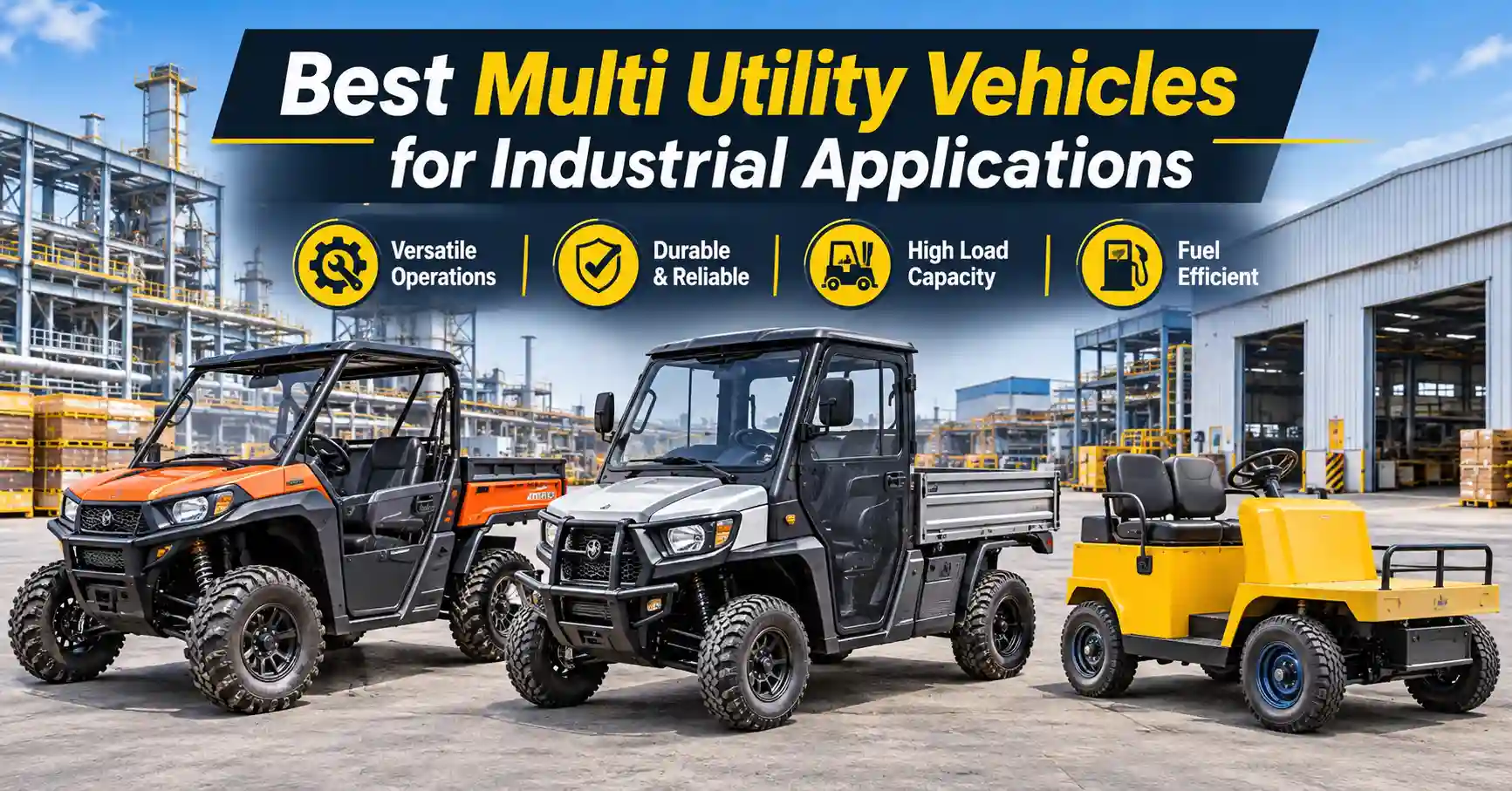
Industries depend on efficient material handling, internal transportation, and smooth movement of workers and equipment to maintain daily productivity. Choosing the right multi utility vehicle for industrial use can help businesses reduce manual effort, improve operational efficiency, and move materials safely across warehouses, factories, construction sites, and large industrial facilities. From compact electric carts to heavy-duty transport vehicles, different models serve different operational needs. However, selecting the right option requires understanding load capacity, power source, terrain, safety features, and maintenance requirements. This guide explores the most suitable vehicle types for industrial applications and explains how businesses can choose a solution that delivers long-term value.

What Are Multi Utility Vehicles for Industrial Applications?
Industrial utility vehicles are designed to transport people, tools, raw materials, finished goods, and equipment within industrial environments. Unlike conventional passenger vehicles, they prioritise functionality, manoeuvrability, load handling, and durability.
These vehicles are commonly used in manufacturing plants, logistics centres, warehouses, mining facilities, construction projects, and large commercial campuses. Depending on their design, they may feature cargo platforms, enclosed cabins, specialised attachments, or passenger seating.
Modern industrial multi utility vehicles are available in electric, diesel, and petrol-powered configurations. Electric models are particularly useful for indoor applications where low noise and the absence of tailpipe emissions are important. Diesel-powered models may be suitable for certain demanding outdoor tasks where higher load capacity or extended operating periods are required.
The best choice depends on the work being performed, the operating environment, and the distance materials need to travel.
Best Types of Multi Utility Vehicle for Industrial Use
Not every industrial facility requires the same type of vehicle. A warehouse handling small packages has different requirements from a manufacturing plant transporting heavy components. Understanding the main vehicle categories helps businesses select equipment that matches their workflow.
1. Electric Utility Vehicles
Electric utility vehicles are popular in warehouses, factories, assembly plants, and distribution centres. Powered by rechargeable batteries, they operate quietly and do not produce tailpipe emissions during use.
Their compact designs allow them to navigate indoor routes, narrow passages, and designated pedestrian areas more easily than larger vehicles. They can transport tools, components, maintenance supplies, and smaller loads between workstations.
For businesses prioritising indoor air quality and lower local emissions, electric models can be a practical option. However, battery capacity, charging time, charging infrastructure, and operating hours should be evaluated before purchase.
2. Heavy-Duty Utility Vehicles
Heavy-duty vehicles are built for demanding operations involving larger loads, rough surfaces, and frequent material movement. Depending on the model, they may feature reinforced chassis, powerful drivetrains, durable suspension systems, and specialised cargo beds.
They can support activities at construction sites, industrial yards, manufacturing facilities, and selected mining operations.
When comparing heavy-duty industrial utility vehicles, businesses should check payload capacity, gradeability, ground clearance, braking performance, and suitability for the intended terrain. The vehicle’s rated capacity must always be respected to maintain stability and safe handling.
3. Cargo Utility Vehicles
Cargo utility vehicles focus on transporting goods, tools, spare parts, and production materials. Their cargo areas may include flatbeds, enclosed compartments, side rails, or dedicated storage arrangements.
These vehicles are useful when materials need to move frequently between storage areas, production lines, loading bays, and maintenance departments.
A well-matched cargo vehicle can help reduce unnecessary trips and improve the flow of goods across a facility. Before selecting one, consider cargo dimensions, loading height, unloading methods, and whether the vehicle needs a covered compartment to protect materials from rain or dust.
4. Passenger Utility Vehicles
Some industrial sites require regular transportation for technicians, supervisors, security personnel, and maintenance teams. Passenger utility vehicles can support movement across large campuses, factories, ports, and industrial estates.
Depending on the configuration, they may include multiple seats, weather protection, handholds, and designated entry points.
Businesses should select a vehicle with adequate seating, safe access, appropriate restraints, and a configuration approved for its intended use. Passenger models should not be overloaded with cargo or modified in ways that compromise safety.
Key Features to Look for in Industrial Utility Vehicles
Choosing the right vehicle requires looking beyond its initial price. The features that matter most are those that directly support daily operations, employee safety, and long-term reliability.
Load Capacity and Vehicle Dimensions
Payload capacity determines how much weight a vehicle can safely carry, while cargo dimensions affect the type and volume of materials it can transport.
Consider the average load, maximum expected load, and frequency of trips. Also measure aisle widths, turning spaces, doorways, loading areas, and ramps to ensure the vehicle can operate comfortably within the facility.
Power Source and Operating Efficiency
Electric vehicles may offer lower energy and routine maintenance costs in suitable applications, while combustion-powered vehicles can be useful for particular outdoor duties and longer operating periods.
Compare energy consumption, battery replacement costs, fuel availability, charging requirements, and expected daily usage. The most economical choice is the one that meets operational demands without unnecessary downtime.
Safety and Operator Comfort
Essential safety considerations include reliable brakes, suitable lighting, a horn or warning system, mirrors, stability, and clear operator visibility. Depending on the application, additional features may include speed limiters, seat belts, reversing alarms, and protective structures.
For industrial utility vehicles, safe operation also depends on clearly marked routes, trained operators, regular inspections, and separation between vehicles and pedestrians.
Durability and Maintenance
Industrial vehicles often operate for long hours and may encounter dust, uneven surfaces, vibration, and frequent loading cycles. Strong construction and accessible service points can help simplify maintenance.
Ask about spare-part availability, service intervals, warranty coverage, and the availability of trained technicians. A dependable support network can make a significant difference when a vehicle is essential to daily production.
How Industrial Utility Vehicles Improve Operational Efficiency
The right vehicle can improve internal logistics by moving materials closer to where they are needed. Instead of relying entirely on manual transport, workers can use suitable vehicles to move tools, components, and supplies between departments.
For example, a manufacturing facility may use compact electric carts to deliver parts to assembly lines, while a larger cargo vehicle handles movement between the warehouse and production building. This division of tasks can reduce unnecessary journeys and support more predictable material flow.
Utility vehicles for industrial operations can also help maintenance teams reach equipment across large sites and allow authorised personnel to travel between buildings more efficiently.
Their effectiveness depends on how well the vehicles fit the workflow. Businesses should map internal routes, identify repetitive transport tasks, estimate daily travel distances, and assess where dedicated vehicles could eliminate bottlenecks.
Explore More: Hydroseeder machine in nagpur | Dust collector manufacturers | Dust Catcher in Andhra Pradesh
Applications Across Different Industries
The versatility of these vehicles makes them suitable for a wide range of industrial environments.
In manufacturing plants, they move components, tools, and finished products between production stations and storage areas. In warehouses and distribution centres, they support internal logistics and short-distance cargo movement.
Construction businesses may use suitable models to transport equipment and supplies across accessible parts of a site. Airports, ports, and large commercial campuses can use purpose-built vehicles for maintenance, authorised personnel transport, and selected service tasks.
For businesses handling different types of work, multi purpose utility vehicles for industries may offer flexibility through modular cargo arrangements or compatible attachments. However, each configuration should be approved for the vehicle and the intended application.
The operating environment must always guide the choice. Indoor facilities may prioritise compact dimensions and low noise, while outdoor sites may need additional ground clearance, weather protection, and traction.
How to Choose the Right Industrial Utility Vehicle
Before investing, businesses should evaluate their actual transport requirements rather than choosing a vehicle based solely on advertised specifications.
Start by identifying what the vehicle will carry, how far it will travel, and how many hours it will operate each day. Determine whether the route includes narrow aisles, ramps, uneven surfaces, or mixed pedestrian traffic.
Next, compare the total cost of ownership. This includes the purchase price, energy or fuel, routine maintenance, tyres, battery replacement where applicable, insurance, and expected downtime.
Also consider operator training, spare-part availability, and the manufacturer’s service network. If possible, request a demonstration under conditions similar to your facility.
When researching industrial utility vehicles, businesses can explore suppliers such as Automeck to understand available vehicle solutions and compare specifications against their operational needs. Always verify the exact model, rated payload, safety provisions, warranty, and suitability before making a purchase.
Conclusion
Selecting the right industrial transport solution can improve material movement, support employee productivity, and make daily operations more organised. The ideal vehicle depends on your load requirements, site conditions, operating hours, and maintenance budget.
A carefully selected multi utility vehicle for industrial use should deliver dependable performance, appropriate safety features, and practical long-term value. By comparing vehicle types and evaluating real operational needs, businesses can invest in a solution that supports efficient and reliable industrial transportation.
Frequently Asked Questions
1. What is a multi utility vehicle used for in industries?
It transports materials, tools, equipment, and authorised personnel across industrial facilities.
2. Which power source is best for industrial utility vehicles?
Electric models suit many indoor applications, while combustion-powered models may suit specific outdoor requirements.
3. How do I choose the right payload capacity?
Calculate typical and maximum loads, then select a vehicle rated to carry them safely.
4. Are electric utility vehicles suitable for factories?
Yes. They can be suitable for indoor transport because they operate quietly and produce no tailpipe emissions during use.
5. What should businesses consider before purchasing an industrial utility vehicle?
Evaluate payload, dimensions, power source, safety, maintenance, service support, and total ownership cost.