A healthy lawn starts with successful Hydroseeding Techniques that encourage quick and consistent seed establishment. Whether you’re restoring a residential lawn, stabilizing a commercial landscape, or covering large open areas, choosing the right approach can make a significant difference. Factors such as soil preparation, mulch selection, moisture management, and application timing all influence how effectively grass seeds sprout and develop. By understanding the process and following proven practices, property owners can achieve stronger turf with fewer maintenance issues.

Why Seed Germination Matters in Hydroseeding
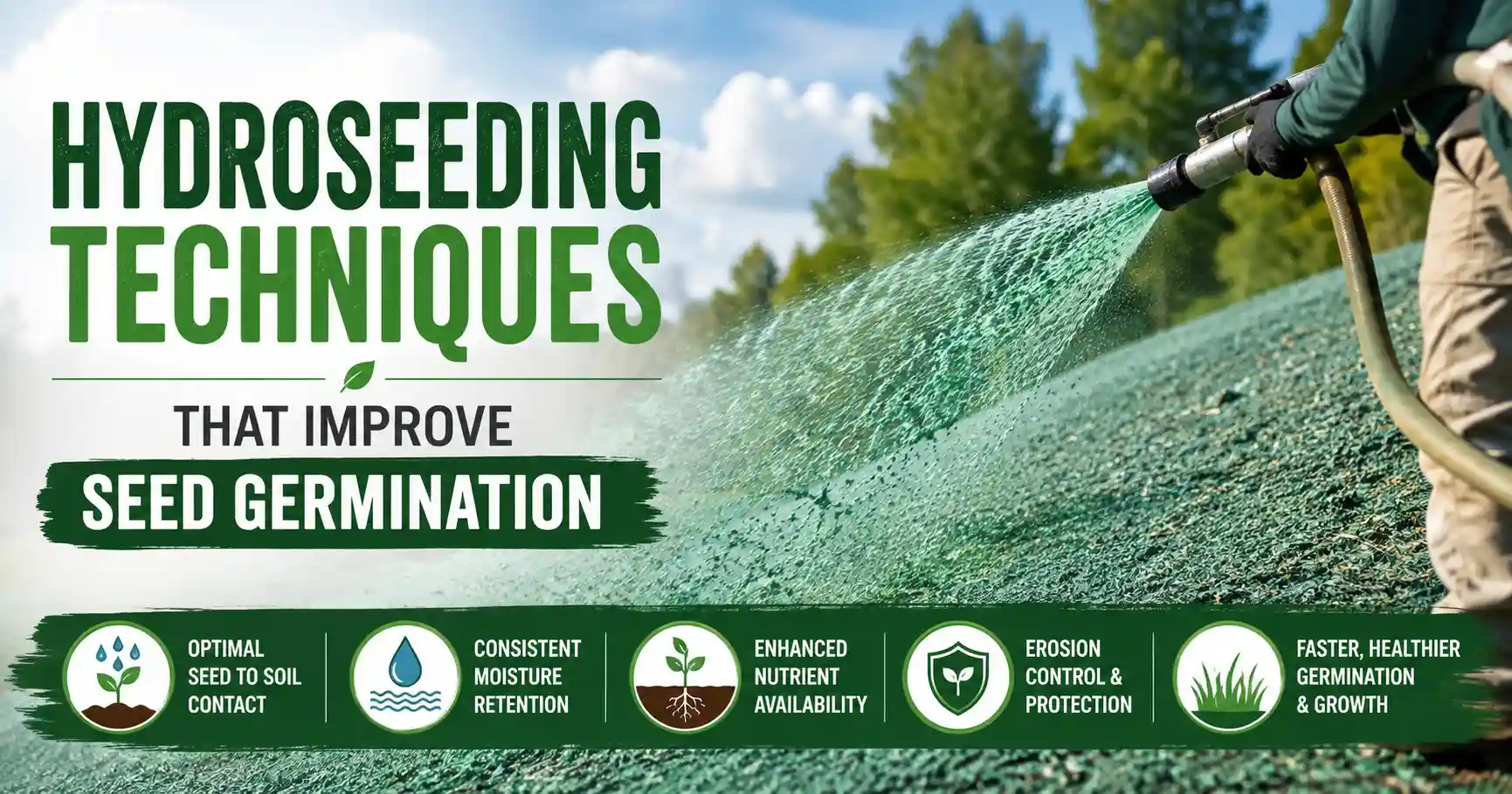
The success of any hydroseeding project depends on how efficiently seeds germinate. Proper Seed Germination in Hydroseeding ensures that grass develops evenly, fills bare patches, and creates a dense, durable lawn.
Unlike traditional seeding, hydroseeding combines grass seed, mulch, fertilizer, tackifier, soil amendments, and water into a slurry. This mixture creates a protective layer over the soil, helping retain moisture while keeping seeds in place during wind or rainfall. These conditions support healthy root development and improve overall establishment rates.
Several factors influence Seed Germination in Hydroseeding, including:
- Soil quality and pH balance
- Moisture availability
- Seed-to-soil contact
- Temperature and seasonal timing
- Quality of mulch and fertilizer
When these elements work together, germination becomes faster and more uniform.
Hydroseeding Techniques for Better Soil Preparation
Proper ground preparation is one of the most important Hydroseeding Techniques because even premium seed mixtures cannot perform well in poorly prepared soil.
Before applying the slurry, remove rocks, weeds, and construction debris. Loosen compacted soil using a rake or tiller to improve aeration and water infiltration. If necessary, incorporate compost or organic matter to increase nutrient availability.
Testing soil pH is another valuable step. Most turfgrass varieties thrive in a pH range between 6.0 and 7.0. Correcting acidic or alkaline conditions before hydroseeding creates an environment where roots can establish more efficiently.
A smooth, graded surface also prevents water runoff and allows the hydroseed mixture to spread evenly across the site.
Choosing the Best Hydroseeding Methods for Different Landscapes
Selecting the Best Hydroseeding Methods depends on the site’s size, slope, climate, and intended use.
Residential lawns often benefit from standard hydroseeding applications using quality wood fiber mulch and cool-season or warm-season grass blends suited to the region.
Commercial properties and roadside embankments may require enhanced hydraulic mulch, bonded fiber matrix products, or erosion-control additives that improve stability on steep slopes.
For areas prone to erosion, professionals frequently use thicker mulch layers and tackifiers that improve adhesion while protecting newly planted seeds from heavy rain.
The Best Hydroseeding Methods also involve matching grass species with environmental conditions. Drought-tolerant varieties perform better in dry climates, while shade-tolerant grasses establish more successfully beneath tree cover.
Moisture Management for Successful Germination
Water is the single most critical factor after hydroseeding. Grass seed requires consistent moisture throughout the germination period, but oversaturation can be just as harmful as dry conditions.
Light, frequent watering keeps the mulch damp without washing it away. During warmer weather, irrigation may be needed several times a day until seedlings emerge. Once grass begins growing, watering frequency can gradually decrease while increasing watering depth to encourage deeper root systems.
Proper irrigation scheduling is one of the most effective Hydroseeding Tips for Better Germination because it maintains the ideal balance between moisture retention and oxygen availability within the soil.
Avoid allowing the mulch to dry completely, especially during the first two weeks after application.
Hydroseeding Techniques That Support Fast Grass Growth
Healthy lawns develop faster when every stage of the hydroseeding process is optimized. Modern Hydroseeding Techniques focus not only on germination but also on establishing vigorous root systems that sustain long-term turf health.
Nutrient-rich starter fertilizers provide phosphorus for root development, while nitrogen supports early leaf growth. Organic soil conditioners further improve nutrient absorption and microbial activity.
Temperature also plays an essential role. Cool-season grasses generally establish best during early fall or spring, whereas warm-season grasses perform better in late spring and early summer.
These practices contribute directly to Hydroseeding for Fast Grass Growth by creating favorable conditions for continuous development from seedling to mature turf.
Explore More: Buy hydroseeder machine in delhi | Buy hydroseeder machine in hyderabad | lndustrial dust collectors in mumbai
How to Improve Seed Germination with Hydroseeding Throughout the Process
Understanding How to Improve Seed Germination with Hydroseeding requires attention before, during, and after application.
During mixing, maintaining the correct slurry consistency helps distribute seed evenly while ensuring adequate mulch coverage. Uniform spraying prevents overcrowded or sparse sections across the lawn.
After application, minimizing foot traffic protects young seedlings from damage. Newly germinated grass is vulnerable until roots become firmly established.
Monitoring weather conditions is equally important. If heavy rainfall is expected immediately after hydroseeding, scheduling the project for a more stable period can reduce erosion and seed displacement.
These practical measures demonstrate How to Improve Seed Germination with Hydroseeding without requiring expensive equipment or complicated maintenance routines.
Common Mistakes That Reduce Germination Success
Even high-quality hydroseeding materials cannot compensate for avoidable mistakes. Some of the most common problems include:
- Applying hydroseed to compacted or poorly graded soil.
- Watering too little or excessively during the first few weeks.
- Using unsuitable grass seed for the local climate.
- Mowing before seedlings reach the recommended height.
- Applying hydroseed during unfavorable weather conditions.
Avoiding these errors significantly improves establishment rates and overall lawn quality.
Supporting Long-Term Lawn Health After Germination
Once grass has emerged, ongoing maintenance determines whether the lawn remains healthy over time.
The first mowing should only occur after the grass reaches the recommended height for its variety. Sharp mower blades prevent tearing young plants and reduce stress during early growth.
Balanced fertilization several weeks after germination encourages continued development while strengthening root systems. Regular monitoring for weeds, pests, and fungal diseases also helps maintain dense turf coverage.
Proper aeration in future growing seasons improves oxygen flow, enhances nutrient uptake, and supports deeper root development. Combined with responsible irrigation practices, these maintenance steps preserve the investment made during hydroseeding.
Professional landscaping providers such as Automeck often emphasize that successful hydroseeding extends beyond application day, requiring consistent aftercare for lasting results.
Conclusion
Successful lawns begin with well-planned Hydroseeding Techniques that prioritize soil preparation, moisture management, quality seed selection, and proper maintenance. By applying the right methods, homeowners and property managers can achieve faster establishment, healthier root systems, and long-lasting turf. Paying attention to seasonal timing, irrigation, and post-application care ensures reliable germination without unnecessary setbacks. A carefully executed hydroseeding project delivers a greener, stronger lawn that continues to thrive for years with regular maintenance.
Frequently Asked Questions
1. How long does hydroseeding take to germinate?
Most hydroseeded lawns begin germinating within 5–14 days, depending on the grass variety, soil temperature, and moisture levels.
2. How often should I water after hydroseeding?
Keep the mulch consistently moist by watering lightly 2–4 times daily until the grass seedlings become established.
3. Is hydroseeding better than traditional seeding?
Yes, hydroseeding generally provides better moisture retention, improved seed distribution, and faster establishment than conventional broadcast seeding.
4. Can hydroseeding be done on slopes?
Yes. With the proper mulch, tackifier, and erosion-control products, hydroseeding performs effectively on slopes and uneven terrain.
5. When is the best season for hydroseeding?
The ideal season depends on the grass type. Cool-season grasses perform best in spring or fall, while warm-season grasses establish more successfully in late spring and early summer.