Hydroseeding has become one of the most efficient methods for establishing healthy vegetation on lawns, highways, mine reclamation sites, golf courses, and erosion-prone landscapes. To achieve uniform seed distribution and successful germination, every machine relies on several specialized systems working together. Understanding Hydroseeder Machine Components helps contractors, landscapers, and project managers operate the equipment more efficiently, perform timely maintenance, and improve seeding results.
Whether you’re purchasing a new hydroseeder or learning how the equipment functions, knowing the purpose of each component can help you maximize productivity while reducing downtime.

What is a Hydroseeder Machine?
A hydroseeder is a specialized piece of landscaping equipment that sprays a slurry made of water, grass seed, mulch, fertilizer, tackifier, and soil amendments over prepared ground. The slurry creates a protective layer that improves moisture retention and encourages faster seed germination.
Unlike traditional broadcasting methods, hydroseeding delivers even coverage across large or uneven areas, making it an ideal solution for commercial landscaping, roadside vegetation, slope stabilization, sports fields, and environmental restoration.
Essential Hydroseeder Machine Components
Every hydroseeder is built using several integrated systems that work together to prepare, mix, and spray the hydroseeding slurry. Understanding these Hydroseeder Machine Components is essential for selecting the right equipment and maintaining consistent performance.
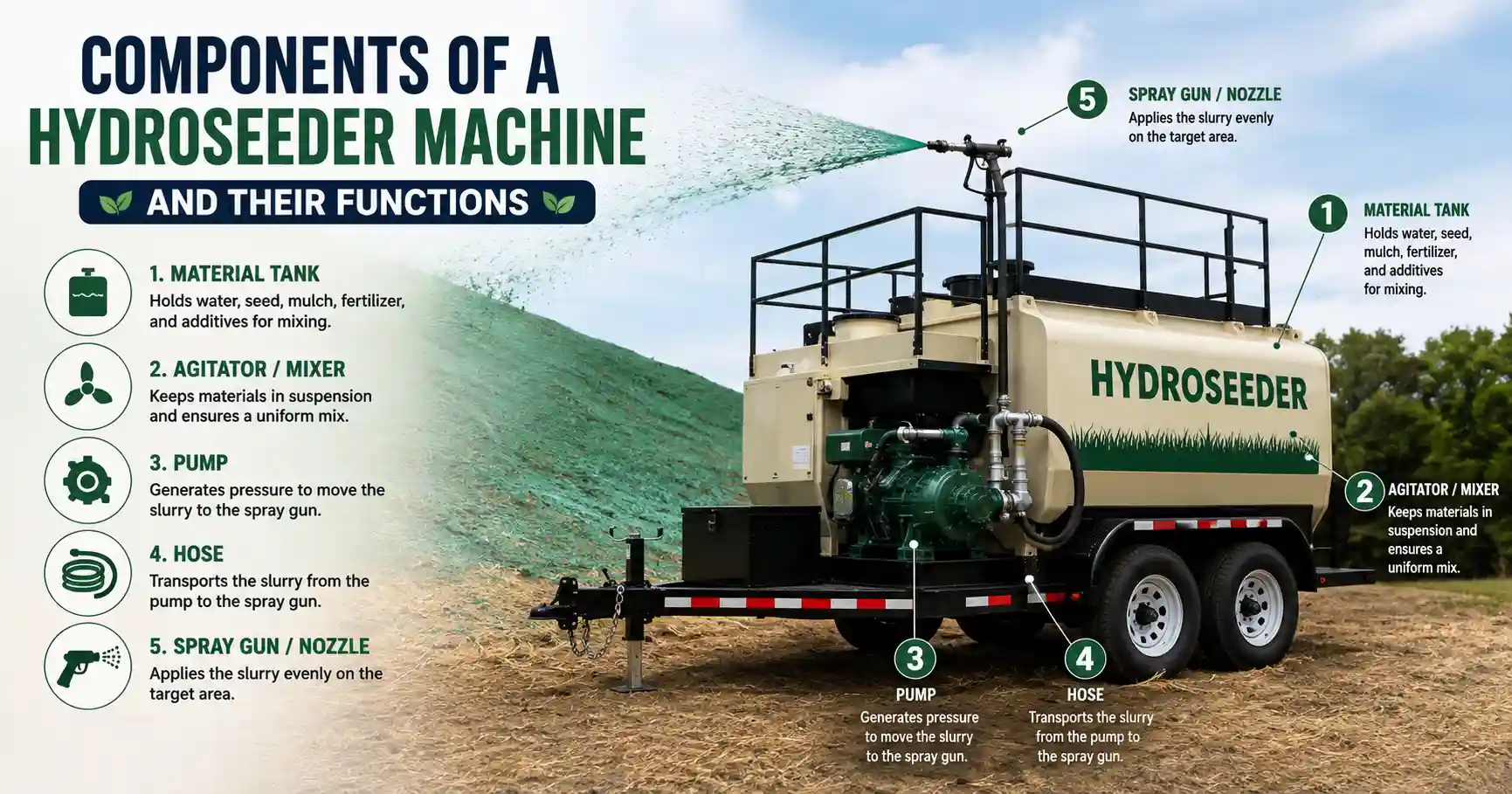
1. Tank
The tank is the largest section of the machine and stores the slurry mixture before application. It is usually manufactured from steel or high-density polyethylene depending on the machine size and application.
Among the most important Hydroseeder Tank Parts, the tank must withstand continuous mixing while resisting corrosion from fertilizers and additives. A properly designed tank also allows complete blending of all materials before spraying.
2. Agitation System
The agitation system continuously mixes water, seed, mulch, and fertilizer to prevent settling inside the tank. Mechanical paddles or hydraulic agitation keep the slurry homogeneous throughout the spraying process.
Without proper agitation, heavier materials sink to the bottom, causing uneven application and inconsistent seed distribution.
3. Pump
The pump is considered the heart of the hydroseeder. It generates the pressure required to move the slurry from the tank through the hose and spray nozzle.
Different pump types are selected depending on project requirements, slurry thickness, and spraying distance. Proper pump maintenance significantly extends equipment life and ensures reliable operation.
4. Engine or Power Unit
The engine supplies the energy required to operate the pump and agitation system. Depending on machine size, hydroseeders may use gasoline, diesel, PTO-driven, or hydraulic power systems.
The engine should deliver sufficient horsepower to maintain consistent pressure during continuous operation.
5. Spray Hose
The hose transports slurry from the pump to the spray nozzle. High-quality hoses are designed to resist abrasion, internal pressure, and blockage caused by mulch fibers.
Longer hoses provide greater flexibility when covering difficult terrain or inaccessible slopes.
6. Spray Nozzle
The nozzle controls the spray pattern and application rate. Operators can switch between different nozzle types depending on the project, allowing either wide-area coverage or targeted spraying.
Proper nozzle selection helps achieve uniform distribution while minimizing material waste.
7. Control Valves
Control valves regulate slurry flow, pressure, and mixing operations. They allow operators to start or stop spraying quickly while maintaining consistent application rates.
Well-maintained valves improve operational safety and reduce product loss during fieldwork.
8. Loading Hatch
The loading hatch provides access for adding seed, mulch, fertilizer, tackifier, and water into the tank. A wide opening makes loading faster while reducing spillage.
Secure hatch covers also prevent contamination during mixing and transportation.
9. Frame and Chassis
The frame supports the entire machine and absorbs operational stress during transportation and spraying. Heavy-duty frames improve stability, particularly for trailer-mounted hydroseeders operating on uneven terrain.
10. Filtration System
Filters protect pumps and nozzles by preventing oversized debris from entering the spraying system. Routine cleaning prevents clogging and ensures uninterrupted operation.
These integrated systems together represent the primary Hydroseeding Equipment Parts responsible for efficient field performance.
Hydroseeder Components and Functions Explained
Understanding Hydroseeder Components and Functions helps operators identify maintenance needs and improve application quality.
- The tank stores the slurry mixture until application.
- The agitation system keeps materials uniformly mixed.
- The pump generates spraying pressure.
- The engine powers the complete system.
- The hose transports slurry safely.
- The nozzle determines spray pattern and coverage.
- Valves regulate pressure and slurry flow.
- Filters protect internal components from clogging.
When all these systems function together, the machine delivers even seed placement, better moisture retention, and improved germination rates.
Explore More: Industrial hydroseeder for sale in delhi | Dust catcher in kolkata | Best Hydroseeder Machine in Tamil Nadu
Important Hydroseeder Tank Parts
Several Hydroseeder Tank Parts directly influence mixing efficiency and equipment durability.
These include the tank shell, internal agitators, loading hatch, drain outlet, inspection opening, and internal baffles where applicable. These components work together to maintain proper slurry consistency throughout the spraying process.
Regular inspection of tank interiors, welds, and seals helps prevent leaks and extends machine lifespan.
How a Hydroseeder Machine Works
Many first-time users wonder How a Hydroseeder Machine Works during actual field operations. The process follows a straightforward sequence.
First, water is added to the tank, followed by mulch, seed, fertilizer, tackifier, and any required soil conditioners. The agitation system continuously mixes these materials into a uniform slurry.
Next, the engine powers the pump, which draws the slurry from the tank and pushes it through the hose. Finally, the spray nozzle distributes the mixture evenly across the prepared ground.
Understanding How a Hydroseeder Machine Works enables operators to optimize mixing times, reduce material waste, and achieve better vegetation establishment.
Maintenance Tips for Long-Term Performance
Proper maintenance keeps hydroseeders operating efficiently throughout demanding landscaping projects.
- Inspect pumps, hoses, filters, valves, and nozzles after every use.
- Flush the entire system with clean water to remove mulch residue, lubricate moving components according to manufacturer recommendations, monitor engine oil and hydraulic fluid levels, check tank interiors for corrosion or damage, and replace worn seals before leaks develop.
Routine preventive maintenance reduces repair costs while improving spraying consistency across future projects.
Choosing Quality Parts for Better Performance
Selecting durable replacement components directly affects operational efficiency. High-quality pumps, heavy-duty hoses, corrosion-resistant tanks, precision spray nozzles, and reliable valves improve productivity while reducing maintenance requirements.
When purchasing replacement Parts of a Hydroseeder Machine, compatibility with your equipment model should always be verified to maintain optimal performance and safe operation.
Working with trusted manufacturers also ensures access to technical support and genuine replacement components. Companies like Automeck focus on designing equipment that meets demanding landscaping and erosion-control applications with dependable engineering and durable construction.
Regular inspections also help identify worn Parts of a Hydroseeder Machine before they cause unexpected equipment failure during critical projects.
Conclusion
Understanding Hydroseeder Machine Components allows operators to use their equipment more effectively, perform preventive maintenance, and achieve consistent hydroseeding results. From the tank and pump to the nozzle, valves, and filtration system, each component contributes to accurate slurry preparation and uniform application. Investing in quality equipment and maintaining every system properly ensures longer machine life, reduced downtime, and healthier vegetation across residential, commercial, and environmental restoration projects.
Frequently Asked Questions
1. What is the most important component of a hydroseeder machine?
The pump is often considered the most important component because it creates the pressure needed to spray the slurry evenly.
2. How often should a hydroseeder be cleaned?
A hydroseeder should be thoroughly cleaned after every use to prevent residue buildup and nozzle blockages.
3. What materials are mixed inside a hydroseeder tank?
A typical slurry contains water, grass seed, mulch, fertilizer, tackifier, and soil amendments.
4. Why is the agitation system necessary?
The agitation system keeps the slurry evenly mixed, preventing seeds and mulch from settling at the bottom of the tank.
5. Can hydroseeder parts be replaced individually?
Yes. Most components such as pumps, hoses, valves, filters, and nozzles can be replaced individually to restore machine performance.