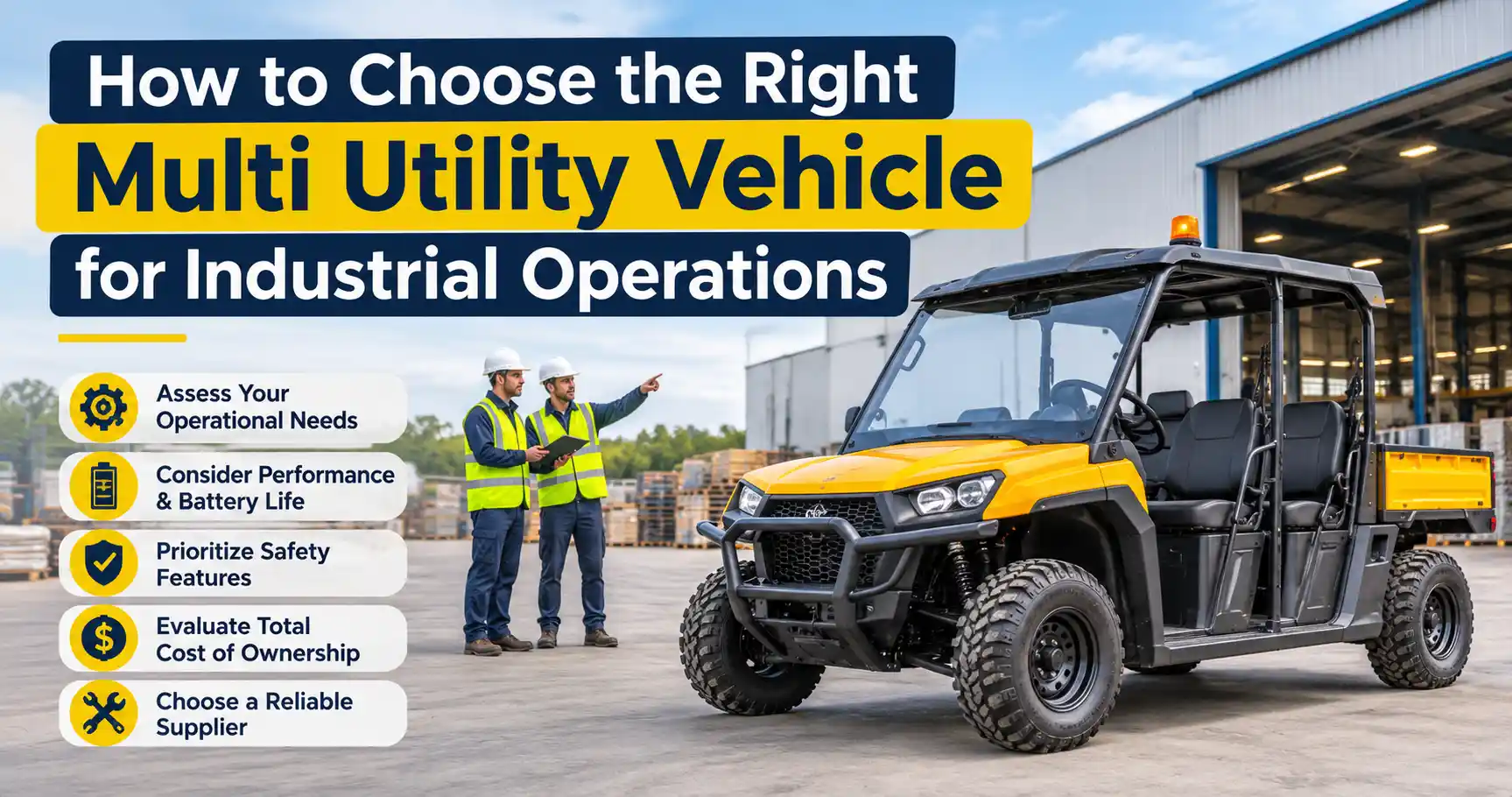
Industrial facilities depend on efficient transportation to move materials, equipment, tools, and personnel across their premises. From manufacturing plants and warehouses to construction sites and large commercial facilities, having the right transport equipment can improve productivity and reduce manual effort. Choosing a multi utility vehicle for industrial use is therefore an important decision for businesses looking to streamline daily operations. However, with different vehicle configurations, load capacities, power options, and safety features available, selecting the right model requires careful consideration of your workplace requirements.
Why Do Industries Need a Multi Utility Vehicle for Industrial Use?
Industrial operations often involve transporting heavy materials, maintenance equipment, spare parts, and supplies between different departments or workstations. Using conventional vehicles for these activities may not always be practical, particularly in facilities with narrow pathways, indoor movement restrictions, or uneven surfaces.
A multi utility vehicle for industrial use provides a practical transportation solution by combining load-carrying capability, manoeuvrability, and operational flexibility. Depending on its design, it can support material handling, facility maintenance, logistics, and other routine industrial activities.
These vehicles are particularly useful in:
- Manufacturing facilities: Moving components, raw materials, tools, and finished products between production areas.
- Warehouses and distribution centres: Supporting internal logistics, inventory movement, and material transportation.
- Construction sites: Carrying equipment, construction supplies, and maintenance materials across work areas.
- Industrial campuses: Transporting maintenance teams, housekeeping supplies, and essential equipment.
An appropriately selected vehicle can reduce unnecessary walking, improve material movement, and help employees complete transportation tasks more efficiently.
7 Important Factors to Consider When Choosing an Industrial Multi Utility Vehicle
Selecting the right vehicle involves understanding how it will be used in your facility. Instead of choosing a model based only on appearance or purchase price, evaluate its technical specifications, operating environment, and long-term suitability.
1. Understand Your Load Carrying Requirements
Load capacity should be one of your first considerations. Different industrial applications require different carrying capabilities, depending on the weight, dimensions, and frequency of transported materials.
Before purchasing an industrial multi utility vehicle, calculate the average and maximum loads it will carry during regular operations.
Consider whether you need to transport small tools, industrial components, packaged goods, heavy equipment, or multiple materials simultaneously.
Always check the manufacturer’s rated payload capacity rather than estimating how much the vehicle can carry. Overloading can affect braking performance, vehicle stability, tyre life, and overall safety.
2. Check the Operating Environment and Terrain
The surface conditions of your industrial premises directly influence vehicle performance.
A vehicle operating inside a smooth warehouse has different requirements from one working across an outdoor construction site or an uneven manufacturing yard.
For indoor applications, compact dimensions, smooth acceleration, and a suitable turning radius are important. Outdoor operations may require stronger tyres, better ground clearance, durable suspension, and protection against dust or moisture.
If your facility has ramps, narrow passages, rough flooring, or changing surface conditions, ensure the vehicle is designed to handle them safely.
3. Choose the Right Power Source
Power source selection affects operating expenses, maintenance requirements, and suitability for different environments.
Electric utility vehicles are increasingly considered for indoor industrial applications because they produce no tailpipe emissions during operation and generally operate more quietly than conventional fuel-powered alternatives.
They are suitable for warehouses, factories, and enclosed facilities where ventilation and noise management are important considerations.
Diesel or petrol-powered vehicles may be appropriate for certain outdoor applications requiring longer operating periods or specific performance characteristics.
When comparing options, evaluate battery capacity, charging duration, operating range, fuel consumption, and availability of charging or refuelling facilities.
4. Evaluate Vehicle Dimensions and Manoeuvrability
Industrial spaces frequently have limited movement areas. Large vehicles may struggle to navigate narrow aisles, loading zones, and production floors.
A multi utility vehicle for industrial operations should have dimensions suitable for your facility’s layout.
Pay attention to its overall length, width, turning radius, wheelbase, and ground clearance. These specifications determine how easily the vehicle can move through different working areas.
Also consider whether employees need to transport materials around machinery, storage racks, loading docks, or pedestrian walkways.
A compact and manoeuvrable design can make internal transportation easier without unnecessarily disrupting other activities.
5. Examine Build Quality and Durability
Industrial vehicles are often exposed to demanding working conditions. Regular loading, unloading, continuous movement, dust, vibration, and occasional impacts can affect their performance over time.
A heavy duty multi utility vehicle should have a strong chassis, durable body construction, reliable suspension, and components designed for its intended application.
Inspect the quality of the cargo platform, tyres, braking system, steering mechanism, and protective features.
If the vehicle will operate outdoors, check whether its electrical components and body materials have suitable protection against environmental exposure.
Investing in a durable vehicle can help minimise unexpected downtime and reduce the need for frequent repairs.
6. Prioritise Operator Safety and Comfort
Safety should never be overlooked when purchasing industrial transportation equipment.
Look for essential features such as effective braking systems, seat belts where applicable, headlights, warning lights, reversing alarms, mirrors, and emergency controls.
Depending on the operating environment, additional features such as rollover protection, speed control, and operator protection structures may also be important.
Operator comfort deserves attention as well. Adjustable seating, clear visibility, accessible controls, and ergonomic steering arrangements can help reduce fatigue during extended working hours.
Ensure the selected vehicle meets applicable workplace safety requirements and that operators receive proper training before using it.
7. Consider Maintenance and Total Cost of Ownership
The initial purchase price does not represent the complete cost of owning an industrial vehicle.
Maintenance, spare parts, battery replacement, fuel or electricity consumption, insurance, servicing, and unexpected repairs all contribute to long-term expenditure.
When evaluating a multi purpose utility vehicle for industries, compare the estimated operating costs over its expected service life.
Check the manufacturer’s warranty, availability of replacement components, authorised service support, and recommended maintenance intervals.
A vehicle with a slightly higher purchase price may offer better long-term value if it has dependable performance, lower maintenance requirements, and readily available technical support.
Explore More: Dust collector manufacturers in Nagpur | Dust Collector Machine in Rajasthan | dust suppression system in India
How to Match the Right Vehicle to Your Industrial Application
Every industrial facility has different transportation requirements. Therefore, selecting a vehicle should begin with identifying its primary purpose.
For example, a manufacturing unit may require a cargo platform for transporting components, while a warehouse may benefit from a compact electric vehicle that moves supplies between storage and dispatch areas.
Construction facilities may need higher ground clearance and a robust chassis to handle uneven outdoor surfaces. Large industrial campuses may require passenger-carrying configurations for internal staff transportation.
An effective industrial utility vehicle selection guide should consider the vehicle’s actual workload rather than relying on general specifications.
Before finalising your purchase, document the distance travelled per shift, average payload, number of operating hours, surface conditions, and frequency of loading and unloading.
This information will help you compare different configurations and identify a vehicle that matches your operational priorities.
Common Mistakes to Avoid When Buying an Industrial Utility Vehicle
Even businesses with clearly defined requirements can make mistakes when selecting industrial transportation equipment.
One common mistake is choosing a vehicle with insufficient payload capacity. This can create operational limitations and increase the risk of overloading.
Another is ignoring the facility layout. A vehicle that performs well outdoors may not be suitable for narrow indoor aisles or crowded production areas.
Businesses should also avoid comparing vehicles exclusively on purchase price. Warranty coverage, service availability, energy consumption, and replacement component costs are equally important.
When evaluating a multi utility vehicle for industrial operations, request a product demonstration whenever possible. Testing the vehicle under representative working conditions can reveal practical limitations that may not be obvious from a specification sheet.
You should also compare the manufacturer’s technical documentation and confirm that the vehicle is suitable for the intended operating environment.
Finding the Right Industrial Utility Vehicle Supplier
Choosing a reliable manufacturer or supplier is just as important as selecting the vehicle itself.
Look for companies that provide clear technical specifications, product demonstrations, warranty information, spare parts availability, and after-sales support.
Ask whether custom configurations are available for specific industrial requirements, such as cargo body modifications, seating arrangements, safety accessories, or specialised attachments.
Automeck is a brand to consider when exploring industrial utility vehicle solutions and evaluating available options for your operational needs.
Before making a final decision, compare the available models against your load requirements, workplace conditions, operating costs, and maintenance expectations.
Conclusion
Selecting the right industrial vehicle requires more than comparing specifications or purchase prices. Businesses should carefully evaluate load capacity, terrain compatibility, power source, manoeuvrability, durability, operator safety, and long-term maintenance costs.
A properly selected multi utility vehicle for industrial use can support smoother material movement, improve workplace productivity, and simplify everyday transportation tasks. By understanding your facility’s requirements and choosing a suitable vehicle configuration, you can make a practical investment that supports your industrial operations over the long term.
Frequently Asked Questions
1. What is a multi utility vehicle used for in industries?
It is used to transport materials, tools, equipment, supplies, and sometimes personnel within industrial facilities.
2. Which power source is suitable for industrial utility vehicles?
Electric vehicles are suitable for many indoor applications, while fuel-powered models may suit certain outdoor requirements.
3. How do I determine the required load capacity?
Calculate the maximum weight and dimensions of the materials the vehicle will regularly transport.
4. Are electric utility vehicles suitable for warehouses?
Yes. They are often suitable for warehouses because they produce no tailpipe emissions during operation and generally operate quietly.
5. What should I check before purchasing an industrial utility vehicle?
Evaluate payload capacity, terrain compatibility, safety features, durability, operating costs, warranty, and after-sales support.